 Whatcom County
Windows Built for Cordata's Weather, Not Just the Showroom
Cordata sits in the part of Whatcom County where marine air off the water meets year-round rain and long stretches of low, gray damp. That combination is hard on windows in ways that don't always show up right away. A window can look fine from the curb for years while water is quietly working its way into the framing behind it. Correct installation matters more here than in drier climates, because the margin for error is smaller and the consequences of a bad seal show up as rot, not just a drafty room.
This page covers what window installation actually involves for homes in Cordata specifically: what the local climate does to windows and the wall assemblies around them, what a correct installation looks like, how we approach the work, and why hiring a crew that already understands this area's conditions is worth the extra question or two when you're vetting contractors.
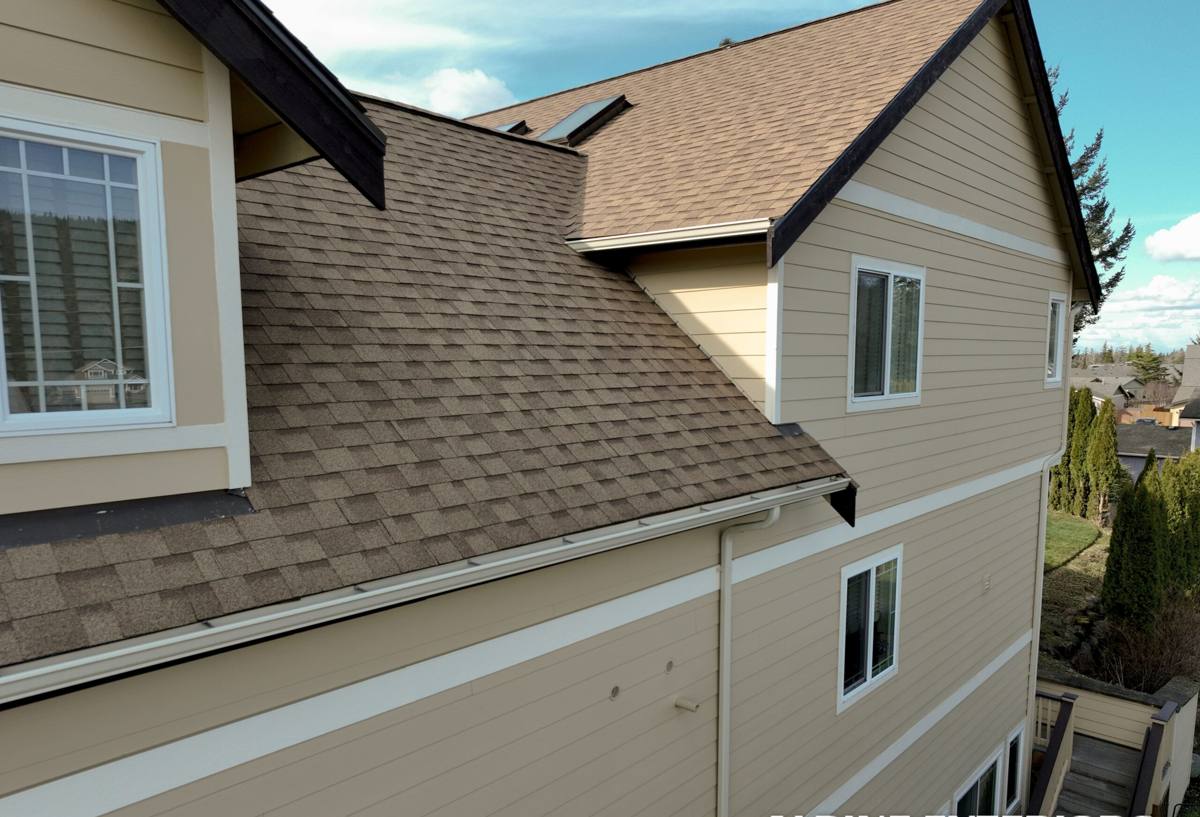
What Whatcom County's Climate Does to Windows
Three things define window performance problems in this part of Washington, and Cordata gets all three.
Salt Air
Proximity to Bellingham Bay and the greater Puget Sound airshed means a steady, low-level presence of salt-laden moisture in the air. Over years, that air accelerates corrosion on window hardware, fasteners, and metal flashing that isn't rated for it. Aluminum components without a proper finish, and lower-grade fasteners, tend to show pitting and staining well before a window's glass or frame would otherwise need attention.
Driving Rain
Rain here rarely falls straight down. Wind off the water pushes it sideways into wall assemblies, which means window openings take on water pressure from the side and from below, not just from above. A window that's only flashed to shed water straight down will let wind-driven rain track sideways behind the trim and into the wall cavity. This is the single most common cause of hidden rot we find around older or poorly installed windows in this area.
A Long Moss Season
Whatcom County's damp season stretches for much of the year, and shaded, north-facing walls in particular stay wet long enough for moss and algae to establish on siding, trim, and window sills. Moss holds moisture against wood and painted surfaces far longer than open air would, which softens caulk joints, degrades paint film, and gives rot a foothold at exactly the seams where a window meets the wall.
None of this means Cordata homes need exotic solutions. It means ordinary things — flashing sequence, sealant choice, drainage paths — have to be done correctly and in the right order, every time, because the climate won't forgive shortcuts the way a drier region might.
Signs a Cordata Home May Need New Windows
Homeowners usually notice a problem before they can name it. Here's what tends to show up first:
- Soft or spongy wood at the sill or bottom corners of the window trim
- Fogging or a permanent haze between the panes of a double-pane window (a sign the seal has failed)
- Visible daylight or a noticeable draft around the sash when the window is closed
- Paint that keeps bubbling or peeling at the same spot near a window, even after repainting
- Difficulty opening, closing, or latching a window that used to operate smoothly
- Persistent moss or dark streaking on the sill or the siding just below the window
- Noticeably higher heating bills without another clear explanation
- Condensation forming on the inside of the glass regularly during cold, wet weeks
Any one of these on its own might just mean a repair. Several at once, especially on the same window or wall, usually points to a moisture problem that's been building for a while.
What a Correct Window Installation Actually Involves
Window installation gets treated like a simple swap far too often — pull the old unit, drop in the new one, caulk the edges. In a climate that drives rain sideways for months at a time, that approach fails, sometimes within a single wet season. A correct installation follows a specific sequence, and skipping steps is exactly what causes the rot we get called to fix later.
The order that has to happen
- Remove the old window and inspect the rough opening. This is the point where hidden rot, previous water damage, or missing flashing gets discovered. It has to be dealt with before anything new goes in — covering up existing damage guarantees a repeat problem.
- Install a sloped sill pan. The sill pan is the drainage plane at the bottom of the opening. It needs to be sloped outward so any water that gets past the window has somewhere to go besides straight into the wall framing.
- Apply flashing tape in the correct shingle-lap order. Sill first, then jambs, then head flashing over the top, each layer overlapping the one below it — the same way roof shingles work, so water is always directed outward and down, never trapped behind a layer.
- Set the window plumb, level, and square. A window that's slightly racked in the opening puts uneven stress on the frame and can compromise the seal along one edge even if it looks fine everywhere else.
- Insulate the gap between the window frame and the rough opening properly — not overpacked, not left empty, using a material that won't hold moisture against the frame.
- Seal and trim the exterior with a sealant rated for the specific materials involved and for sustained damp exposure, not just a general-purpose caulk.
Every one of those steps is doing a specific job related to water management. In a dry climate, a mistake in this sequence might go unnoticed for a decade. In Whatcom County's driving rain and long wet season, it tends to surface within a year or two as staining, softness, or a draft.
Choosing the Right Window for This Climate
Frame material and glass package both matter here, and the right choice depends on the specific wall, exposure, and budget. There's no single "best" window for every house — but some trade-offs come up constantly in this area.
| Frame Material | How It Handles Local Conditions | Trade-offs |
|---|---|---|
| Vinyl | Won't rot or corrode from salt air; low maintenance | Can expand/contract with temperature swings; quality varies widely between manufacturers |
| Fiberglass | Very stable dimensionally, holds paint well, resists moisture damage | Higher upfront cost than vinyl |
| Aluminum-clad wood | Attractive wood interior with a weather-resistant exterior shell | Cladding seams and fasteners need to be rated for salt-air exposure or they'll corrode early |
| Solid wood | Classic look, good for period-appropriate homes | Highest maintenance burden in a long wet season; needs diligent paint and sealant upkeep |
On glass, we generally steer homeowners toward double-pane units with a low-E coating and an argon or krypton gas fill. That combination handles this region's mild-but-persistently-damp-and-gray climate well: it cuts heat loss during cold snaps and reduces the interior condensation that shows up on cheaper glass during long cold, wet stretches. The exact U-factor and solar heat gain coefficient worth targeting can shift depending on which direction a window faces and how much of the house is shaded — that's a conversation worth having room by room, not a single number that applies to the whole house.
Replacement Windows vs. New Construction Windows
This distinction matters and gets glossed over often enough that it's worth explaining plainly.
| Type | Best For | What It Means for Water Management |
|---|---|---|
| Replacement (pocket) window | Existing openings with sound, intact framing | Fits inside the existing frame; relies on the existing structure's flashing and drainage being in good condition |
| New construction window | Openings where the framing needs repair, or where the exterior siding is being removed anyway | Uses a nailing flange set into fresh flashing, giving full control over the water management layers |
A lot of Cordata homes are good candidates for straightforward replacement windows. But if we open up an opening and find the sheathing or framing has already taken on water damage, a replacement window over damaged framing just re-covers the problem. In that situation, doing it as a new-construction-style install — even though it's more work — is the honest recommendation, because it's the only way to actually address what's underneath.
How Our Process Works
We keep the process straightforward and try not to make it more complicated than it needs to be:
- Walkthrough and assessment. We look at each window from both sides, check for soft spots, drafts, and failed seals, and talk through which windows actually need replacement versus which can wait.
- Written estimate. Clear scope, clear materials, clear pricing before anything starts.
- Removal and opening inspection. This is when we find out what's really going on behind the trim — and we'll show you and explain it if we find something unexpected.
- Repair any damaged framing or sheathing before the new window goes in. We don't install a new window over rotten wood.
- Install with full flashing sequence as described above — sill pan, shingle-lapped flashing, proper insulation, correct sealant.
- Interior and exterior finish work to match the surrounding trim and siding as closely as practical.
- Final walkthrough so you can operate every window and ask questions before we consider the job done.
Why Hiring a Crew That Already Works in Cordata Matters
Window installation knowledge that works in a dry inland climate doesn't automatically transfer here. A crew that mostly works in low-rainfall regions may not default to sloped sill pans or shingle-lapped flashing, because in their normal working conditions, skipping those steps doesn't cause visible problems for years. In Whatcom County's driving rain and salt air, those shortcuts show up fast.
A crew that regularly works Cordata and the surrounding area also has a working sense of which walls and exposures in this neighborhood tend to take the worst weather, what the moss and algae growth patterns look like on local homes, and how older housing stock in this area was typically built — all of which shapes what to look for the moment an old window comes out.
Questions worth asking any contractor before you hire
- Do you install a sloped sill pan on every window, or only when asked?
- What flashing tape or membrane do you use, and is it rated for this climate?
- What happens if you find rotten framing once the old window is out — is that a change order or is it included in your estimate process?
- Do you warranty both the window itself and your installation labor, and for how long?
- Can you walk me through your installation order before you start?
A contractor who can answer these clearly, without hesitation, is telling you they treat installation as a sequence of decisions rather than a single afternoon of swapping units.
Living With Your New Windows in a Long Moss Season
Even a correctly installed window benefits from a little seasonal attention in this climate. Keep sills and tracks clear of accumulated debris and moss growth, since a season or two of neglect lets moss establish and hold moisture against the frame and sealant. Check exterior caulking annually, ideally at the start of the wet season, since UV exposure and constant damp cycles will eventually break down even a good sealant, and a small gap is far cheaper to reseal than the rot it can eventually cause if it's left alone. If you notice a new draft, a sticking sash, or fresh staining, it's worth a look sooner rather than later — problems caught early in this climate are simple; problems left through a few wet seasons rarely stay that way.
What Affects the Cost
| Factor | Why It Matters |
|---|---|
| Number of windows | Per-window cost typically drops somewhat with larger jobs due to shared setup and labor efficiency |
| Frame material | Vinyl is generally the most budget-friendly; fiberglass and wood cost more upfront |
| Replacement vs. new construction | New-construction-style installs involve more labor, especially when framing repair is needed |
| Condition of existing framing | Hidden rot discovered during removal adds repair work that a simple swap wouldn't require |
| Window size and configuration | Larger units, custom shapes, or specialty operating styles (casement, awning, sliding) vary in cost |
| Trim and siding matching | Matching existing exterior details takes more time than a plain finish |
We don't publish a flat price list because these variables genuinely change the scope from house to house, and Cordata's mix of home ages and styles means no two jobs look quite the same. A walkthrough gets you a real number, not a guess.
If you're noticing drafts, moisture, or aging windows on your Cordata home, we're happy to take a look and give you a straightforward, no-pressure estimate — just fill out the form below.