 Whatcom County
Building Decks for Happy Valley's Climate, Not Against It
Happy Valley sits close enough to the water and the weather patterns that roll through Whatcom County that a deck here takes a different kind of beating than a deck in a drier inland climate. Salt-tinged air, long stretches of driving rain, and a moss season that can run most of the year all work on wood, fasteners, and finishes in ways that show up as soft boards, rust streaks, and slick, green-tinged surfaces within a few seasons if the deck wasn't built with those conditions in mind. A custom deck built for Happy Valley isn't just about layout and looks — it's about material choices, drainage, and hardware that hold up to what this specific location throws at them year after year.
We've built and repaired decks throughout Whatcom County long enough to know that a design that works fine in a sheltered inland yard can fail early in a more exposed Happy Valley lot. This page covers what actually matters for a deck built to last here: the climate factors, the materials, the build details, and the maintenance rhythm that keeps a custom deck solid instead of turning into a slippery, rotting liability.
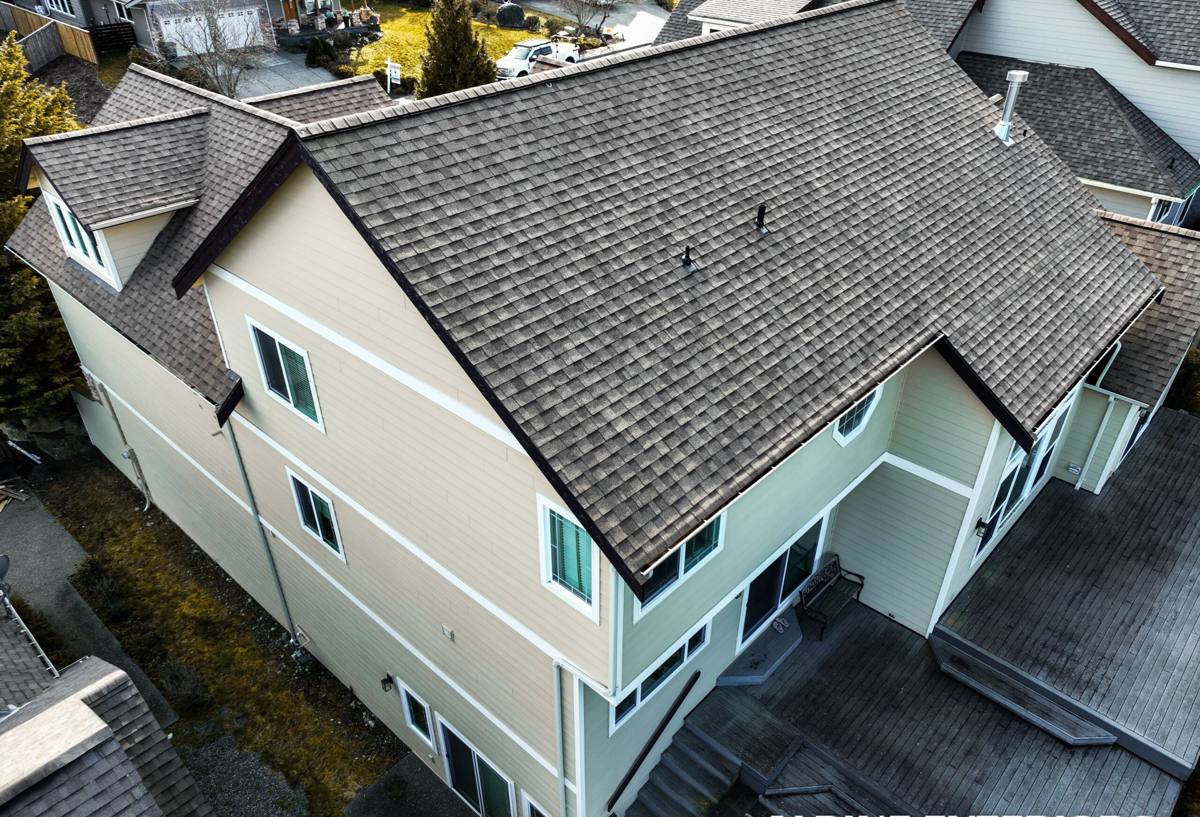
What Whatcom County Weather Does to a Deck Over Time
Salt Air and Metal Fatigue
Homes closer to Bellingham Bay and the broader Puget Sound shoreline deal with airborne salt that settles on every exposed surface, including deck hardware. Standard fasteners and connectors corrode faster in this environment than they would further inland. Rust doesn't just look bad — it weakens the joints holding your deck together, and once a fastener starts corroding, moisture gets a foothold in the surrounding wood fibers, accelerating rot from the inside of the connection point outward.
Driving Rain and Standing Water
Whatcom County doesn't just get a lot of rain — much of it arrives horizontally, driven by wind off the water. That means water gets pushed into places a straight-down rain would never reach: under railings, behind ledger boards, into gaps between decking boards that weren't spaced with drainage in mind. Water that can't shed off quickly sits, soaks into end grain, and starts rot in the spots that are hardest to inspect and hardest to fix without tearing into the structure.
The Long Moss Season
Shaded, damp decks in this region grow moss and algae for a good chunk of the year, not just in the depths of winter. Beyond the maintenance headache, moss holds moisture against the decking surface constantly, which speeds up wood decay and turns boards slick and genuinely dangerous underfoot — especially on stairs. A deck design that accounts for airflow, drainage, and material choice up front will fight moss far less than one that didn't plan for it.
Decking Material Options for Happy Valley
There's no single "best" decking material — there's a best material for this climate and this budget. Here's how the common options actually perform under Whatcom County conditions:
| Material | Moisture & Moss Resistance | Maintenance | Typical Lifespan Here |
|---|---|---|---|
| Pressure-treated wood | Fair — needs sealing to perform well | Annual cleaning and re-sealing recommended | 10-15 years with upkeep |
| Cedar | Good natural rot resistance, but surface still grows moss if shaded | Periodic staining/sealing to hold color and resist moisture | 15-20 years with upkeep |
| Composite decking | Very good — doesn't absorb water like wood, though surface can still grow algae if damp and shaded | Occasional washing, no sealing or staining | 25-30 years |
| PVC/capped composite | Excellent — fully sealed surface, minimal moisture uptake | Lowest — soap and water as needed | 25+ years |
We don't push one material on every homeowner. A pressure-treated frame under a composite or PVC decking surface is a common and honest way to balance upfront cost against long-term maintenance in this climate. Where a client wants the look and feel of real wood and is willing to keep up with sealing, cedar remains a solid choice — we just make sure they understand the maintenance commitment going in, because skipping it is what leads to early rot complaints in this climate specifically.
What a Correct Deck Build Involves
Footings and Framing
Everything starts below the decking boards. Footings need to be sized and set to local frost depth and soil conditions, not guessed at. Framing lumber should be rated for ground contact where it's close to grade, and joist spacing should account for the decking material chosen — composite and PVC products often have tighter span requirements than solid wood, and ignoring that leads to bounce and premature sagging.
Ledger Attachment and Flashing
The ledger board — where the deck attaches to the house — is the single most common failure point on decks anywhere, and it's worse in a region with as much driving rain as Whatcom County gets. Proper flashing behind and over the ledger keeps water from working its way into the house's rim joist and sheathing. We treat ledger flashing as non-negotiable, not an upsell, because a failure here can mean structural damage to the home itself, not just the deck.
Fasteners and Hardware Rated for the Environment
Given the salt air exposure common around Happy Valley, we use corrosion-resistant fasteners and structural connectors rated for the conditions rather than standard hardware that's cheaper but corrodes faster near the water. It costs a bit more upfront and saves a homeowner from hardware failure and rust staining a few years down the line.
Board Spacing and Airflow
Decking boards need consistent gap spacing to let water drain through rather than pool on the surface, and the framing below needs enough clearance and ventilation to let the underside of the deck dry out between rain events. Decks built low to the ground with poor airflow underneath are the ones that develop persistent moss and soft spots fastest in this climate.
Design Considerations Specific to Happy Valley Lots
Grading and Drainage Around the Deck
Where the ground slopes and where water naturally wants to run matters as much as the deck structure itself. A deck built without attention to surrounding grading can end up with water pooling against footings or splashing back up onto the underside of the frame during heavy rain — a routine occurrence here, not an exception.
Sun Exposure and Shade Patterns
Tree cover and the orientation of the home relative to the sun affect how long a deck stays damp after rain. Heavily shaded sections dry slower and grow moss faster, which sometimes means adjusting layout, railing style, or even trimming sightlines (in coordination with the homeowner) to get more airflow and light onto the deck surface.
Railings and Code Requirements
Any deck elevated above a certain height needs code-compliant railings, and material choice matters here too — untreated or poorly finished wood railings take the brunt of driving rain and salt air since they're the most exposed part of the structure. We build railings to current code and to hold up to the exposure, not just to pass initial inspection.
Our Process for a Happy Valley Deck Project
- On-site visit to assess grading, sun/shade exposure, and existing structure (for replacements or additions)
- Honest conversation about material trade-offs for your budget and how much upkeep you want to take on
- Design and layout planning, including drainage, airflow, and code-required railing details
- Proper permitting where required by the local jurisdiction
- Footings, framing, and ledger flashing done to hold up against driving rain, not just pass a quick look
- Corrosion-resistant fastening throughout, given the salt air exposure common in this area
- Final walkthrough covering how to maintain the specific material you chose through the local moss season
Maintenance in a Long Moss Season
Even a well-built deck benefits from a basic seasonal routine in Whatcom County. Clearing debris out of board gaps keeps drainage paths open. A periodic wash — plain water and a stiff brush, or a gentle cleaner appropriate to the material — knocks back moss and algae before they get established and slick. Wood decks need their sealant or stain checked annually since UV and moisture wear it down faster here than in drier climates; composite and PVC decks skip that step entirely, which is a big part of why many Happy Valley homeowners lean that direction for lower-maintenance living.
Ignoring moss buildup doesn't just create a slip hazard — it traps moisture against the board surface continuously, which is exactly the condition that leads to rot in wood decking and surface degradation even in some composite products. Catching it early with routine cleaning is far cheaper than replacing boards later.
Why a Crew That Already Works in Happy Valley Matters
Deck-building fundamentals are the same everywhere, but the details that make a deck actually last — flashing choices, fastener grade, footing depth, where moss tends to take hold on a given lot orientation — come from having built and maintained decks under these specific conditions repeatedly. A crew that mainly works drier, more sheltered areas may not default to the salt-resistant hardware or the drainage-first framing approach that Happy Valley homes need, simply because it hasn't been a problem for them elsewhere. We build decks throughout Whatcom County and see firsthand what holds up here and what doesn't, and we apply that to every custom deck we build in Happy Valley specifically.
That local track record also means we're not guessing about permitting requirements, typical soil conditions, or how a given yard drains after a heavy rain event — we've already worked through those questions on other projects nearby.
Let's Talk About Your Deck
If you're planning a new custom deck or replacing one that's showing its age, we're happy to take a look and walk through honest options for your Happy Valley property — no pressure, no pushy sales pitch. Use the form below to request a free estimate and we'll go over materials, layout, and what it'll take to build something that actually holds up to this climate.