 Whatcom County
Why Fairhaven Windows Take a Different Approach
Fairhaven sits close to Bellingham Bay, and that proximity to saltwater shapes everything about how windows age here. Salt-laden air corrodes unprotected metal hardware, breaks down cheap seals faster than manufacturers' warranties account for, and works its way into hairline gaps that wouldn't matter in a drier inland climate. Add Whatcom County's long stretch of driving, wind-pushed rain each fall and winter, plus a moss season that can run from late autumn well into spring, and you have a set of conditions that punishes shortcuts. A window that's merely "installed" instead of correctly flashed, sealed, and detailed for this specific environment will show it — usually within a few wet seasons, not decades.
We're not describing a worst-case scenario. This is the normal weather pattern for anyone living near the water in Whatcom County, and it's the baseline we design every custom window job around, whether we're working on a century-old Fairhaven cottage or a newer build a few blocks up the hill.
What "Custom" Actually Means Here
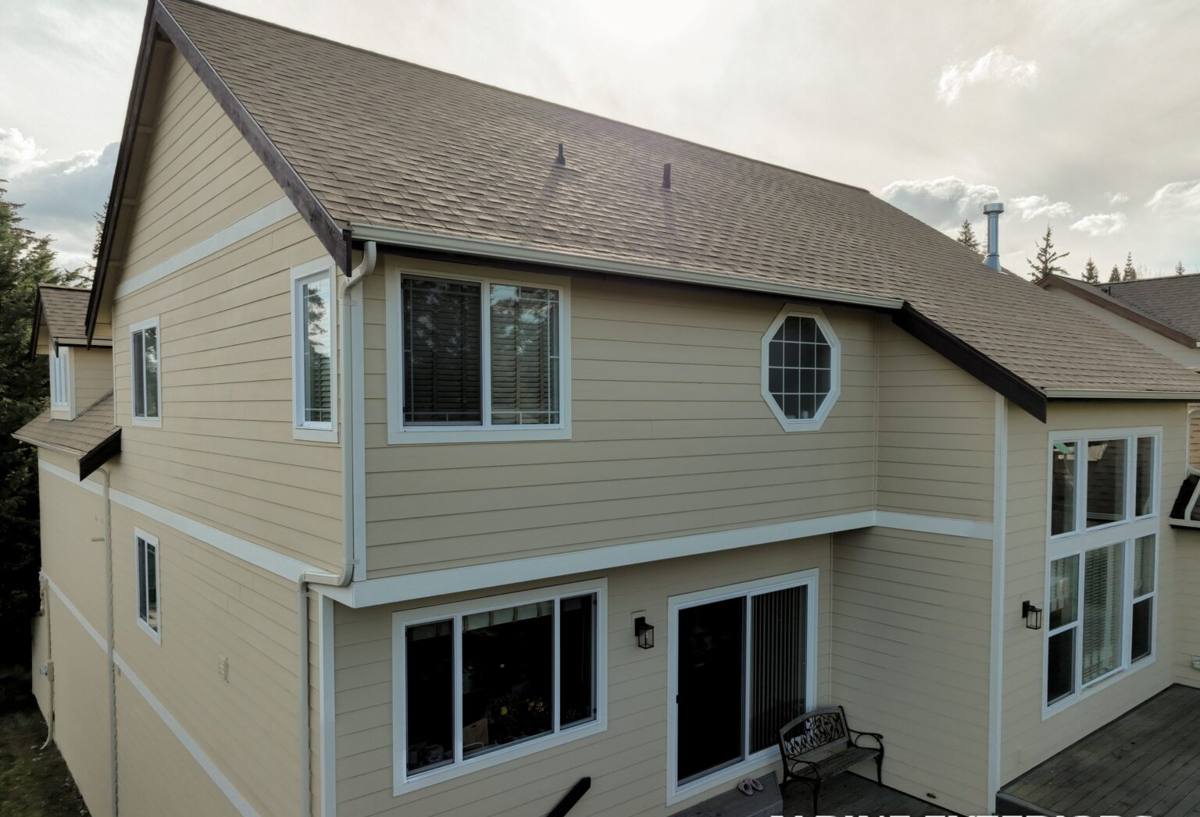
Fairhaven's housing stock is genuinely mixed. The neighborhood includes some of Bellingham's older homes alongside newer infill construction, and that variety means stock window sizes and off-the-shelf trim packages often don't fit cleanly. "Custom" in our line of work isn't a marketing word — it means we measure each opening individually, account for out-of-square framing that's common in older houses, and match sightlines and proportions so new windows don't look like an obvious retrofit.
Common Fairhaven Window Scenarios
- Older homes with original wood-frame openings that have settled or shifted slightly over the decades
- Additions or remodels where window rough openings don't match current standard sizing
- Homes with partial bay or marine views where sightlines and frame width matter more than average
- Properties close enough to the water that hardware corrosion is a visible, recurring issue
- Renovations where owners want to preserve a historic look on the exterior while upgrading performance
None of these are unusual requests. They're the normal range of what a local crew handles on a regular basis in this part of Whatcom County.
Choosing Frame and Glass for a Marine Climate
Material choice matters more here than in drier parts of the county. The table below reflects the honest trade-offs we walk homeowners through — not a sales pitch for any one product, but the maintenance and moisture realities of each option.
| Frame Material | Salt Air / Moisture Performance | Maintenance | Typical Fit |
|---|---|---|---|
| Vinyl | Good — won't corrode or rot; seams and hardware quality vary by manufacturer | Low | Most standard replacements; budget-conscious upgrades |
| Fiberglass | Very good — dimensionally stable in temperature and humidity swings | Low to moderate | Larger openings, energy-focused upgrades |
| Aluminum-clad wood | Good exterior protection if cladding and flashing are done correctly; interior wood still needs care | Moderate | Homes wanting a traditional wood interior look with better weather resistance outside |
| Solid wood | Poor without diligent upkeep — the most exposed to rot and moss staining in this climate | High | Historic-accuracy projects where owners commit to regular maintenance |
We don't push any homeowner toward solid wood on a Fairhaven exterior facing prevailing weather unless they understand the maintenance commitment going in. It's not that wood windows are a bad product — it's that this specific climate is unforgiving of missed maintenance cycles, and we'd rather set that expectation up front than have a client surprised in five years.
Glass Package Considerations
Double-pane with a low-E coating is the practical baseline for this area — it manages both heat retention through cooler, wet months and glare during the brighter summer stretch. For homes closer to the water or in more wind-exposed spots, we also talk through impact-resistant or laminated glass options, less for storm severity than for the wear that constant wind-driven moisture puts on standard seals over time.
The Part That Actually Determines Whether a Window Lasts: Flashing and Sealing
Most window failures we get called out to inspect in this region aren't glass failures or frame failures — they're water management failures. A window can be an excellent product and still fail early if it's not integrated correctly into the wall assembly behind the siding.
Correct installation in a driving-rain climate means:
- Removing the old window and inspecting the rough opening and sill for hidden rot or prior water damage before anything new goes in
- Installing sill pan flashing so any water that gets past the window has a path back out, not into the wall cavity
- Layering house wrap and flashing tape in proper shingle-fashion order — top piece always overlapping the one below it, never the reverse
- Setting the window level, plumb, and square, then securing it per the manufacturer's fastening schedule rather than "close enough"
- Sealing and insulating the gap between the frame and rough opening without over-packing it, which can bow the frame
- Finishing exterior trim and caulking joints so water sheds away from the opening instead of pooling against it
Skip or rush any one of these steps and the window itself becomes almost irrelevant — water finds the gap. This is the piece of the job that's invisible once trim goes back on, which is exactly why it's worth asking a contractor to explain their flashing sequence before they start.
How We Approach a Fairhaven Custom Window Project
1. On-Site Assessment
We look at each opening individually — framing condition, current sill and flashing state, sun and wind exposure, and how close the home sits to the water. Two windows on the same house can have different needs depending on which side of the building they're on.
2. Measuring and Ordering
Because so many Fairhaven openings are non-standard or slightly out of square from age or settling, we measure for a precise custom fit rather than assuming a catalog size will work.
3. Removal and Structural Check
Old windows come out carefully, and we inspect the framing underneath. If there's rot or water damage from a prior failed install, we address that before setting anything new — installing a good window into a compromised opening just repeats the same failure on a delay.
4. Correct Flashing and Installation
This follows the sequence described above, every time, regardless of whether it's one window or a full-house replacement.
5. Interior and Exterior Finish
Trim, caulking, and finish work are completed to match the home's existing look, whether that's a historic profile or a more modern trim package.
6. Final Walkthrough
We check operation, seals, and finish work with the homeowner before considering the job done.
Signs Your Current Windows Are Already Losing the Fight
- Visible moss or green staining building up on sills, frames, or exterior trim
- Corroded or stiff hardware — cranks, locks, or hinges that have gotten harder to operate
- Fogging or condensation between panes, which means a seal has failed
- Soft or discolored wood trim around the window opening
- Noticeable drafts or cold spots near the window during winter storms
- Paint or finish peeling specifically around the window perimeter rather than elsewhere on the wall
- Difficulty opening or closing that wasn't there a year or two ago
Any one of these on its own isn't necessarily urgent. Several together, especially moss staining combined with soft trim, usually means moisture has already gotten past the seal and is working on the framing behind it.
Maintenance That Actually Matters in This Climate
Even a correctly installed window benefits from basic upkeep in a marine environment. Rinsing salt residue off exterior frames and hardware a couple times a year, keeping gutters and nearby drainage clear so water isn't sheeting directly onto window heads, and checking caulk lines annually for cracking all go a long way. Moss and algae growth on sills should be cleaned promptly rather than left to hold moisture against the frame — it's a cosmetic issue at first, but it doesn't stay cosmetic if ignored through a full wet season.
Why Local Experience in Fairhaven Specifically Matters
Whatcom County's weather isn't uniform from neighborhood to neighborhood. A crew that regularly works Fairhaven already understands how wind and rain behave against homes this close to the bay, what the area's housing stock tends to look like structurally, and how to match trim and finish work on older homes without it looking bolted-on. That familiarity shows up in small decisions — how much flashing overlap to use on a particularly exposed wall, which glass package makes sense given a home's orientation to prevailing wind, how to sequence work around the wetter months rather than fighting them. It's the difference between a crew applying a generic install checklist and one that's calibrated its process to this specific stretch of coastline.
It also matters for accountability. A local, established contractor is easy to reach if a question comes up after the job — about warranty coverage, a maintenance question, or anything else — rather than a crew that worked one job in the area and moved on.
Get a Straightforward Look at Your Windows
If you're dealing with drafts, fogged glass, moss buildup, or you're planning ahead for a renovation, we're happy to come take a look and give you an honest assessment — no pressure, no inflated urgency. Use the form below to request a free estimate for your Fairhaven home.