 Whatcom County
Building Decks for Bellingham's Coastal Climate
Bellingham sits close enough to Bellingham Bay and the Salish Sea that salt-laden air, wind-driven rain, and long stretches of overcast, damp weather are just part of owning a home here. A deck built the way it would be built in a drier inland town doesn't hold up the same way in Whatcom County. Fasteners corrode faster near the water, moss and algae take hold on any surface that stays shaded and damp, and framing that isn't detailed for constant moisture exposure starts showing rot years before it should. Building a deck that lasts in Bellingham means designing for those conditions from the footings up, not just picking attractive decking and hoping for the best.
We work on decks throughout Bellingham and the surrounding Whatcom County area, so the choices below aren't theoretical. They reflect what actually holds up through a Pacific Northwest wet season and what tends to fail early when it's skipped.
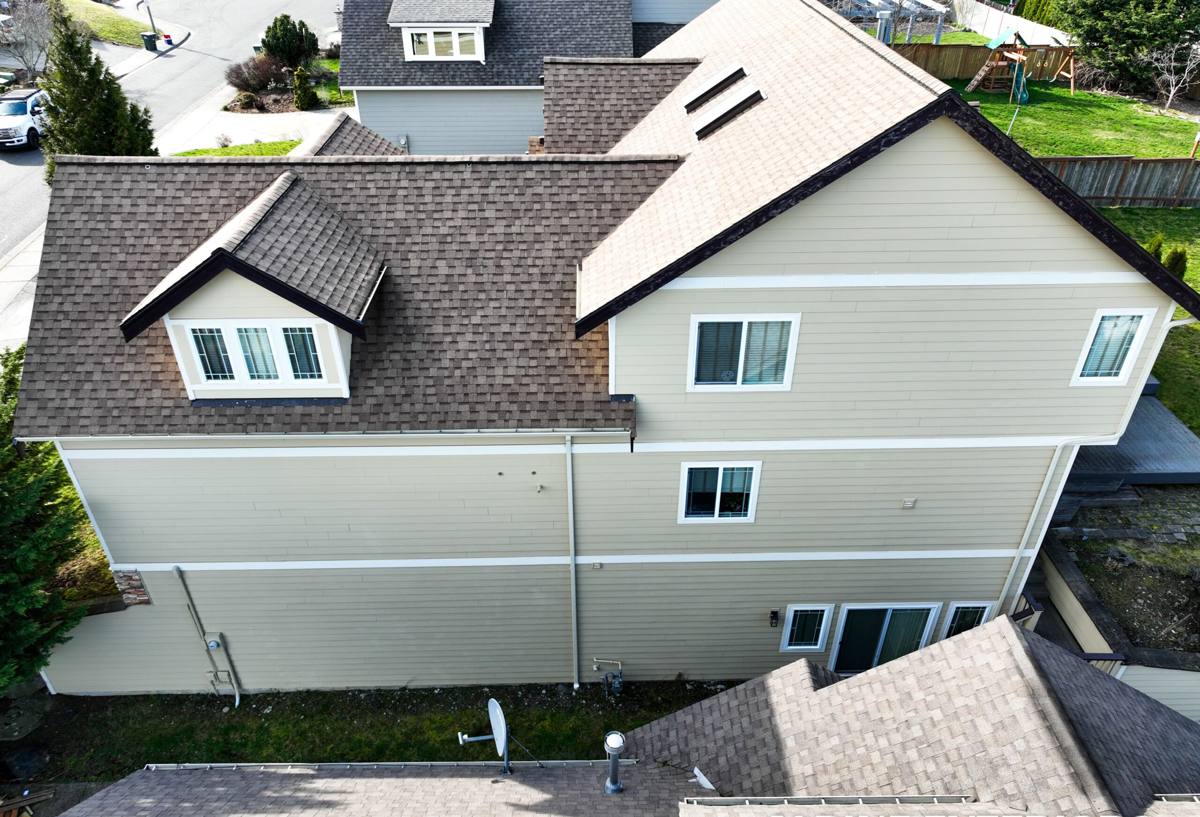
What Local Homes Actually Need From a Deck
A deck in this region has to handle three things every other part of the exterior deals with too: near-constant moisture, salt exposure depending on proximity to the water, and a moss and algae season that can run from fall through spring. That changes some of the basic decisions homeowners make when planning a new deck.
Framing and Substructure
The structure underneath the decking does most of the long-term work and is the part most likely to be under-built or under-protected. In a climate like Bellingham's, we pay close attention to:
- Ledger board flashing and attachment — the connection where the deck meets the house is the single most common source of hidden rot and structural failure if it isn't flashed and sealed correctly.
- Joist protection — exposed cut ends and joist tops absorb water readily; unprotected framing lumber can start breaking down well before the decking above it shows any sign of trouble.
- Fastener and hardware selection — coastal air accelerates corrosion on standard fasteners and connectors, so hardware needs to be rated for the exposure it's actually going to see.
- Footing depth and drainage — footings need to be set below frost depth and away from standing water, with soil graded so water moves away from posts rather than pooling around them.
- Airflow underneath the deck — low decks with poor ventilation trap moisture against the framing and speed up rot; proper clearance and, where needed, vents or gaps help the structure dry out between storms.
Decking Material Choices
There's no single "correct" decking material for every Bellingham project — it depends on budget, maintenance tolerance, and how exposed the deck is to sun, shade, and salt air. Here's how the common options actually compare in this climate:
| Material | How it handles our climate | Maintenance | Typical lifespan here |
|---|---|---|---|
| Pressure-treated fir/hem-fir | Affordable, but absorbs moisture readily and is the most prone to cupping, splitting, and moss growth in shaded areas | Annual cleaning and periodic sealing | 10–15 years with upkeep |
| Cedar | Naturally rot- and insect-resistant, handles damp shaded spots better than treated fir, but still needs finish maintenance | Cleaning and re-staining every 1–3 years | 15–20 years with upkeep |
| Composite decking | Doesn't absorb water the way wood does, resists moss staining better, but low-quality boards can still trap surface moisture if not installed with proper gapping | Periodic washing, no staining or sealing | 20–30 years |
| PVC/capped polymer | Fully sealed surface, best resistance to moisture and moss staining, holds color well in low-light coastal conditions | Occasional washing | 25+ years |
We don't push any one material as a universal answer. The right call depends on how much sun the deck gets, whether it sits near the water, and how much upkeep the homeowner actually wants to do — we'll walk through the honest trade-offs for the specific spot on your property.
Moss, Algae, and Moisture Management
Whatcom County's moss season isn't a minor cosmetic issue — a deck surface that stays damp and shaded for months at a time becomes slick, discolored, and eventually starts to break down faster than one that's designed to shed water and dry out. Two things make the biggest difference: board spacing that allows water to drain through rather than pool on the surface, and layout choices that avoid trapping moisture in low-airflow corners against the house or a fence line. On existing decks, we also look at whether nearby trees or structures are keeping a section shaded and wet most of the year, since that's usually where moss and rot show up first regardless of what the decking is made of.
Permitting and Code Considerations in Whatcom County
Most raised decks require a permit, and inspectors are checking for the same fundamentals wherever you build in this region: proper footing depth and bearing, correct ledger attachment and flashing, guardrail height and baluster spacing on elevated decks, and stair geometry that meets current code. Depending on the property, setback requirements from the City of Bellingham or Whatcom County can also affect how close a deck can be built to a property line. We handle the permitting process as part of the job so homeowners aren't left tracking down requirements themselves, and we build to pass inspection the first time rather than treating code minimums as a target to shoot for.
Our Deck Building Process
- On-site assessment. We look at drainage, sun and shade exposure, soil conditions, and how the deck will connect to the house before recommending materials or layout.
- Design and material selection. We walk through honest trade-offs between wood and composite/PVC options based on your budget and how much maintenance you want to take on.
- Permitting. We prepare and submit what's required for your project and coordinate inspections.
- Structural build. Footings, framing, ledger flashing, and hardware are installed to hold up under sustained coastal moisture, not just pass a one-time inspection.
- Decking and finish work. Boards, railings, and stairs are installed with attention to drainage and airflow underneath.
- Final walkthrough. We go over care and maintenance specific to the material you chose so the deck actually reaches its expected lifespan.
Repair, Resurface, or Rebuild?
Not every aging deck needs to be torn out. If the framing underneath is sound and the problems are limited to the decking surface — cupping, graying, moss staining, or a few damaged boards — resurfacing on top of solid structure can be the more cost-effective route. But if the ledger connection is compromised, if joists show soft spots or rot when probed, or if footings have shifted or heaved, patching the surface just hides a structural problem that will keep getting worse. Part of what we do on an initial visit is tell you honestly which category your deck falls into, rather than defaulting to whichever answer costs more.
Deck Maintenance Checklist for Bellingham Homeowners
Whatever material you choose, a few habits go a long way toward getting the full expected lifespan out of a deck in this climate:
- Sweep leaves and debris off the surface regularly, especially in fall — trapped wet leaves are one of the fastest ways to stain and soften decking.
- Clean moss and algae buildup at least once a year, ideally before it gets slick and before spring growth accelerates.
- Check and clear gaps between boards so water can drain through rather than pool.
- Inspect the ledger board area and any flashing for gaps or damage once a year.
- Re-seal or re-stain wood decking on the schedule appropriate to the product — don't wait until the finish has fully worn away.
- Look underneath the deck occasionally for standing water, soft framing, or signs of pest activity.
Why Hire a Crew That Already Works in Bellingham
A deck built by a crew unfamiliar with this specific climate often looks the same as one built by a local crew — on day one. The difference shows up two, five, and ten years later, in flashing details, hardware choices, and framing decisions that either accounted for salt air and constant moisture or didn't. We build decks throughout Bellingham and Whatcom County and specify materials and details based on what actually holds up here, not what works in a drier part of the country. That local track record is also what lets us give you a realistic maintenance schedule and an honest read on your existing deck's condition, rather than a generic recommendation.
If you're planning a new deck or trying to figure out whether an existing one needs repair or replacement, we're glad to take a look and give you a straightforward, no-pressure estimate. Use the form below to get started.