 Whatcom County
Building Decks That Actually Hold Up in Blaine
Blaine sits right on the water at the northern edge of Whatcom County, and that location shapes everything about how a deck should be built here. Homes close to Semiahmoo Bay and the Strait of Georgia deal with salt-laden air, near-constant winter moisture, and a moss season that can stretch from October well into spring. A deck that's built the way it might be built inland, or the way a general contractor from outside the county might build it, tends to show problems fast: corroded fasteners, soft ledger boards, slick moss-covered surfaces, and railings that loosen within a few seasons.
We build decks for Whatcom County homes, and Blaine's coastal exposure is one of the more demanding environments in our service area. That doesn't mean building a deck here is complicated — it means being deliberate about material choice, fastener grade, drainage detail, and surface treatment from the start, instead of fixing those things later.
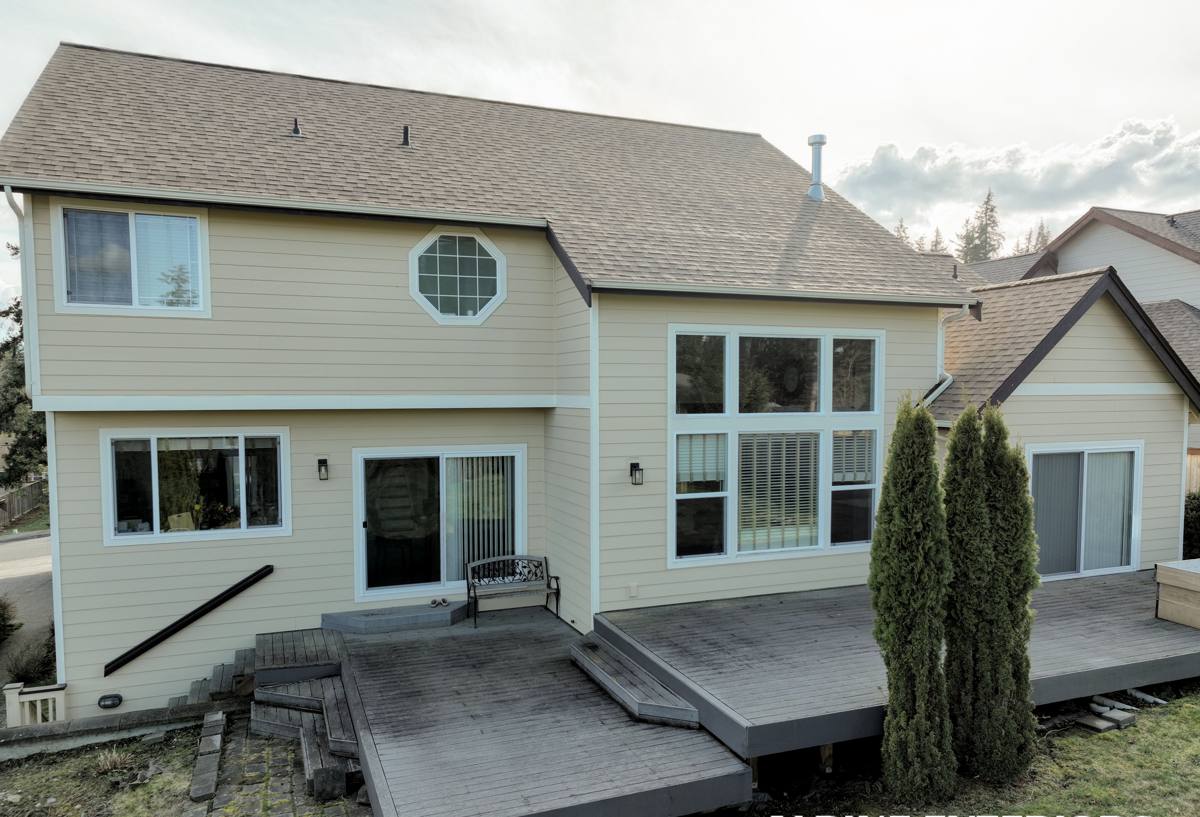
What Blaine's Climate Does to an Ordinary Deck
Salt Air and Corrosion
Proximity to saltwater accelerates corrosion on any exposed metal — fasteners, joist hangers, railing brackets, and structural connectors. Standard hot-dip galvanized hardware can hold up reasonably well inland, but within a mile or two of the water it corrodes noticeably faster. Once a fastener starts rusting, it weakens the connection it's holding, and that's not something you can see until the deck starts flexing or a board works loose.
Driving Rain and Wind-Driven Moisture
Blaine gets weather that comes in sideways off the water. Driving rain doesn't just fall on a deck surface — it gets pushed under railings, into ledger connections, and against the house band board where the deck attaches. Without proper flashing and a drainage gap at that connection, water gets trapped against the house structure, which is one of the most common causes of hidden rot behind a deck.
Moss and Prolonged Dampness
Whatcom County's moss season is long, and Blaine's marine humidity keeps deck surfaces damp longer than drier parts of the county. Moss on a walking surface isn't just unattractive — it holds moisture against the wood or composite decking, and on wood surfaces it becomes genuinely slippery, which is a real safety issue on stairs and near entry points.
What a Correctly Built Deck Needs Here
A deck that's going to last in Blaine's environment needs a handful of things done right from the ground up. None of this is exotic — it's about not skipping steps that matter more here than they would somewhere drier and further from the coast.
- Stainless steel or heavy-duty coated fasteners and structural hardware, not standard-grade galvanized, anywhere within reach of salt spray
- Proper ledger board flashing with a drainage gap between the deck frame and the house, so wind-driven rain can't sit against the structure
- Footings set below frost depth and sized for the soil conditions on the specific lot, since Blaine's soil can vary from sandy near the shoreline to heavier clay further inland
- Joist spacing and blocking that account for the actual decking material chosen, since composite and wood have different span requirements
- A surface material and finish that resists moss growth or that can be cleaned and treated without excessive maintenance
- Railing posts through-bolted to the frame, not just lag-screwed into rim joists, for wind and structural load
- Gaps and airflow underneath the deck so the substructure can dry out between rain events instead of staying perpetually damp
Choosing Decking Material for a Coastal Whatcom County Lot
Material choice matters more in Blaine than it does further inland, mainly because of the combined effect of salt air and sustained moisture. There isn't one universally correct answer — it depends on budget, how the homeowner wants to maintain the deck long-term, and how close the lot sits to the water.
| Material | How It Handles Blaine's Climate | Maintenance Reality |
|---|---|---|
| Pressure-treated wood | Affordable and structurally solid, but needs sealing and cleaning more often in salt air and moss conditions | Annual cleaning, resealing every 2-3 years |
| Cedar | Naturally more rot-resistant, ages well visually, but still needs periodic finish maintenance in a wet marine climate | Cleaning and oiling or sealing every 1-2 years |
| Composite decking | Resists moisture absorption and rot well; some boards resist moss and algae better than others | Periodic washing, no sealing or staining needed |
| PVC/capped composite | Best moisture resistance of the common options, holds up well against salt exposure | Lowest maintenance, higher upfront cost |
We'll talk through these trade-offs honestly based on the specific site — a shaded, moss-prone lot near the water calls for a different recommendation than a sunnier lot set back from the shoreline.
Our Deck Building Process for Blaine Homes
1. Site Visit and Assessment
We look at sun exposure, drainage patterns, proximity to salt air, existing structure (if we're replacing or extending a deck), and any moss or moisture issues already present on the property. This is also where we check what the deck will attach to and whether the existing band board or foundation needs any attention first.
2. Design and Material Selection
We talk through layout, railing style, and decking material with the homeowner's budget and maintenance preferences in mind, factoring in how exposed the specific lot is to wind and salt spray.
3. Permitting
Deck construction in Whatcom County and within Blaine's city limits typically requires a building permit, especially for decks above a certain height or attached to the primary structure. We handle this as part of the project so the work is inspected and up to code.
4. Foundation and Framing
Footings are set to proper depth, ledger flashing is installed correctly at the house connection, and the frame is built with corrosion-resistant hardware sized for the load and span.
5. Decking, Railing, and Finish Work
Boards are installed with proper spacing for drainage and material expansion, railings are secured to the frame (not just the surface decking), and any finish or sealant is applied according to the material manufacturer's specifications.
6. Walkthrough
We go over the finished deck with the homeowner, including any maintenance recommendations specific to their material choice and the property's exposure to salt air and moisture.
Repair, Rebuild, or Replace?
Not every deck problem in Blaine means starting over. If the framing and footings are sound but the surface has failed, rebuilding the decking and railings on a solid existing structure is often the right call. If corrosion has compromised the fasteners or the ledger connection has been letting water into the house band board, a full rebuild is usually the more honest recommendation, even if it costs more upfront — patching structural corrosion issues tends to fail again within a season or two.
Signs a Deck Needs More Than a Surface Fix
- Rust staining around fastener heads or visible corrosion on joist hangers
- Soft or spongy spots near the house connection or around post bases
- Railings that flex or wiggle when pushed
- Persistent moss or dark staining that returns quickly after cleaning
- Gaps or separation where the deck meets the house siding or trim
Maintenance That Actually Matters Near the Water
Whatever material a Blaine deck is built with, a few maintenance habits make a real difference given the local climate. Clearing debris from between boards keeps moisture from sitting and feeding moss growth. An annual or twice-yearly wash — even just a stiff brush and mild cleaner — keeps moss from getting established on wood surfaces. Checking railing connections once a year for looseness catches problems while they're still a quick fix. And keeping gutters and downspouts clear near the deck area prevents extra water from being dumped directly onto or under the structure during Whatcom County's wetter months.
Why Hire a Crew That Already Works in Blaine
Building a deck that holds up here isn't about following a generic national build spec — it's about knowing which details matter more in a marine climate with a long wet season. A crew that already works Blaine and the surrounding Whatcom County coastline knows which fastener grades actually hold up, how the local permitting process runs, and where moisture tends to collect on lots near the shoreline. That local familiarity shows up in decks that don't need major repairs three or four years in.
If you're planning a new deck, a rebuild, or want an honest read on whether your current deck's problems are cosmetic or structural, we're happy to take a look. Reach out for a free, no-pressure estimate using the form below.