 Whatcom County
 Composite Decking Built for Edgemoor's Waterfront Climate
Edgemoor sits close to the water, on bluffs and slopes that catch weather straight off Bellingham Bay. That means salt-laden air, driving rain that comes in sideways more often than straight down, and a long stretch of the year — roughly October through April — when moss, algae, and standing moisture are working on every horizontal surface around the house. A deck in this neighborhood isn't just outdoor furniture space. It's a structure that has to shed water fast, resist corrosion, and stay slip-safe through a wet Whatcom County winter. Composite decking, installed correctly, handles that job better than most alternatives — but "installed correctly" is doing a lot of work in that sentence, and it's where a lot of decks in this area fall short.
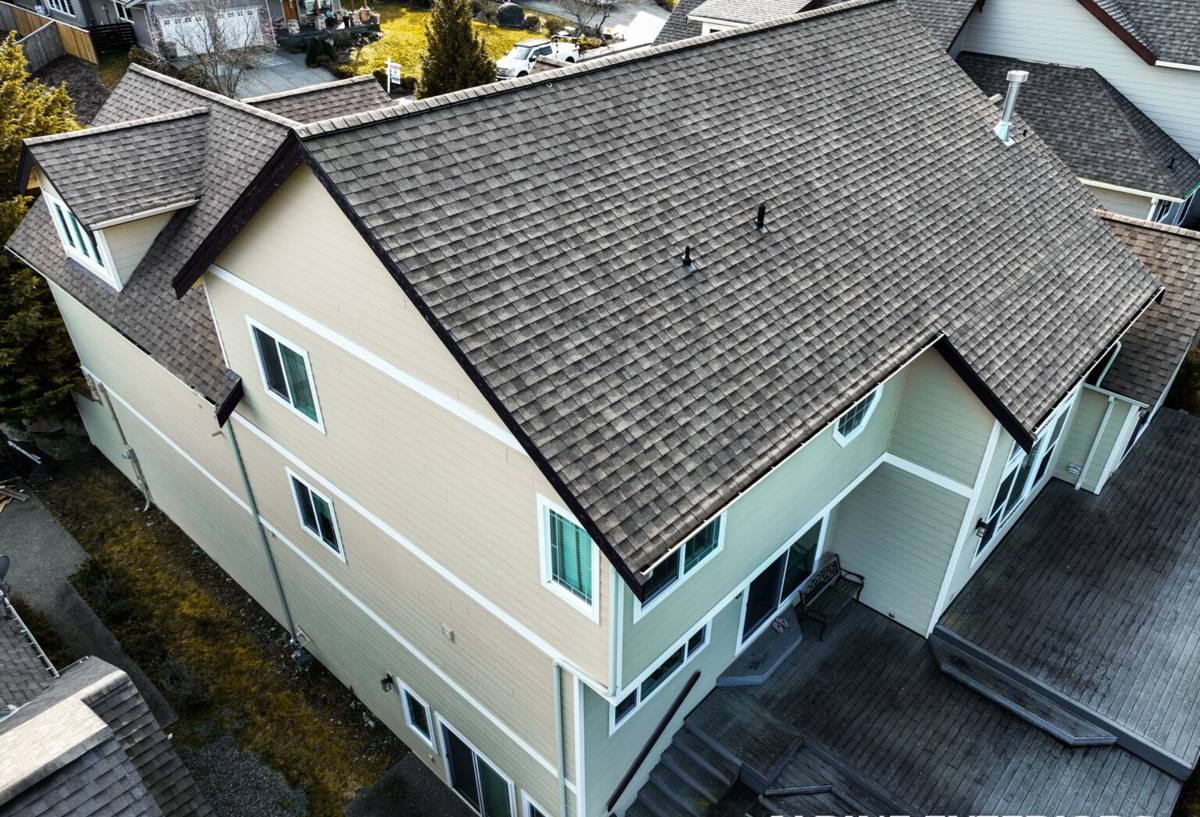
What Salt Air, Rain, and Moss Season Actually Do to a Deck
Homeowners often assume the deck boards themselves are the weak point. In our experience, the real damage usually starts underneath or at the connection points, not on the walking surface.
Salt Air
Airborne salt from the bay accelerates corrosion on anything metal — fasteners, joist hangers, hidden clips, railing hardware. Standard zinc-coated screws that would last for years inland can start rusting and staining boards within a couple of seasons this close to the water. Once a fastener corrodes, it loses grip strength long before it looks obviously bad, which is why hardware grade matters more here than it does a few miles inland.
Driving Rain
Wind-driven rain gets pushed under deck boards, into ledger connections, and behind fascia in ways that vertical-only rain doesn't. Any gap in flashing at the house connection becomes an entry point for water into the rim joist and framing behind it — a slow, hidden rot problem that can go unnoticed for years because the composite surface above it still looks fine.
Moss and Algae
Whatcom County's damp, shaded shoulder seasons are ideal moss and algae conditions, especially on decks with tree cover or limited sun exposure. Moss holds moisture against the board surface and turns a deck slick fast. It also tends to find the same weak spots repeatedly — poor drainage, tight board gapping, and low-ventilation areas under the deck.
Composite Decking Basics: What You're Actually Buying
"Composite decking" covers a range of products, and the differences matter more in a coastal climate than in a dry one.
- Capped composite — a composite core (wood fiber and plastic) wrapped in a protective polymer shell on all sides. This is what we recommend for Edgemoor properties; the cap resists moisture absorption, staining, and fading far better than older, uncapped boards.
- Uncapped composite — older-generation material without the protective shell. It's more prone to moisture uptake, surface mold, and fading over time. We generally steer clients away from this for waterfront or high-moisture lots.
- PVC decking — fully synthetic, no wood content, the most moisture-resistant option and the least prone to mold or moss adhesion. It costs more up front and has a different look and feel underfoot than wood-fiber composites.
None of these are "set it and forget it" forever — even the best capped composite still needs periodic cleaning to stay ahead of moss and pollen film. But the difference in how much maintenance a board needs, and how it ages over a decade of this climate, is real and worth understanding before you pick a product on price alone.
What a Correct Installation Involves
Composite boards are only as good as what's underneath them. Most of the deck failures and callbacks we see in this area trace back to substructure or fastening shortcuts, not the decking material itself.
Substructure and Framing
Pressure-treated joists rated for ground contact where relevant, joist spacing tightened up (often 12" on-center for angled board patterns or picture-frame borders, versus the standard 16"), and proper blocking at board ends. In a wet climate, we also pay close attention to keeping the framing ventilated underneath — trapped moisture under a deck with poor airflow is a moss and rot accelerant.
Ledger Flashing
Where a deck attaches to the house, correct flashing — not caulk alone — is what keeps driving rain out of the rim joist. This is one of the most commonly skipped steps on older or budget deck builds, and it's the single biggest hidden-rot risk on an attached deck in this climate.
Fastener and Hardware Grade
Stainless steel or marine-rated coated fasteners and hangers for anything within reach of salt air. It costs more than standard hardware, but replacing corroded connectors under a finished deck later means tearing the deck apart — far more expensive than specifying the right hardware once.
Drainage and Grading
Board spacing and a slight slope away from the house so water sheets off rather than pooling. On sloped Edgemoor lots this also means thinking about where deck runoff goes once it leaves the structure, so it isn't just redirected toward a foundation or a neighbor's property line.
Composite vs. Wood vs. PVC: How They Hold Up Here
| Factor | Wood | Capped Composite | PVC |
|---|---|---|---|
| Moisture / rot resistance | Low — needs regular sealing | High | Highest |
| Moss / algae resistance | Low, especially in shade | Moderate-high, needs periodic cleaning | High |
| Salt air / hardware corrosion risk | Depends entirely on fastener choice | Low if correct hardware used | Low if correct hardware used |
| Upfront cost | Lowest | Mid | Highest |
| Annual maintenance | Sanding, staining, sealing | Wash/scrub 1-2x per year | Wash 1-2x per year |
| Typical lifespan (coastal WA conditions) | 10-15 years with upkeep | 25-30+ years | 25-30+ years |
Wood can still be the right call for a homeowner who wants that specific look and is willing to keep up with annual sealing. But for most Edgemoor properties dealing with year-round moisture exposure, the reduced maintenance burden of composite is what actually drives the decision — not just the upfront price tag.
How Our Process Works
- On-site assessment — we look at existing framing (if replacing an old deck), sun/shade exposure, drainage path, and how exposed the site is to wind and salt air off the bay.
- Structural check — ledger condition, footing adequacy, and whether the existing substructure can be reused or needs to be rebuilt.
- Product selection — we walk through capped composite and PVC options based on your budget, sun exposure, and how much upkeep you want to do.
- Permitting — Whatcom County and City of Bellingham both have permit requirements that can apply depending on deck height, attachment to the structure, and size. We handle that process rather than leaving it on the homeowner.
- Build — framing/substructure work first, then flashing, then decking, railing, and stairs.
- Walkthrough — we go over basic seasonal care before we consider the job finished.
Maintaining a Composite Deck Through Moss Season
Composite decking cuts down maintenance dramatically compared to wood, but "low-maintenance" isn't "no-maintenance" in this climate. A short seasonal routine keeps a deck looking and performing the way it should for decades:
- Sweep debris (leaves, needles, pollen) off the deck regularly in fall — trapped organic matter is what feeds moss growth.
- Wash the surface with a soft-bristle brush and mild soap/water once or twice a year, more often in shaded or low-airflow areas.
- Keep gutters and downspouts near the deck clear so runoff isn't dumping extra water onto the deck surface.
- Check board gaps and drainage points each fall before the heavy rains start — clogged gaps hold water and speed up algae growth.
- Inspect railing posts and stair connections annually for any looseness, which can signal hardware corrosion underneath.
- Avoid pressure washing on high settings directly at board seams — it can force water into places it shouldn't go.
Cost Factors on an Edgemoor Deck Project
Every deck is different, and we'll always give you a firm number after seeing the site, but the main variables that move the price are consistent:
| Factor | Why it matters |
|---|---|
| Deck size and shape | Square footage plus any angles, curves, or picture-framing that add cut waste and labor |
| Height off grade | Taller decks need more substructure, railing, and often stairs |
| Existing substructure condition | Reusable framing costs far less than a full tear-out and rebuild |
| Product tier | Entry-level capped composite vs. premium composite vs. PVC |
| Railing and stair complexity | Cable, composite baluster, or custom railing styles all price differently |
| Site access | Sloped or waterfront-adjacent lots can add labor time for material staging |
Why It Matters to Hire a Crew That Already Works Edgemoor
A lot of general contractors treat every deck the same regardless of where it sits. That works fine in a dry, inland yard. It doesn't work as well on a bluff-side or waterfront lot in Whatcom County, where salt exposure, wind-driven rain, and drainage on sloped terrain all need to be accounted for in the framing and fastener choices before the first board goes down. A crew that regularly builds and repairs decks in this specific neighborhood already knows which hardware grade actually holds up here, how local permitting works, and where water tends to collect on these lots. That local pattern recognition is the difference between a deck that needs attention again in five years and one that's still solid in twenty-five.
If you're planning a new deck or replacing an aging one in Edgemoor, we're happy to take a look and give you a straightforward, no-pressure estimate — just fill out the form below and we'll get back to you.