 Whatcom County
New Roof Installation for Edgemoor Homes
Edgemoor sits close enough to the water that its homes take a different kind of weather beating than houses further inland in Whatcom County. Salt-laden air off Bellingham Bay, driving rain that comes in sideways during fall and winter storms, and a moss season that can run eight or nine months out of the year all work against a roof at the same time. A roof that would hold up fine in a drier, inland climate can fail early here if it wasn't chosen and installed with these specific conditions in mind. This page walks through what a correct new roof installation looks like for an Edgemoor property, and why the details matter more here than they would somewhere with a milder climate.
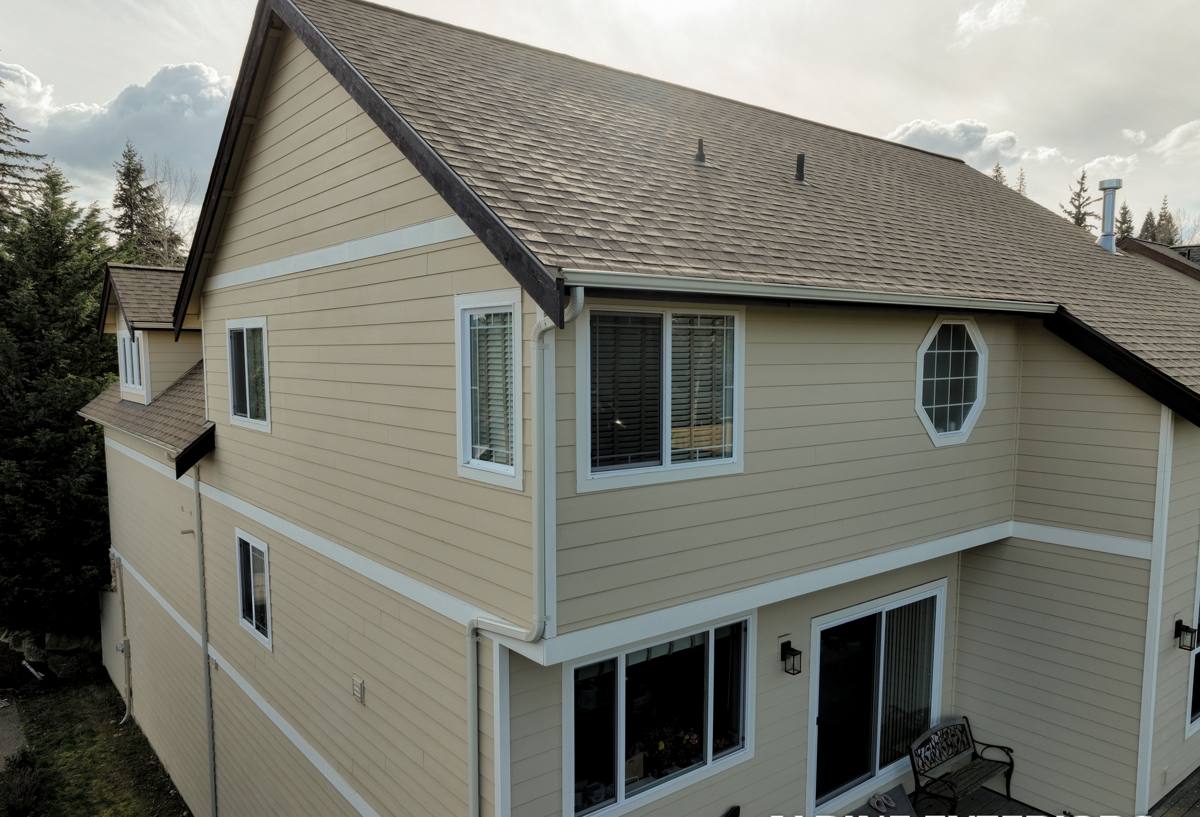
What Edgemoor's Climate Actually Does to a Roof
It's worth being specific about the mechanisms at work, because they change what "good roofing" means in this neighborhood.
Salt Air
Homes closer to the water are exposed to airborne salt that settles on roofing materials and accelerates corrosion of exposed metal — flashing, fasteners, vent caps, and any exposed hardware. Over years, cheap or uncoated metal components corrode faster near the water than they would even a few miles inland. This is one of the clearest reasons material selection and hardware quality matter more in Edgemoor than in a landlocked part of the county.
Driving Rain
Whatcom County storms often bring rain at an angle rather than straight down, especially with wind off the water. Wind-driven rain finds weaknesses that vertical rain never would: it pushes up under shingle tabs, works into poorly sealed flashing, and tests every penetration point — vent stacks, chimneys, skylights — far harder than a calm rain does. A roof system built for wind-driven rain needs proper underlayment, correctly lapped flashing, and shingles rated and fastened for wind exposure.
Extended Moss Season
The Pacific Northwest's damp, mild climate gives moss and algae a long growing window, and north-facing or shaded roof sections in Edgemoor's tree-covered lots are especially prone to it. Moss isn't just cosmetic — as it establishes itself, it lifts shingle edges, holds moisture against the roof deck, and shortens the life of the roofing material underneath it. A roof installed without moss-resistant strategy in mind will need more aggressive maintenance and will age faster on its shaded slopes.
What a Correct New Roof Installation Involves
A new roof is more than swapping old shingles for new ones. Done right, it's a layered system where each component depends on the one below it being installed correctly.
Tear-Off and Deck Inspection
Before anything new goes on, the old roofing comes off down to the deck. This is the only point where the crew can actually see the plywood or OSB sheathing underneath. In a wet climate, hidden deck damage from long-term moisture intrusion is common, especially around old flashing points and roof penetrations. Any soft, delaminated, or rotted sheathing needs to be replaced before installation continues — skipping this step to save time or money is one of the most common ways a "new roof" fails early.
Underlayment
The underlayment is the roof's backup waterproofing layer, and in an area with driving rain it deserves real attention rather than being treated as a formality. Synthetic underlayments generally outperform old-style felt in wind and moisture resistance. Ice-and-water shield membrane at eaves, valleys, and penetrations adds a self-sealing layer exactly where wind-driven rain is most likely to intrude.
Flashing
Flashing directs water away from the vulnerable transition points on a roof: chimneys, skylights, sidewalls, valleys, and vent penetrations. In a salt-air environment, the metal used for flashing and the fasteners that hold it matter — corrosion-resistant materials hold up longer than standard galvanized components. Flashing that's improperly lapped or sealed is one of the single most common sources of roof leaks, and it's a detail that's easy to rush and hard to inspect once the roof is finished.
Roofing Material and Ventilation
The visible roofing material is the last layer, and it needs to be matched to the wind and moisture conditions of the site, correctly fastened per manufacturer specification, and paired with proper attic ventilation. Ventilation matters as much as the shingles themselves in a damp climate — a poorly ventilated attic traps moisture, which shortens the life of the roof deck and roofing material from underneath, regardless of what's installed on top.
Choosing Materials for Edgemoor's Conditions
There's no single "best" roofing material for every home — the right choice depends on the home's exposure, roof pitch, budget, and how much moss and moisture resistance matters for that particular lot. Here's an honest comparison of the options most commonly considered for this area.
| Material | Moss/Moisture Behavior | Salt Air Durability | Maintenance | Typical Lifespan |
|---|---|---|---|---|
| Architectural Asphalt Shingle | Good with algae-resistant granules; needs periodic moss removal on shaded slopes | Good when fasteners/flashing are corrosion-resistant | Low to moderate | 25-30 years |
| Metal Roofing | Excellent — moss struggles to establish on metal | Requires coated/marine-grade fasteners and panels near the water | Low | 40-50+ years |
| Cedar Shake | Poor without diligent upkeep — moisture-retentive by nature | Moderate; needs regular treatment | High | 20-30 years with upkeep |
| Composite/Synthetic Shingle | Good, engineered for moisture resistance | Good | Low | 30-50 years (varies by product) |
We're honest with Edgemoor homeowners about trade-offs rather than pushing one product. Cedar shake, for example, has real aesthetic appeal that fits a lot of homes in this area, but it demands more consistent maintenance in a climate this damp — we'll tell you that upfront rather than let you find out after installation. Architectural asphalt with algae-resistant granules remains the most common choice for good reason: it balances cost, appearance, and performance well for this climate when installed correctly.
Cost Factors Specific to This Area
Every roof quote should reflect the specific conditions of the home, not just square footage. Factors that tend to move the estimate for Edgemoor properties include:
| Factor | Why It Affects Cost |
|---|---|
| Roof pitch and access | Steeper roofs and tree-crowded lots slow work and require more safety setup |
| Deck condition | Hidden moisture damage found during tear-off requires sheathing replacement |
| Number of penetrations | Each chimney, skylight, or vent stack adds flashing labor and material |
| Material choice | Metal and composite products cost more upfront than standard asphalt |
| Ventilation upgrades | Older homes often need added intake or exhaust venting brought up to standard |
| Corrosion-resistant hardware | Marine-grade fasteners and flashing cost more but pay off in a salt-air setting |
We'd rather walk a roof in person and give a number based on what we actually find than quote a flat rate over the phone that doesn't account for these variables.
Our Process for an Edgemoor Roof Installation
- On-site inspection. We walk the roof, check the attic for ventilation and moisture signs, and look at how the home is exposed to wind and water.
- Written estimate. A clear breakdown of material, labor, and any deck or ventilation work anticipated — no vague allowances.
- Tear-off and deck check. Old roofing comes off, sheathing is inspected, and any damaged sections are replaced before moving forward.
- Underlayment and flashing. Synthetic underlayment and ice-and-water membrane go down first, followed by properly lapped, corrosion-resistant flashing at every penetration.
- Roofing installation. Material is installed to manufacturer spec, with attention to fastener pattern and wind exposure.
- Ventilation check. Intake and exhaust venting is verified or upgraded so moisture doesn't get trapped in the attic.
- Final walkthrough. We go over the finished roof with you, including what routine moss maintenance should look like going forward.
Why a Crew That Already Works Edgemoor Matters
A roofing crew that regularly works Whatcom County properties near the water already knows which slopes tend to hold moss, which flashing details tend to fail first in wind-driven rain, and which fasteners actually hold up instead of streaking or corroding within a few years. That local pattern recognition shows up in small decisions throughout the job — where to add extra ice-and-water membrane, which hardware to spec, how to sequence the tear-off around our unpredictable rain windows — that a crew unfamiliar with this specific coastal climate might not think to make.
What to Ask Before Hiring Anyone for This Job
- Will you replace any damaged sheathing found during tear-off, and how is that priced?
- What underlayment and ice-and-water shield are you using, and where will it be placed?
- Are the flashing and fasteners corrosion-resistant for a coastal/salt-air environment?
- How will you handle attic ventilation as part of the job, not as an afterthought?
- What's the manufacturer's warranty, and what's your own labor warranty?
- Do you have current licensing and insurance you can provide in writing?
- How do you sequence work around Whatcom County's rain patterns to protect an open roof?
Maintaining a New Roof in This Climate
Even a correctly installed roof benefits from periodic attention in a climate like this. Keeping gutters clear so water isn't backing up under the roof edge, having moss treated or removed from shaded slopes before it takes hold, and having penetrations and flashing points checked every few years catches small issues before they become leaks. None of this replaces a correct installation — it just protects the investment once it's done right.
If your Edgemoor home needs a new roof, we're happy to take a look and walk you through what your specific property needs — no pressure, no upsell, just a straight assessment and a free estimate.