 Whatcom County
Board & Batten Siding in Everson: Built for the Nooksack Valley
Everson sits in the Nooksack River valley, surrounded by farmland, tree cover, and the kind of damp, marine-influenced weather that defines Whatcom County. Board and batten siding has real appeal here — it's a look that suits the area's mix of older farmhouses, newer infill homes, and outbuildings, with clean vertical lines and a texture that reads well against a rural backdrop. But board and batten is also one of the least forgiving siding profiles when it's installed wrong, and Whatcom County's climate finds every weak spot fast.
This page covers what board and batten siding actually needs to hold up on an Everson home, what correct installation looks like, and why the crew installing it matters as much as the material itself.
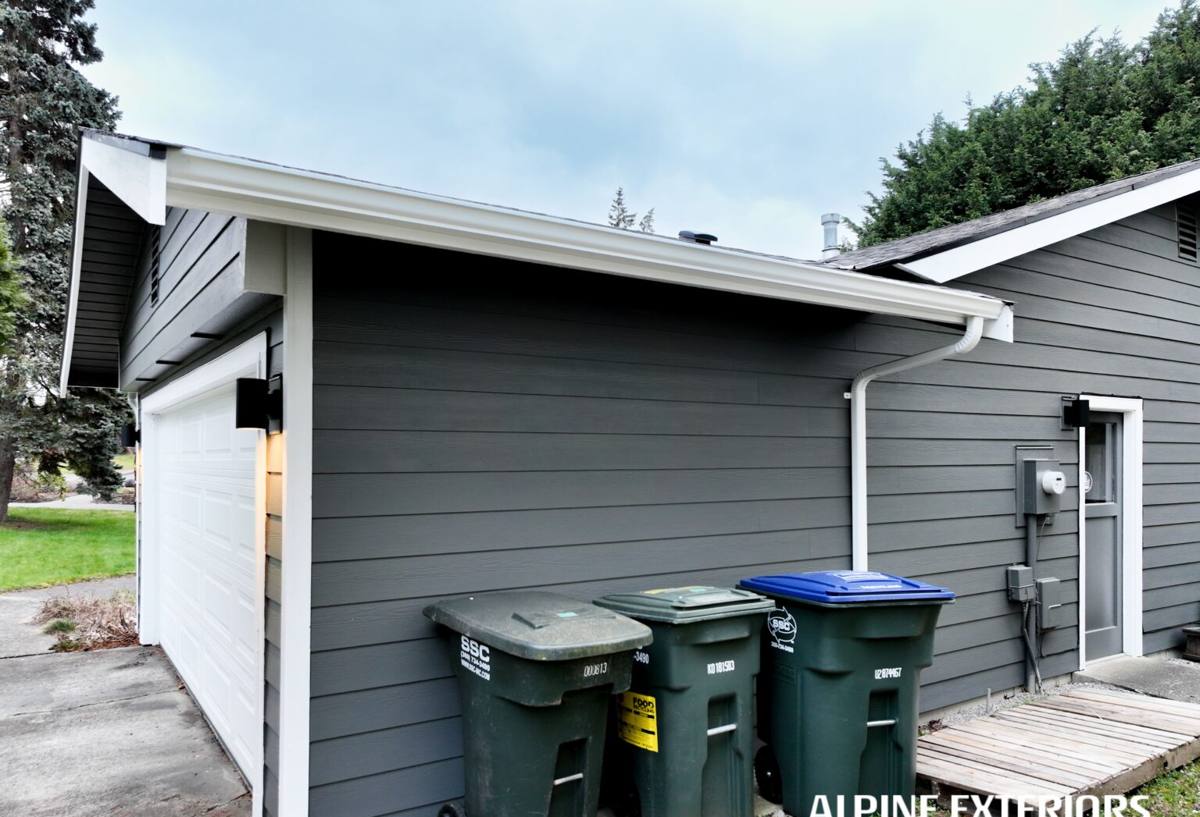
What Whatcom County's Climate Does to Board & Batten Siding
Board and batten relies on vertical battens covering the seams between wider panels or boards. That design creates more vertical joints and more fastener penetrations than lap siding — which means more places for water to find a way in if the details aren't right. In a climate like ours, that matters more than it would somewhere dry.
Rain, moisture, and moss
Whatcom County sees a long stretch of the year with sustained rain and low sun angles, and Everson's river valley setting adds extra humidity that lingers on north-facing walls and shaded elevations. That combination is exactly what moss and algae need to take hold. On any siding product, moss growth traps moisture against the surface longer than it should sit there — and on products that aren't fully moisture-stable, that constant damp cycle is what eventually causes swelling, soft spots, and paint failure at the seams.
Driving rain and wind-driven exposure
Storms coming off the Sound and driving rain events push water sideways into wall assemblies, not just straight down. Board and batten's vertical battens can actually help shed water well when they're installed with the right overlap and gap — but only if the batten spacing, fastening, and flashing underneath are done to spec. Get those details wrong and the same profile that looks great becomes a wick for water instead of a shield against it.
Salt air across the region
Whatcom County's proximity to Puget Sound and the Strait of Georgia means salt-laden air is part of the region's exterior wear pattern, accelerating corrosion on fasteners, trim, and metal flashing over time. Everson is far enough inland that this is a lighter factor than it is on a waterfront property, but it's still part of why we spec corrosion-resistant fasteners and flashing on every board and batten job in this area, not just the ones closest to the water.
What a Correct Board & Batten Installation Actually Involves
Board and batten looks simple from the street, but the assembly behind it is where the job is won or lost. A correct installation on a home in this climate includes:
Water-resistive barrier and drainage plane
Everything starts underneath the siding, not at the siding itself. A properly lapped weather-resistive barrier, correctly integrated flashing at windows, doors, and penetrations, and a drainage gap behind the panel give any water that does get past the surface a way out instead of a place to sit.
Furring strips for a rainscreen gap
On board and batten specifically, installing over vertical furring strips creates a ventilated air gap behind the siding. That gap lets moisture that reaches the back side of the panel dry out instead of staying trapped against the sheathing — a meaningful difference in a climate where walls rarely get a long dry stretch.
Batten spacing and fastening
Battens need consistent spacing, correct overlap onto the panel joint, and fasteners driven at the manufacturer's specified pattern and depth — not just "close enough." Overdriven or underdriven fasteners are one of the most common causes of early siding failure, and it's a detail that's invisible once the job is finished, which is exactly why it matters who's doing the work.
Trim, flashing, and joint treatment
Every horizontal joint, window head, and outside corner needs flashing or trim detailing that sheds water outward rather than letting it track behind the siding. On a board and batten install this includes proper kick-out flashing at rooflines and correct caulking only where the manufacturer specifies it — not as a substitute for flashing that was left out.
Why We Install James Hardie Board & Batten — and Not the Alternatives
We install James Hardie fiber cement exclusively, including their board and batten profiles (HardiePanel vertical siding with HardieTrim battens). We don't install vinyl, LP SmartSide, Cemplank, Allura, or unfinished wood siding, and in a climate like Whatcom County's, the reasoning holds up on inspection, not just on paper.
| Material | How it handles this climate | Why it's not our choice |
|---|---|---|
| James Hardie fiber cement | Non-combustible, dimensionally stable in wet-dry cycles, factory ColorPlus finish resists moisture and UV | Our standard — no trade-off list needed |
| Vinyl board and batten | Won't rot, but expands/contracts with temperature swings and can warp or bow over time | Seams and battens can separate; thinner profile shows on a textured application like board and batten |
| LP SmartSide (engineered wood) | Treated to resist moisture, reasonable cost | Wood-based core is still more vulnerable to sustained damp exposure and edge swelling than fiber cement |
| Cedar / primed spruce | Natural, classic look for board and batten | Needs ongoing refinishing, and constant moss-season moisture accelerates rot at battens and joints |
James Hardie's fiber cement doesn't expand and contract the way wood or vinyl does, it's manufactured to survive freeze-thaw and wet-dry cycling, and the factory-applied ColorPlus finish holds its color and seals its edges better than a job-site paint job ever will. For a profile like board and batten, where there are more seams and more fastener points than lap siding, that stability matters even more.
Our Process for a Board & Batten Job in Everson
| Step | What happens |
|---|---|
| Free on-site estimate | We walk the home, check the current siding and sheathing condition, and talk through what board and batten will look like on your specific elevations |
| Moisture and substrate check | We look for existing rot, soft sheathing, or trapped moisture before pricing the job — this is where hidden problems get caught early, not after demo |
| Written scope and product selection | Panel and batten sizing, trim details, and James Hardie color/finish selection, laid out in writing before work starts |
| Removal and prep | Old siding comes off, sheathing is inspected and repaired as needed, and the weather-resistive barrier and flashing are installed correctly the first time |
| Installation to manufacturer spec | Furring strips, panels, battens, and trim installed per James Hardie's fastening and clearance requirements |
| Final walkthrough | We review the finished work with you before calling the job done |
Signs Your Current Siding Is Ready to Be Replaced
- Moss or algae that keeps returning within a season or two of cleaning
- Soft or spongy spots when you press on siding near the bottom edge or around windows
- Visible warping, bowing, or gaps opening up between boards or battens
- Paint that's peeling, bubbling, or failing faster than a normal repaint cycle
- Water staining on interior walls near exterior corners after heavy rain
- Fasteners visibly popping or rust streaking down from nail heads
Why a Crew That Already Works Everson Matters
Board and batten siding is unforgiving of shortcuts, and a lot of the details that make it fail or succeed — furring strip spacing, flashing integration, fastener schedule — aren't things a homeowner can verify by looking at the finished wall. Hiring a crew that already works Whatcom County means we're used to sequencing jobs around this region's rain windows, we know what moss and moisture damage on a wall assembly around here actually looks like when we open it up, and we're not learning the local permitting and inspection process on your project. That familiarity translates directly into fewer surprises and a job done right the first time.
Maintenance and Long-Term Care
Once James Hardie board and batten is installed correctly, upkeep in this climate is straightforward: periodic gentle washing to keep moss from establishing on shaded or north-facing walls, checking caulking at trim joints every year or two, and keeping gutters and downspouts clear so water isn't dumping directly onto a wall section. That's meaningfully less maintenance than repainting cycles on wood, and it avoids the warping and seam issues that show up on vinyl and engineered wood board and batten over time.
If your Everson home's siding is showing moss, soft spots, or failing paint — or you're planning new board and batten siding and want it done to hold up through another Whatcom County winter — we're happy to walk the property and give you a straight, no-pressure estimate. Use the form below to get started.