 Whatcom County
Composite Decking Built for How Everson Actually Weathers
Everson sits in the part of Whatcom County where the Nooksack lowlands stay damp for most of the year. Between the driving rain off the Sound, the humidity that never fully burns off in winter, and a moss season that can run from October well into spring, an outdoor deck here takes a beating that decks in drier parts of the state simply don't face. Composite decking has become the default recommendation for homeowners in this area for a reason: it doesn't absorb water the way wood does, it doesn't need refinishing every couple of years, and it resists the moss and algae growth that turns a wood deck green and slick by January.
This page is specifically about composite decking for homes in and around Everson — not a general decking overview. If you're weighing whether composite is the right call for your property, or you already know you want composite and want to understand what a correct installation looks like in this climate, this is written for you.
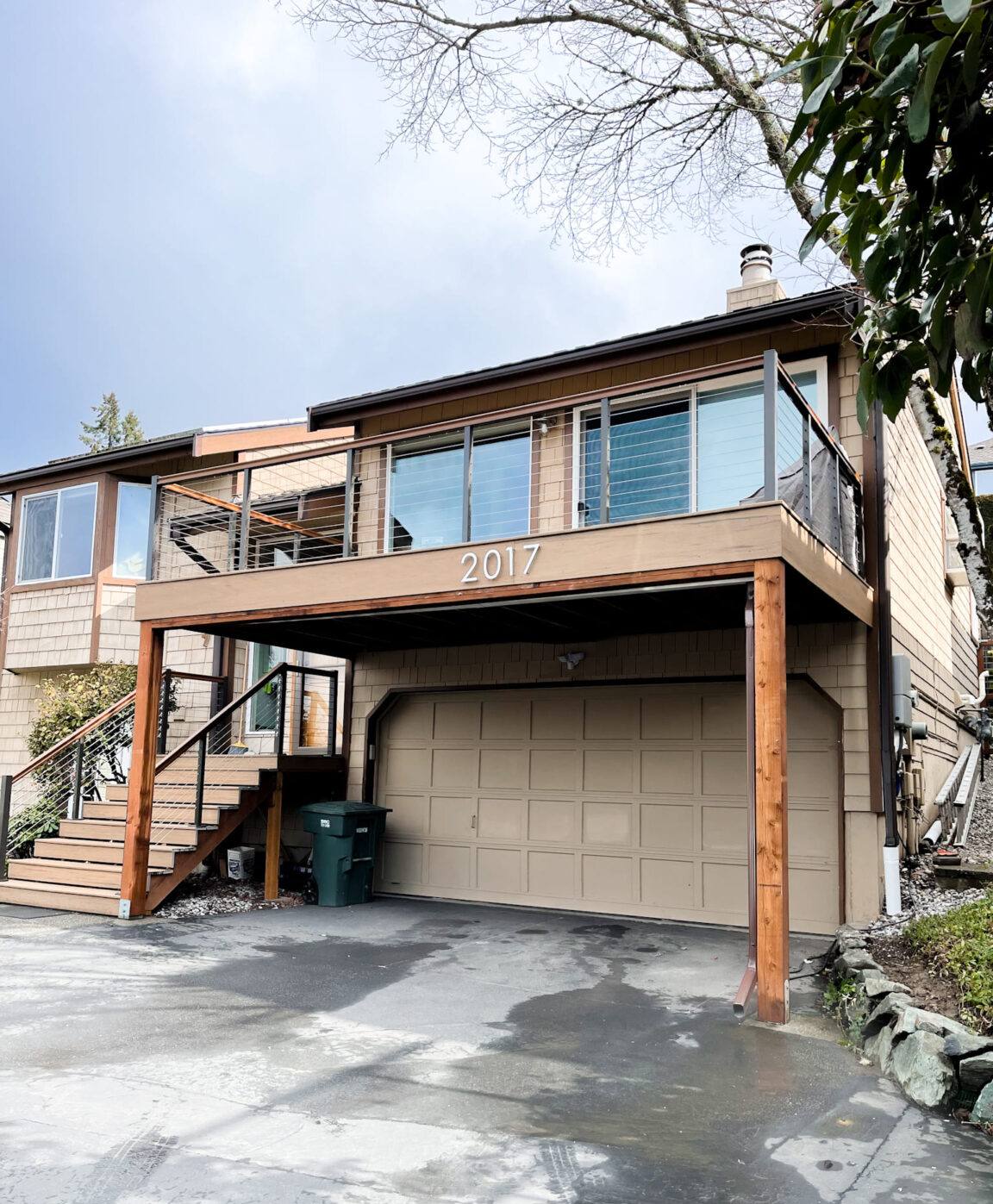
What Whatcom County's Climate Actually Does to a Deck
Before talking about materials, it helps to understand what a deck in this area is up against, because it changes how the job should be built, not just what it's built out of.
Moisture That Doesn't Let Up
Whatcom County gets long stretches of steady, driving rain rather than short heavy downpours. That means wood surfaces stay saturated for days at a time instead of drying between storms. Any decking material that absorbs water — or any substructure that traps it — is going to rot, cup, or grow mold faster here than it would in a drier climate.
A Long Moss and Algae Season
Shaded decks, north-facing decks, and decks under tree cover deal with moss and algae for a large part of the year in this part of the county. On wood, that means regular pressure washing and re-staining just to keep the surface from becoming a slip hazard. On decking material with any texture or porosity, organic growth gets a foothold and is hard to fully remove.
Marine-Influenced Air
Even this far inland, Whatcom County sits close enough to the Sound that the air carries more salt and moisture than you'd find further east. That affects fastener choice, flashing material, and how quickly untreated metal corrodes — details that matter more here than in an arid climate.
Freeze-Thaw Cycling
Winters here aren't brutally cold, but they do bring repeated freeze-thaw swings. Water that gets into a board, a fastener hole, or a ledger connection and then freezes will expand and work a structure loose over a few seasons if it isn't detailed correctly the first time.
Composite vs. Wood vs. PVC: How They Actually Hold Up Here
There's no universally "best" decking material — there's a best material for this climate and this budget. Here's how the common options compare for a property in Everson specifically.
| Material | Moisture Behavior Here | Moss/Algae Resistance | Maintenance | Typical Lifespan |
|---|---|---|---|---|
| Pressure-treated wood | Absorbs water readily; prone to cupping and splintering in our rain | Low — needs regular cleaning and re-staining | Annual cleaning, refinishing every 2-3 years | 10-15 years with upkeep |
| Cedar | Better natural resistance than pine, still absorbs moisture over time | Moderate, still greens without upkeep | Regular staining/sealing | 15-20 years with diligent care |
| Uncapped composite | Some moisture absorption at cut edges and surface | Better than wood, can still stain in constant shade | Occasional washing | 20-25 years |
| Capped composite | Fully sealed outer shell resists water intrusion | High — surface sheds organic growth much easier | Occasional washing, no staining/sealing ever | 25-30+ years, most carry long warranties |
| PVC decking | Essentially waterproof | High | Lowest of all options | 25-30+ years |
For most Everson homes, capped composite is the sweet spot between upfront cost and how little attention it demands in a climate like ours. PVC is fully synthetic and performs similarly on moisture, but tends to look and feel less like traditional decking and costs more.
What a Correct Composite Deck Installation Actually Involves
Composite boards themselves are low-maintenance, but the deck underneath them still has to be built right — and this is where a lot of the long-term problems on composite decks actually start. The board isn't the weak point; the substructure and detailing are.
Substructure and Ventilation
Composite boards are heavier than wood and behave differently under load and temperature swings, so joist spacing needs to match the manufacturer's specification for the specific board profile — not just standard wood-deck spacing. Ground-level and low-clearance decks need enough airflow underneath to let the framing dry out between our rain events; a deck built tight to damp soil in this climate is a setup for framing rot years before the composite boards themselves show any wear.
Fastening and Board Spacing
Composite expands and contracts with temperature more than wood does. Gapping between boards has to account for that movement, and it changes slightly depending on whether the install happens in a cold snap or a warm stretch. Fasteners need to be corrosion-resistant given the marine-influenced air in this part of the state — using the wrong hardware here shows up as rust staining and loosened boards within a few seasons, not decades.
Flashing and Ledger Connection
Where a deck attaches to the house, the ledger board and flashing detail is the single most common source of hidden water damage on any deck, wood or composite. In our climate, with rain coming in sustained stretches rather than brief downpours, a poorly flashed ledger connection will drive water behind siding and into rim joists over time — a problem that's expensive to fix and often invisible until it's serious.
Choosing the Right Composite Board for This Climate
Not all composite decking is built the same, and the differences matter more in a wet climate than in a dry one.
- Capped vs. uncapped: Capped boards have a fully wrapped protective shell; uncapped or partially capped boards expose more of the wood-plastic core to moisture at cut ends and grooves.
- Surface texture: Deep wood-grain textures look good but can hold moisture and organic debris longer in shaded, damp spots — a factor worth weighing on north-facing or tree-covered decks.
- Color: Darker boards run hotter in direct sun and expand more; lighter and mid-tone colors handle our mix of gray days and occasional summer heat with less movement.
- Hidden fastener systems: Reduce surface penetrations where water could work its way in, and give a cleaner look.
- Warranty structure: Composite warranties vary widely on what's covered — fading, staining, structural integrity — and for how long. It's worth reading before assuming "25-year warranty" means what you think it means.
Our Process, Start to Finish
- On-site assessment: We look at drainage, sun/shade exposure, existing structure (if replacing a deck), and how the space will actually be used.
- Design and material selection: We walk through board options, colors, and railing systems suited to the site and budget, and explain the honest trade-offs of each.
- Permitting: We handle the permit process where one applies, so the structure is inspected and compliant.
- Framing and substructure build: Proper joist spacing, ventilation, and ledger flashing done to spec before a single composite board goes down.
- Composite board installation: Correct spacing, corrosion-resistant fastening, and clean edge and stair detailing.
- Final walkthrough: We go over the finished deck with you, including what maintenance (if any) it actually needs.
Cost Factors for a Composite Deck Project
Composite decking costs more upfront than pressure-treated wood, but the gap narrows significantly over the life of the deck once you factor out staining, sealing, and board replacement. Actual pricing depends on your specific site and material choice, but here's what tends to move the number.
| Factor | Why It Affects Cost |
|---|---|
| Deck size and shape | More square footage and complex angles mean more material and labor |
| Height off grade | Elevated decks need more substructure, railing, and often stairs |
| Board tier (capped vs. uncapped) | Fully capped, premium lines cost more per square foot than entry-level composite |
| Railing system | Composite, cable, or metal railing all price differently than basic options |
| Site access | Difficult access or removal of an existing structure adds labor time |
| Ledger and flashing complexity | Additional work to properly tie into existing siding or framing |
We'll give you a specific number for your property rather than a generic per-square-foot figure — every site in Everson has different grade, access, and structural starting points.
Maintenance: What a Composite Deck Actually Needs Here
One of the main reasons homeowners in this area switch to composite is how little upkeep it demands compared to wood, but "low-maintenance" isn't "no-maintenance." In our climate, a bit of seasonal attention keeps a composite deck looking and performing the way it should.
- Sweep off leaves, needles, and organic debris regularly — trapped moisture under debris is the main cause of surface staining, even on capped boards
- Rinse or wash the deck a couple of times a year to clear pollen, mildew film, and moss spores before they take hold
- Check that gaps between boards stay clear so water drains through rather than pooling
- Inspect railing posts and stair connections annually for movement
- Keep gutters and downspouts near the deck clear so runoff isn't dumping directly onto the surface or substructure
- Avoid harsh pressure-washer settings directly on the board surface, which can damage the cap layer on some products
Why Hire a Crew That Already Works in Everson
A lot of decking problems we get called to fix weren't caused by bad composite material — they were caused by a substructure or flashing detail that worked fine somewhere drier but wasn't built for a climate that stays wet for months at a time. A crew that already works this part of Whatcom County knows the local permitting process, has already worked out which fastener and flashing choices actually hold up against our marine air and rain, and isn't guessing at spacing and ventilation based on a manufacturer spec sheet written for a national market. That local experience is the difference between a deck that looks good for one season and one that still looks and performs well after a decade of Whatcom County weather.
If you're considering composite decking for your Everson home, we're happy to come take a look, talk through honest options for your site and budget, and put together a straightforward estimate — no pressure, no obligation. Use the form below to get started.