 Whatcom County
Building a Deck That Actually Holds Up in Everson
Everson sits in the part of Whatcom County where the Nooksack Valley funnels a lot of moisture through, and it shows up fast on decks that weren't built with that in mind. Long stretches of driving rain, short dry spells, and a moss season that can run from October through May put a specific kind of stress on outdoor structures. Add in the salt-tinged air that moves inland off the Sound on windier days, and you've got a combination that eats through cheap fasteners, traps water in the wrong spots, and turns a poorly ventilated deck surface green within a year or two. A deck built for a drier climate, or built to a generic spec, just doesn't last the same way out here.
This page is specifically about custom deck building and replacement for homes in Everson — not a general overview of decks everywhere. If you're weighing a new deck, a rebuild of an aging one, or repairs to something that's started to sag or rot, this is the detail that actually matters for a structure that has to survive our wet season year after year.
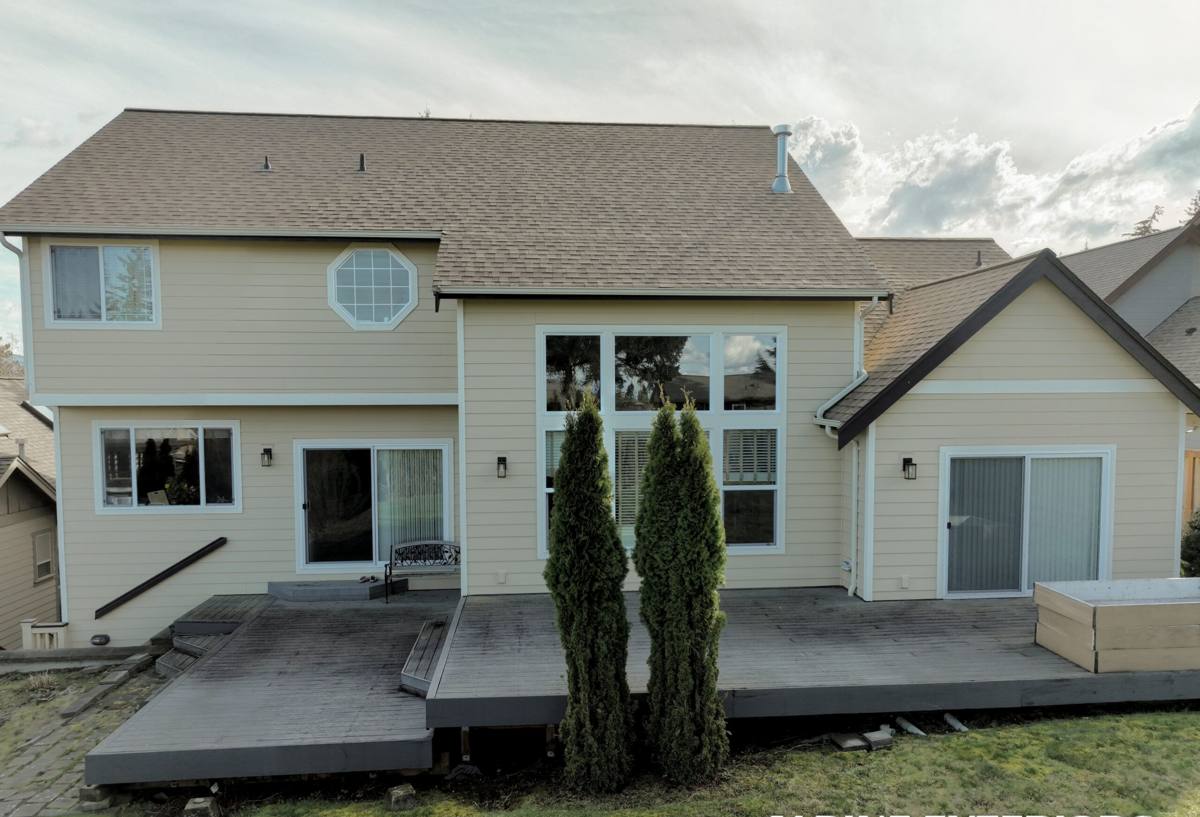
What a Correctly Built Deck Needs in This Climate
Most deck failures we see aren't dramatic — they're slow. Water gets into a place it shouldn't, sits there because there's no way for it to drain or dry, and the wood or fastener underneath quietly degrades until something finally gives. A deck built for Whatcom County conditions has to account for that from the first cut.
Ledger Board and Flashing
The ledger board — where the deck attaches to the house — is the single most common source of hidden rot on decks in our area. If it isn't properly flashed with a water-resistant barrier and correctly lapped under the house's siding or building paper, rain gets driven behind it during storms and never fully dries out between wet spells. We flash every ledger connection so water sheds away from the house rather than into the framing, and we don't rely on caulk alone to do that job — caulk fails, proper flashing geometry doesn't.
Footings Set Below Frost Depth
Footings need to be sized and set to local frost depth and soil conditions, not just poured to a minimum someone eyeballed. Ground that heaves or settles unevenly through a wet winter will rack a deck frame over time, showing up as doors that stick, boards that separate, or railings that lean. Getting the footing depth and diameter right the first time avoids a problem that's expensive to fix later.
Fasteners and Hardware
In an area with this much moisture and occasional salt-laden air, fastener choice isn't cosmetic. We use coated or stainless hardware rated for ground contact and exterior exposure, and we match connector hardware to the decking and framing material being used. Mismatched metals or bargain-bin screws are one of the fastest ways a deck starts showing rust streaks and loosening boards within a couple of seasons.
Choosing a Decking Material for Everson's Climate
There's no single "best" decking material — there's a best fit for your budget, your maintenance appetite, and how much sun versus shade your deck actually gets (shaded decks under trees hold moisture and moss far longer than ones in open sun).
| Material | Upfront Cost | Moisture/Moss Behavior | Maintenance |
|---|---|---|---|
| Pressure-treated lumber | Lowest | Resists rot when sealed regularly; can cup or check if left untreated | Annual cleaning and re-sealing recommended |
| Cedar | Moderate | Naturally rot-resistant but still needs finish to prevent graying and moss uptake | Re-stain or seal every 1-2 years |
| Composite decking | Higher | Won't rot, but can develop surface algae/moss film in shaded, damp spots | Periodic wash-down, no sealing needed |
| PVC decking | Highest | Fully moisture-resistant, least prone to moss retention | Occasional wash-down only |
We'll walk through this table honestly during your estimate. Composite and PVC cost more up front but trade away the sealing and staining cycle that pressure-treated and cedar decks need to survive our wet season. There's no wrong answer here — it depends on whether you'd rather pay more now or spend an afternoon each spring maintaining the surface.
Moss, Algae, and the Long Wet Season
Moss doesn't just look bad — on a deck surface it holds moisture against the boards and makes the surface genuinely slippery, which matters on steps and any deck near a walkway. A few things make the biggest difference for decks in Everson specifically:
- Proper board spacing so water and debris drain through rather than sitting on top
- Joist tape or a ventilated substructure so the underside of the deck can dry between rain events
- Keeping overhanging branches trimmed back so more sun and airflow reach the deck surface
- Cleaning debris out of gaps between boards before it composts into a moss-friendly layer
- Choosing a decking finish or material that doesn't hold a porous surface moss can root into
None of this eliminates moss entirely — it's a genuine year-round presence in this part of the county — but it's the difference between an occasional light cleaning and a deck that's green and slick by the second winter.
How Our Process Works
- On-site assessment: we look at your existing structure (if replacing or repairing) or your yard's layout, drainage, and sun exposure for a new build, and take real measurements rather than estimating from a photo.
- Material and layout discussion: we go over decking material trade-offs, railing style, and any features like built-in seating or stairs, matched to your budget.
- Written estimate: a clear scope and price before any work starts — no surprise add-ons once we're underway.
- Permitting: we handle the permit application and any required engineering documentation for your project.
- Demolition and framing: old decking and, if needed, old footings are removed; new footings, ledger flashing, and framing go in to spec.
- Decking, railing, and finish work: boards, railings, stairs, and any trim are installed and finished.
- Final walkthrough and inspection: we confirm the deck passes any required inspection and walk the finished project with you before calling the job done.
Permits and Local Requirements
Most new decks and many significant deck rebuilds in Whatcom County require a building permit, particularly once a deck is elevated above a certain height or attached to the house structure. Permit requirements can also touch on setback distances from property lines, guardrail height, and stair geometry. We handle this paperwork as part of the job rather than leaving it to the homeowner to sort out, and we build to the code requirements that apply, not just to what "looks about right."
What Affects the Cost of a Deck Project
| Factor | Why It Matters |
|---|---|
| Decking material | Pressure-treated, cedar, composite, and PVC all carry different material costs and lifespans |
| Size and height | Larger decks and multi-level decks need more framing, footings, and stair structure |
| Ledger and attachment complexity | Decks attaching to complex rooflines or siding types may need extra flashing detail |
| Railing style | Cable, glass, and custom wood railings cost more than standard baluster railings |
| Site access and grading | Sloped yards or tight access can add labor for footings and material handling |
| Demolition needs | Removing an old deck, especially one with rot or failed footings, adds time before rebuilding starts |
Deck Maintenance Checklist for Everson Homeowners
- Sweep debris out of board gaps a few times a year, especially in fall
- Check the ledger flashing area for any signs of staining or soft wood each spring
- Reseal or restain wood decking on the schedule appropriate to the product used
- Wash composite or PVC surfaces to remove any algae film before it sets in
- Inspect railing posts and stair stringers for movement or looseness annually
- Keep gutters and downspouts near the deck clear so runoff isn't dumping directly onto it
Why It Matters to Hire a Crew That Already Works in Everson
A deck built to a generic national spec sheet can still fail here if it ignores what this specific climate does to a structure over time. A crew that already works in Everson and the surrounding Whatcom County area knows which ledger details actually keep water out through a real Pacific Northwest winter, what footing depth the local soil and frost conditions call for, and what the permitting office expects to see on an application before it gets approved without back-and-forth delays. That local familiarity shows up less in the sales pitch and more in the parts of the deck you don't see once it's finished — the flashing, the footings, the hardware — which are exactly the parts that determine whether it's still solid in ten years.
If you're considering a new deck, a replacement, or repairs to an existing one in Everson, we're happy to walk the site with you and give you a straightforward, no-pressure estimate. There's a form below to get that conversation started.