 Whatcom County
Building a Deck That Actually Holds Up in Everson
A deck in Everson has to earn its keep through a wet, gray stretch of the year that runs far longer than most homeowners expect when they're picturing summer barbecues on a new deck. Whatcom County's climate brings driving rain, heavy dew, and a moss season that can start creeping in as early as October and not let go until May. A deck built without that reality in mind will look fine for a season or two and then start showing problems: soft spots underfoot, green film on the boards, fasteners bleeding rust, and framing that's rotting quietly where nobody's looking. Building it right the first time isn't about upgrading everything to the most expensive option — it's about getting the structure, drainage, and material choices matched to what this specific climate does to wood and metal over years, not months.
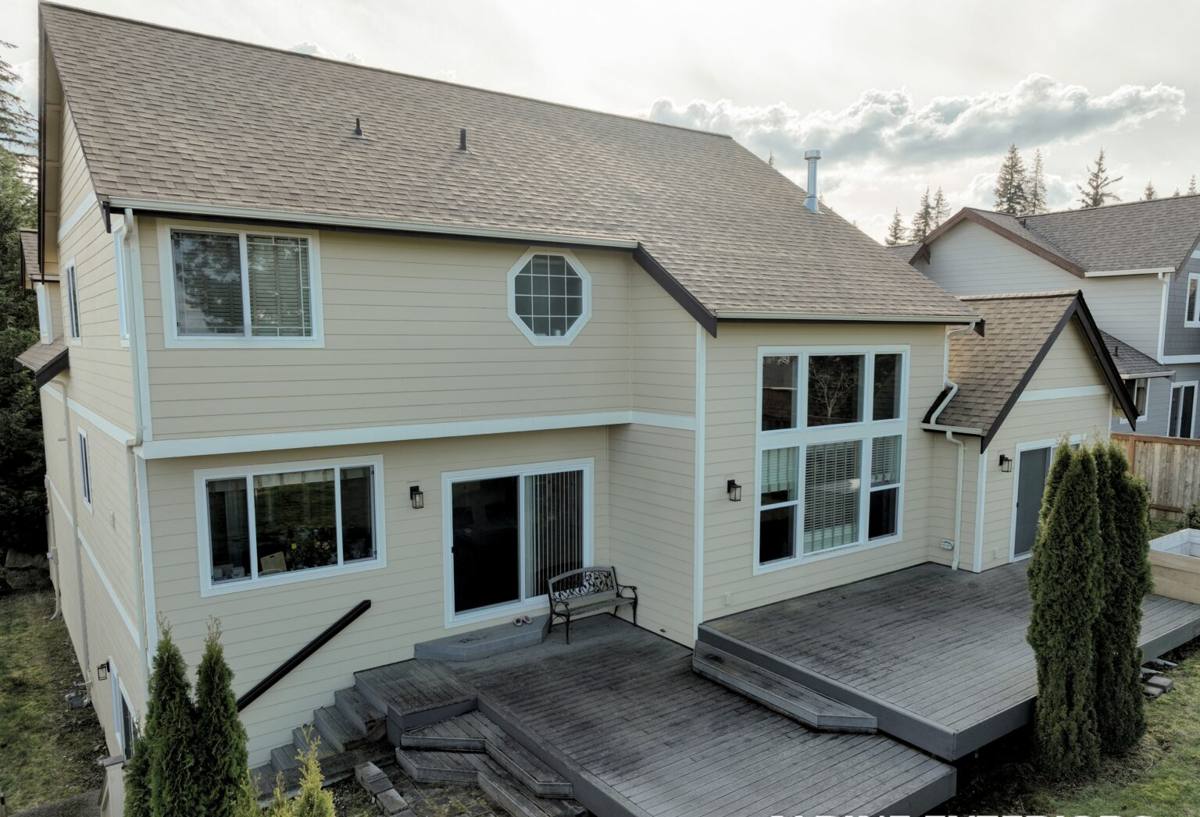
What Everson Homes Need From a Deck
Everson sits in a part of Whatcom County that sees a lot of standing moisture through the fall and winter — saturated ground, slow-draining lawns, and long stretches where surfaces simply don't dry out between rain events. That matters more for a deck than most homeowners realize, because a deck isn't just the boards you walk on. It's a structure sitting low to the ground, often close to siding, downspouts, and landscaping that stays damp for weeks at a stretch. A deck built for this area needs:
- Framing and hardware rated for sustained ground and air moisture, not just occasional rain
- Ledger board flashing that keeps water from working its way behind the house siding
- Enough clearance and airflow underneath to let the structure actually dry out between storms
- A decking surface that resists moss and algae growth, or that's easy to treat when it shows up
- Drainage planning so water sheds off the deck instead of pooling against the house or fence line
Skip any one of these and the deck will still get built — it just won't last the way it should, and the failures tend to show up in the framing and connections long before the surface boards look obviously bad.
Where Decks Actually Fail Around Here
Most of the deck problems we get called out to inspect in this area trace back to a handful of repeat issues, and almost none of them are about the decking material itself. The ledger board — the piece that bolts the deck to the house — is the single most common failure point, usually because it wasn't flashed correctly and water has been getting behind it for years. Undersized or poorly spaced footings are another common one, especially on older decks built before local frost depth and load requirements were as consistently enforced. And post bases that sit directly in standing water or wet soil, rather than up on proper hardware, rot from the bottom up in a way that's invisible until someone steps on a soft board and finds out the post underneath has been failing for a while. None of these are exotic problems — they're the predictable result of building without accounting for how much moisture this region holds onto for how long.
Choosing the Right Decking Material
There's no single "right" decking material for every Everson home — it depends on budget, how much upkeep you want to take on, and how long you want to go before you're doing anything to the surface. Here's how the common options actually compare once you factor in this climate:
| Material | Moss/algae resistance | Maintenance | Typical lifespan here |
|---|---|---|---|
| Pressure-treated lumber | Low — needs regular cleaning and sealing | Annual cleaning, re-sealing every 2-3 years | 15-20 years with upkeep |
| Cedar | Moderate — naturally rot-resistant but still surfaces moss without care | Cleaning and oiling every 1-2 years to hold color and resist growth | 15-25 years with upkeep |
| Composite decking | Higher — dense surface sheds algae more easily, though it still needs washing | Periodic washing, no sealing or staining | 25-30+ years, backed by manufacturer warranty |
We don't push composite on every job — pressure-treated and cedar are honest, proven choices and cost meaningfully less up front. The trade-off is real maintenance commitment: skip a couple of cleaning cycles in a wet stretch and moss gets a foothold fast, and once it's established in wood grain it's harder to fully clear than to have prevented. Composite costs more initially but shifts the ongoing burden from "seasonal maintenance task" to "occasional wash," which matters if you'd rather spend a Saturday differently. Either way, the decision should be made with your actual maintenance habits in mind, not just the sticker price.
Fasteners and Hardware Matter as Much as the Boards
A beautiful deck surface on undersized or wrong-grade hardware is still a deck that will fail early. In a climate this wet, we use fasteners and structural connectors rated for constant moisture exposure — not the bargain hardware that looks fine in the box but starts staining and weakening within a couple of wet seasons. This is one of those details a homeowner can't easily inspect after the fact, which is exactly why it needs to be right the first time.
The Structural Work Nobody Sees
The parts of a deck that determine whether it lasts 15 years or 30 are almost entirely below the surface boards. This is the work that gets skipped or shortcut on lower-quality builds because it's invisible once the deck is finished:
- Footings sized and set to local frost depth and soil conditions, not just poured to the minimum
- Ledger board flashing installed so water sheds away from the house wall, not into it
- Joist spacing matched to the decking material's actual span rating, not stretched to save on lumber
- Post bases that keep wood off wet soil and standing water entirely
- Fastener grade rated for sustained exposure, not interior-grade hardware
Every one of these is cheaper to do correctly during the build than to repair once rot has set in, and in this climate, the timeline for that rot to become structural is shorter than most people expect.
Our Deck Building Process
We run the same process on every deck build, whether it's a small platform off a back door or a full multi-level outdoor living space:
- On-site assessment — we look at grade, drainage, existing structure (for replacements), and how the deck ties into the house before we talk materials or design.
- Design and material walkthrough — honest conversation about the trade-offs between wood and composite, layout options, and what fits your budget and maintenance appetite.
- Permitting — we handle the applicable permit paperwork so the structural work is inspected and documented, protecting you if you sell the home later.
- Footings and framing — footings set to proper depth, ledger flashed correctly, joists and beams sized to the actual load and span.
- Decking and railing installation — surface material installed with correct spacing for drainage and seasonal expansion, railing set to code height and spacing.
- Final walkthrough — we go over the finished deck with you, including what maintenance it needs and when.
Permits and Local Considerations
Deck construction in and around Everson typically requires a building permit once the structure passes certain height and size thresholds, and setback requirements from property lines can vary depending on whether a property sits within city limits or unincorporated Whatcom County. We handle this as part of the build rather than leaving it to the homeowner to sort out — skipping the permit step might save time up front, but it creates real problems later if you go to sell the house or file an insurance claim on a structure that was never inspected. If your property has specific zoning questions, we'll flag them early rather than after materials are ordered.
Maintenance to Protect Your Investment
Even the best-built deck needs some seasonal attention in this climate. Here's the realistic minimum to keep a deck performing well through Whatcom County's wet months:
- Sweep leaves and debris off the surface regularly through fall — trapped organic matter holds moisture and feeds moss
- Clean the deck surface at least once a year with a deck-safe cleaner to break up moss and algae before it embeds in the grain
- Check and clear drainage gaps between boards so water isn't pooling
- Inspect ledger board flashing and post bases annually for early signs of water intrusion
- Re-seal or re-stain wood decking on the schedule appropriate to the product — don't wait until it's visibly gray and worn
- Trim back overhanging vegetation that keeps the deck shaded and damp longer than it needs to be
Cost Factors to Expect
Every deck is priced around its own footprint, material choice, and site conditions, but the main variables that move the number are consistent:
| Factor | Why it affects cost |
|---|---|
| Size and footprint | More square footage means more material, more footings, more labor hours |
| Decking material | Composite runs higher up front than pressure-treated or cedar, offset by lower long-term maintenance |
| Height and grade | A deck built well above grade needs more framing, railing, and often stairs |
| Site access and drainage | Poor drainage or difficult access can add site prep work before framing starts |
| Railing and features | Built-in benches, custom railing, or multiple levels add labor and material |
We give straightforward, itemized estimates so you can see exactly what's driving the number, rather than a single lump figure that's hard to evaluate against other quotes.
Why Hire a Crew That Already Works in Everson
Deck building isn't a one-size-fits-all trade — what works structurally and materially in a drier inland climate doesn't hold up the same way here. A crew that already works throughout Whatcom County has already seen how local drainage patterns, soil conditions, and the region's long moss season affect deck framing and surface materials over time, not just in a showroom or a manufacturer's spec sheet. That experience shows up in small decisions — how footings are set, where flashing gets extra attention, which fastener grade actually holds up — that aren't visible on the day the deck is finished but determine how it looks and performs five and ten years down the road.
If you're considering a new deck or need an honest opinion on repairing versus rebuilding an existing one in Everson, we're happy to take a look and give you a straightforward, no-pressure estimate using the form below.