 Whatcom County
Siding Built for Everson's Weather, Not Just Its Look
Everson sits in the Nooksack River valley in Whatcom County, and that location shapes what siding actually has to survive here. Homes in this part of the county deal with a long wet season, heavy driving rain that comes in sideways during fall and winter storms, and the kind of persistent damp air that keeps north-facing walls and shaded siding runs green with moss for months at a time. Add in the humidity that settles into low-lying river valley terrain, and you have a climate that is genuinely hard on exterior materials — especially anything that relies on paint film, caulking, or a factory primer coat to keep water out.
We install James Hardie fiber cement siding exclusively, and we work specifically in Whatcom County towns like Everson. That combination matters more than it sounds like it should. A siding product that's engineered for Pacific Northwest moisture, installed by a crew that already knows how water moves on homes in this valley, is a very different outcome than a generic install of whatever product happened to be cheapest that month.
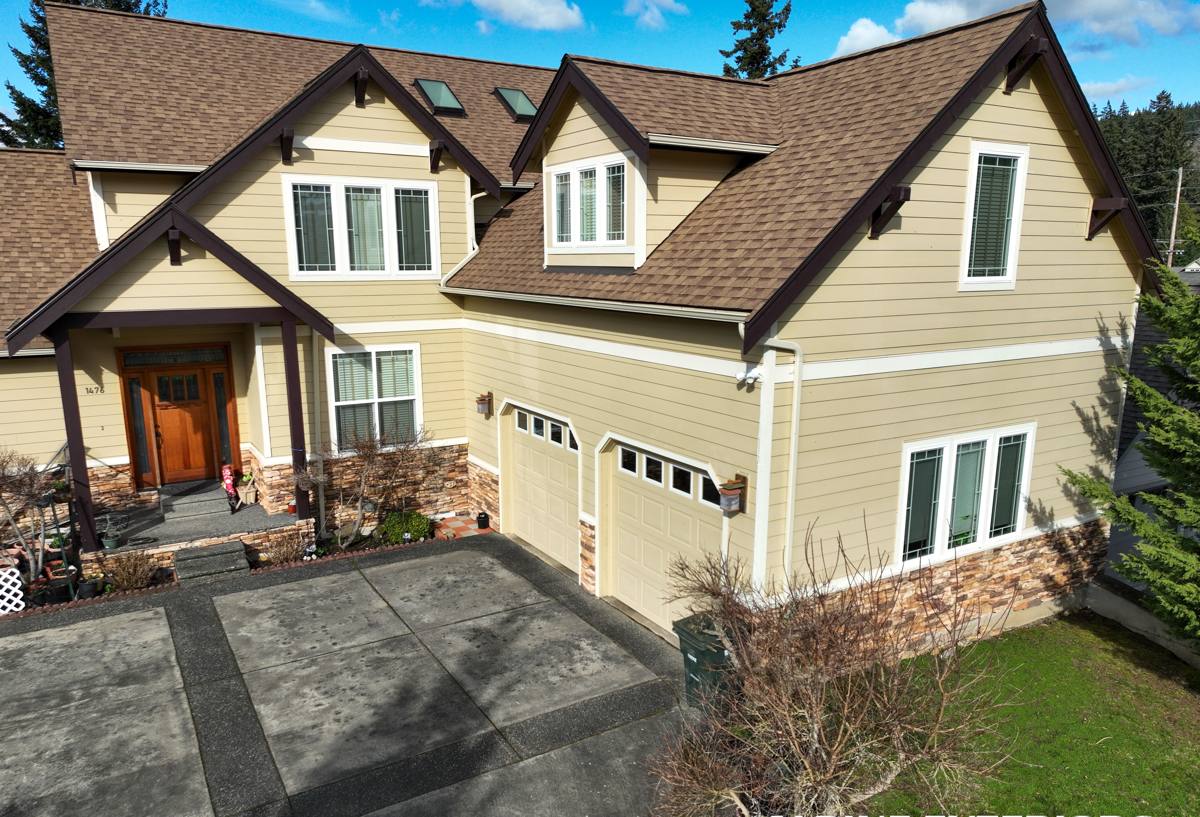
What Driving Rain and Moss Season Actually Do to Siding
It helps to be specific about the failure modes, because "the weather is rough here" doesn't tell you much on its own.
Driving Rain
Wind-driven rain doesn't just run down a wall — it gets pushed sideways and upward into laps, seams, and anywhere two pieces of siding meet. Over years, that repeated wetting finds every weak point in a siding system: unsealed cut edges, undersized flashing, panels installed too tight to the ground or roofline, and caulk joints that were never meant to be a primary water barrier in the first place.
Moss and Prolonged Dampness
Shaded siding — under eaves, behind landscaping, on north walls facing tree lines along the river — stays damp longer after every rain. That's exactly the environment moss and mildew need. On wood-based or wood-look products, sustained moisture at the surface eventually works its way into the material itself, especially at cut ends and fastener points that lost their factory sealing during installation.
Freeze-Thaw Cycling
Whatcom County doesn't get brutal winters, but Everson does see enough freeze-thaw swings each year that any siding holding moisture at the time of a freeze is at risk. Water expands as it freezes, and that stress repeats every cold snap.
Why We Only Install James Hardie Fiber Cement
We don't install LP SmartSide, vinyl, Cemplank, Allura, primed spruce, or cedar. That's not a marketing position — it's a standard we set because of exactly the failure modes described above.
- Non-combustible core: fiber cement doesn't rely on a protective coating to resist fire, unlike engineered wood products.
- Moisture-resistant by composition: Hardie's cement-based formulation doesn't absorb and swell the way wood-based siding or trim can at cut edges and fastener points.
- Factory-applied ColorPlus finish: baked-on color and finish outperforms field-applied paint in adhesion and fade resistance, which matters when a wall is going to sit wet for days at a time.
- Climate-engineered product lines: Hardie makes region-specific HZ (HardieZone) formulations, and the Pacific Northwest falls under specifications built around moisture exposure, not just temperature.
- A real transferable warranty: backed by a manufacturer with decades of track record in wet climates, not just a marketing claim.
We're not saying every other product is unusable everywhere. We're saying that after years of doing exterior work in Whatcom County's climate, we stopped installing products that require more maintenance, more caulk, and more luck to hold up here — and standardized on the one that doesn't.
What a Correct Fiber Cement Install Actually Involves
Fiber cement siding is only as good as its installation. A rushed or under-detailed install can undercut even the best product, and in a climate like Everson's, the details are what determine whether siding lasts 10 years or 40.
Water Management Comes First
Before a single piece of siding goes up, the wall needs a correctly lapped weather-resistant barrier, properly integrated flashing at every window, door, and roofline intersection, and a rainscreen or drainage gap where conditions call for it. Siding is the last line of defense, not the only one — if the water management layer behind it is wrong, no siding product will save the wall.
Clearances and Fastening
Fiber cement panels need proper clearance from grade, roofing, and decks so water has somewhere to go instead of wicking up into the bottom edge of the siding. Fasteners have to be placed and set to Hardie's specifications — over-driven or under-driven nails are one of the most common causes of premature siding problems, and it's purely an installation issue, not a product one.
Cut Edges and Joints
Every field-cut edge needs to be sealed per manufacturer instructions before installation. Joints and seams need to be treated correctly — caulked where specified, left to drain where a rainscreen detail calls for it — rather than sealed the same way everywhere out of habit.
James Hardie Product Lines Suited to This Climate
| Product | Best Use | Why It Fits Everson |
|---|---|---|
| HardiePlank Lap Siding | Most home exteriors | Standard horizontal siding with HZ5 moisture-zone engineering for the PNW |
| HardiePanel Vertical Siding | Accent walls, gables, modern facades | Clean vertical lines with the same fiber cement weather resistance |
| HardieTrim | Corners, window and door trim | Matches siding durability at the joints most exposed to driving rain |
| HardieSoffit | Eaves and overhangs | Resists the sustained damp and shade that drives moss growth under eaves |
How We Work in Everson
- On-site assessment: we walk the home, checking existing siding condition, trim, flashing, and any moisture damage already present before quoting anything.
- Scope and product selection: we recommend the Hardie product line, profile, and ColorPlus color that fit the home and its exposure — full sun walls versus shaded, moss-prone elevations often get different attention.
- Tear-off and prep: old siding comes off, sheathing gets inspected for hidden rot or moisture damage, and any deteriorated material is addressed before anything new goes up.
- Water barrier and flashing: the weather-resistant barrier and flashing details go in correctly — this is the step that determines long-term performance more than the siding itself.
- Installation to spec: panels, trim, and soffit installed to Hardie's fastening and clearance requirements, not shortcuts.
- Final walkthrough: we review the completed job with the homeowner and cover basic care before we consider the project done.
What Drives the Cost
| Factor | Why It Matters |
|---|---|
| Home size and wall complexity | More corners, dormers, and cutouts mean more trim and labor |
| Existing siding removal | Tear-off and disposal add time versus building on new construction |
| Sheathing or rot repair | Hidden moisture damage found during tear-off has to be fixed before new siding goes on |
| Product line and profile | Lap width, panel style, and trim choices affect material cost |
| Site access | Tight lots, landscaping, and grade changes affect labor time |
We give straightforward, written estimates after seeing the home in person — we don't quote fiber cement work sight unseen, because the condition behind the existing siding is often the biggest cost variable.
Why It Matters That We Already Work in Everson
A crew that regularly works Whatcom County towns like Everson already understands the county permitting process, knows how local moisture and shade patterns behave on specific lots, and isn't learning the region's climate quirks on your project. That familiarity shows up in small but real ways — knowing which elevations need extra attention to drainage detailing, understanding how river-valley humidity affects cure times and scheduling, and being available for warranty follow-up without a long drive from out of the area.
Simple Maintenance Once It's Installed
Correctly installed Hardie siding is low-maintenance, not no-maintenance. A little seasonal attention goes a long way in this climate:
- Rinse siding annually, focusing on shaded and north-facing walls where moss takes hold first
- Keep gutters clear so overflow doesn't run down the siding face repeatedly
- Trim back landscaping and tree limbs that keep a wall section shaded and damp
- Inspect caulk joints at trim and penetrations every year or two and re-caulk if it's cracking
- Address any impact damage or chipped ColorPlus finish promptly so the cement core stays protected
If you're weighing a siding replacement in Everson and want a straight answer about what your home actually needs, we're happy to take a look and walk the property with you. Fill out the form below for a free, no-pressure estimate.