 Whatcom County
Siding Built for Everson's Nooksack Valley Climate
Everson sits in the Nooksack River valley east of Bellingham, close enough to the foothills of Mount Baker that homes here see a different weather pattern than siding on the coast or in town. Winters bring long stretches of saturated air and standing fog off the river bottom. Spring and fall deliver driving, sideways rain that hits siding at an angle most products were never designed to shed. And because the valley holds moisture longer than higher, more exposed ground, homes here go through a moss and algae season that can stretch eight months or more. Add in the salt-laden marine air that rolls through all of Whatcom County off the Salish Sea, and you have a combination that punishes cheap or improperly installed siding faster than almost anywhere else in the state.
We install James Hardie fiber cement siding exclusively, and Everson is exactly the kind of climate that explains why. This page focuses on one service, in one place: what a correct James Hardie installation looks like on an Everson home, and why the details matter more here than they would somewhere drier.
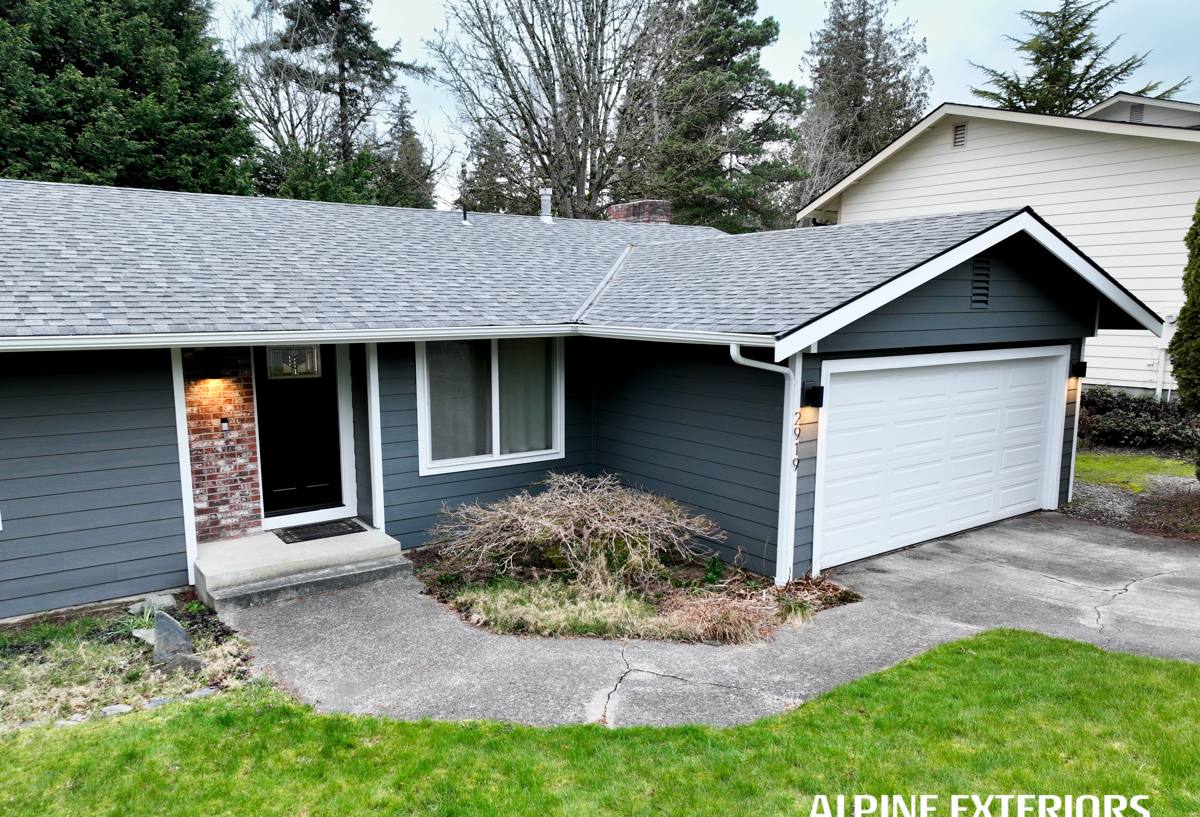
What Whatcom County Weather Actually Does to Siding
It helps to be specific about the failure modes we see, rather than talk in generalities about "rain and cold."
Moisture that never fully leaves
In the river valley, humidity lingers longer after a storm than it does on higher, breezier ground. Wood-based and wood-composite siding products absorb that ambient moisture over repeated cycles, even when they're not being rained on directly. Over years, that slow moisture uptake is what drives swelling, edge softening, and eventually rot at seams and butt joints.
Driving rain at the wall plane
Whatcom County storms frequently come with real wind behind them, which pushes rain sideways into wall surfaces instead of letting it run straight down. That means laps, joints, and any exposed fastener or cut edge take a direct hit far more often than in a calmer climate. Flashing details and caulking choices that are optional in dry regions are not optional here.
Moss, algae, and constant shade cycles
Long moss season isn't just cosmetic. Moss and algae hold moisture against the siding surface for extended periods, which accelerates whatever degradation process is already underway underneath. A siding product that resists water intrusion at the surface handles this far better than one that's absorbing it.
Salt air and coastal drift
Even inland from the Salish Sea, marine air carries salt that settles on exterior surfaces and accelerates corrosion of fasteners, trim metal, and paint finishes. Coatings that aren't engineered for a marine-influenced climate chalk, fade, and break down faster than their warranty numbers suggest.
Freeze-thaw swings
Everson gets genuine cold snaps in winter, not just Puget Sound drizzle. Water that's absorbed into a porous or swollen siding material and then freezes expands and pries the material apart from the inside. Repeated freeze-thaw cycling is one of the fastest ways to shorten the life of a marginal siding product.
Why James Hardie Fits This Climate Specifically
James Hardie fiber cement is engineered from cement, sand, and cellulose fibers — it doesn't absorb and swell the way wood-based products do, and it doesn't feed the organic growth that vinyl and wood surfaces are prone to hosting in a long moss season. It's also non-combustible, which matters given how many Whatcom County homes back up to timber, brush, or agricultural land where wildfire risk has become a real planning consideration.
James Hardie's HZ5 product line is specifically engineered for regions with more freeze-thaw cycling and moisture exposure — the Pacific Northwest, including Whatcom County, is squarely in that category. The factory-applied ColorPlus finish is baked on under controlled conditions, which gives it better resistance to fading, chalking, and moisture intrusion at the finish layer than field-applied paint, and it carries its own finish warranty separate from the substrate warranty.
None of that is marketing shorthand — it's the specific reason this is the only siding system we install. We've made the call that a fiber cement system engineered for this exact climate profile is worth the higher install-day cost, because it's the difference between a 30-40+ year exterior and a 12-15 year one that needs partial replacement.
What a Correct Installation Involves
James Hardie siding fails prematurely almost exclusively because of installation mistakes, not product defects. In a climate like Everson's, the margin for error is smaller than in a drier region. A correct job includes:
- Proper water-resistive barrier and house wrap integration behind the siding, lapped correctly with flashing at every penetration
- Correct fastener type, spacing, and depth per James Hardie's published fastening schedules — over-driven or under-driven nails are one of the most common causes of early failure
- Minimum clearance gaps at the bottom of the siding from grade, roofing, decks, and patios so water has somewhere to go instead of wicking upward
- Properly sized and caulked joints, using sealants rated for the temperature and moisture swings of this climate, not general-purpose caulk
- Flashing integration at every window, door, and roofline intersection — this is where the majority of hidden water intrusion starts
- Correct panel and board orientation and overlap for the specific James Hardie product being used (lap siding, panel, or shingle-style)
Skipping any one of these doesn't show up immediately. It shows up two, five, or eight years later as staining, soft trim, or a warranty claim that gets denied because the installation didn't meet manufacturer specification. That's the real risk with fiber cement: the product itself is durable, but an incorrect install voids the protection it's supposed to offer.
Our Process for an Everson Project
1. On-site assessment
We walk the exterior, check the current siding and sheathing condition, look at drainage paths around the foundation, and note any existing moisture damage that needs to be addressed before new siding goes on — installing over a compromised wall assembly just hides a problem instead of fixing it.
2. Product and line selection
We talk through James Hardie's lap, panel, and shingle profiles and the ColorPlus palette, and recommend the HZ line appropriate for this valley's exposure and elevation.
3. Removal and wall prep
Old siding comes off, sheathing is inspected and repaired as needed, and a new water-resistive barrier is installed correctly lapped, before a single piece of Hardie goes up.
4. Installation to manufacturer spec
Fastening, flashing, and clearances are done to James Hardie's published installation guidelines — not a shortcut version — because that's what keeps the manufacturer's warranty valid and the wall assembly dry.
5. Final walkthrough
We review the finished job with you, cover care and maintenance basics, and make sure you have the documentation tied to your warranty coverage.
Why It Matters That We Already Work in Whatcom County
A crew that installs siding across climate zones without adjusting for local conditions will build the same wall assembly in Everson that they'd build in a dry inland town, and that's how you end up with premature failures that get blamed on the product instead of the install. Working regularly in Whatcom County means we already know how much clearance to leave at grade in a river valley that floods periodically, how aggressive the moss growth gets on north- and east-facing walls shaded by trees or hillside, and which flashing details actually hold up through a full Pacific Northwest wet season rather than just looking right on installation day.
It also means we're not guessing at permitting or inspection expectations for the area — we know what local building departments look for on a siding replacement or new-construction exterior.
Cost Factors for an Everson James Hardie Project
Every home is different, but the variables that actually move the price on a James Hardie job are consistent. We won't quote a number without seeing the house, but here's what drives the estimate:
| Factor | Why It Affects Cost |
|---|---|
| Current siding removal | Tear-off, disposal, and any sheathing repair found underneath add labor and material beyond the new siding itself |
| Home size and wall complexity | More corners, dormers, and roof intersections mean more flashing detail and cut work per square foot |
| Product line and profile | Lap, shingle, and panel styles, plus trim and accent choices, carry different material costs |
| ColorPlus vs. primed for field paint | Factory-finished ColorPlus costs more up front but eliminates a repaint cycle and carries its own finish warranty |
| Moisture or rot repair | Any water-damaged sheathing or framing found during tear-off needs to be corrected before new siding goes on |
| Site access | Sloped lots, tight setbacks, or landscaping near the foundation can affect scaffolding and material staging |
Signs Your Everson Home May Need Siding Attention
- Persistent moss or algae staining that returns shortly after cleaning
- Soft or spongy spots around window trim, corners, or the bottom courses of siding
- Visible warping, bowing, or separation at seams and joints
- Paint that's peeling or bubbling rather than just fading evenly
- Musty odor or visible staining on interior walls that back up to exterior siding
- Siding that's original to a home built more than 20-25 years ago, especially wood or older composite products
Any of these are worth a look before they turn into a larger repair. Catching moisture intrusion early, before it reaches the framing, is a meaningfully smaller job than waiting until there's structural rot to address.
Get a Local, No-Pressure Estimate
If you're weighing a siding project on your Everson home, we're happy to walk the exterior with you, talk through what James Hardie's product lines would look like on your house, and give you a straightforward estimate — no pressure, no upsell to a product we don't stand behind. Use the form below to get started.