 Whatcom County
Siding Installation Built for Everson's Climate
Everson sits in the Nooksack River valley in Whatcom County, and homes here take a different kind of weathering than homes closer to the water or up in the foothills. The valley holds moisture longer than higher, more exposed ground. Marine air moves through the county for much of the year, rain arrives sideways more often than straight down, and shaded north and east walls stay damp long after a storm has passed. Add a moss season that can run from fall through spring, and you have a set of conditions that punishes siding that wasn't installed with drainage and ventilation in mind.
A siding installation in Everson isn't just about picking a product and nailing it up. It's about managing water at every seam, flashing every penetration, and choosing a material that won't swell, rot, or feed moss growth over the years. That's the standard we hold every job to, and it's why we install James Hardie fiber cement exclusively — more on that below.
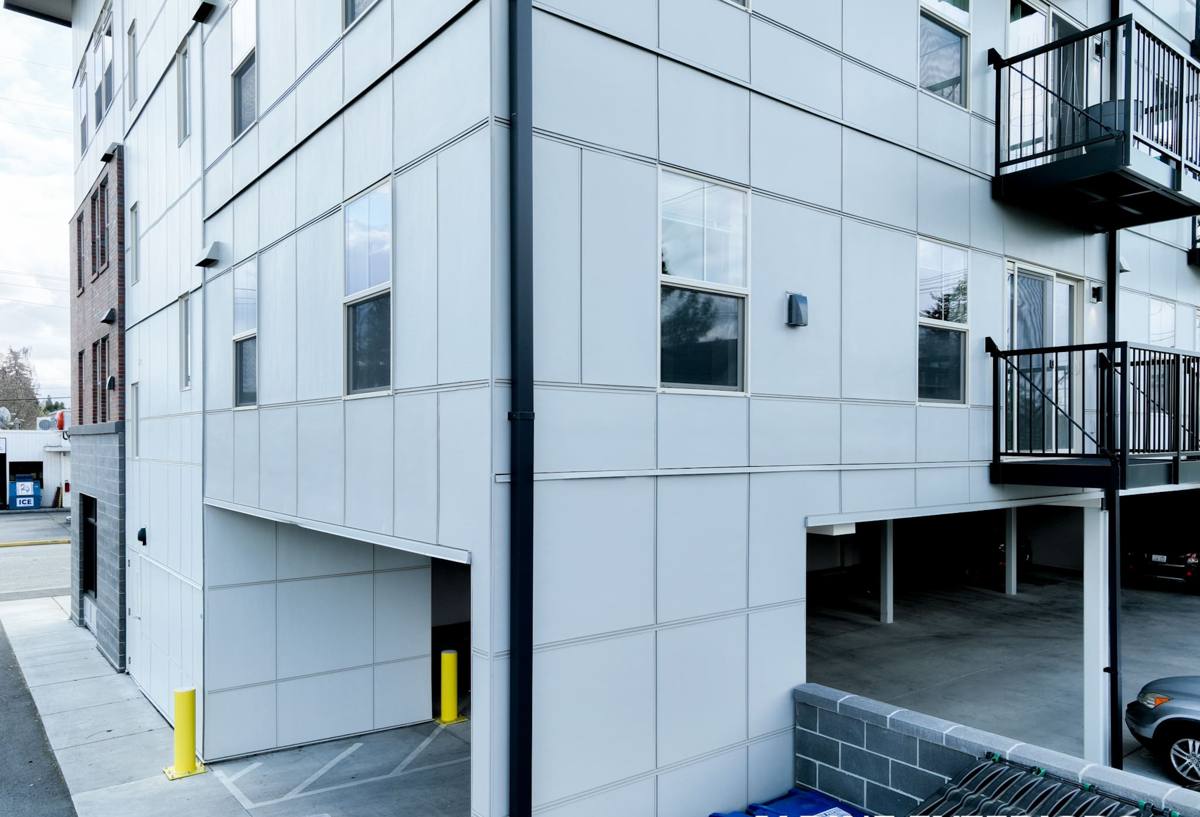
Why We Standardized on James Hardie Fiber Cement
We used to get asked to install a wider range of products. We stopped offering vinyl, LP SmartSide, and other engineered wood or fiber cement alternatives because, after years of siding work in this county's climate, we kept seeing the same failure points: moisture getting behind panels, edge swelling on engineered wood products, and vinyl that cracked or faded faster than homeowners expected. None of those products are junk — they work fine in the right climate and with perfect installation. But Whatcom County's combination of driving rain, humidity, and long damp stretches doesn't forgive installation shortcuts, and some products have less margin for error than others.
James Hardie fiber cement gives us a non-combustible material with a factory-applied ColorPlus finish that doesn't rely on field-applied paint to hold up against UV and moisture cycling. It's engineered specifically for climate zones like ours through Hardie's HZ5 product line, and it carries a strong transferable warranty when installed by a certified crew following Hardie's own specifications. We install it because we've seen it hold up here, not because it's the only option on the market.
What a Correct Siding Installation Actually Involves
The Weather-Resistive Barrier Comes First
Before a single piece of siding goes up, the wall needs a continuous, properly lapped weather-resistive barrier (WRB). Every seam should be taped, every penetration sealed, and the barrier should integrate with window and door flashing so water sheds outward and downward — never behind the siding. This layer does more long-term work than the siding itself, and it's the step that gets rushed on low-bid jobs.
Flashing and Drainage Details
Window heads, sills, deck ledgers, roof-to-wall transitions, and any place two planes meet are where siding failures actually start. Correct flashing directs water out and away from the wall assembly instead of trapping it. In a valley climate like Everson's, where walls can stay damp for days after a storm, a drainage gap behind the siding matters too — it lets any moisture that does get past the cladding find its way back out instead of sitting against the substrate.
Fastening and Clearances
Hardie panels and lap siding have specific fastener spacing, nail penetration depth, and butt-joint treatment requirements. Getting these wrong doesn't show up immediately — it shows up as cracking, popped fasteners, or water intrusion two or three years down the road. We also hold to manufacturer-specified clearances above grade, roofing, decks, and patios, which keeps splash-back and standing moisture away from the bottom edge of the siding, a common weak point on older homes in this area.
Signs an Everson Home Needs New Siding
- Soft or spongy spots when you press on the siding, especially near the bottom courses or under windows
- Persistent moss or algae growth that returns within weeks of cleaning, particularly on north and east-facing walls
- Visible cracking, buckling, or separation at panel seams and corners
- Peeling or bubbling paint that keeps coming back no matter how often it's repainted
- Rising energy bills that suggest the wall assembly is no longer insulating or sealing the way it should
- Warping or bowing on wood-based or engineered siding, especially at butt joints and lower courses
Any one of these on its own might be a minor repair. Several at once usually means the underlying water management has failed and full replacement is the more honest recommendation.
James Hardie Product Lines We Install
Not every Hardie product fits every home. Part of our estimate process is matching the right line to your home's style, exposure, and the specific walls that take the worst weather.
| Product Line | Best For | Notes for This Climate |
|---|---|---|
| HardiePlank Lap Siding | Traditional and farmhouse-style homes | Most common choice locally; available in smooth and cedar-textured finishes |
| HardiePanel Vertical Siding | Modern builds, accent walls, gable ends | Clean lines; pairs well with board-and-batten detailing |
| HardieShingle | Craftsman and cottage-style homes | Staggered or straight-edge panels for a shingle look without wood's moisture sensitivity |
| HardieTrim | Corners, fascia, window and door surrounds | Matches the panel line and holds paint or ColorPlus finish evenly |
All of these are available with Hardie's ColorPlus factory finish, which means the color is baked on at the factory rather than field-sprayed — one less step where quality can vary, and one less thing for a homeowner to worry about repainting for years.
Our Process, Start to Finish
1. On-Site Estimate
We walk the exterior with you, look at drainage patterns, check existing siding condition, and talk through which Hardie product fits the home. This is also when we flag any rot, framing damage, or flashing issues that need attention before new siding goes on.
2. Tear-Off and Substrate Inspection
Old siding comes off and the sheathing underneath gets inspected. This is the point where hidden water damage from years of a failing wall assembly shows up — better to find and fix it now than to bury it under a new WRB.
3. Weather Barrier and Flashing Installation
We install and tape the WRB, flash all windows, doors, and penetrations, and set up drainage details before any siding goes on.
4. Siding Installation
Panels or lap siding go up to Hardie's fastening and clearance specifications, with trim, corners, and joints detailed to shed water.
5. Final Walkthrough
We walk the finished job with you, point out the details we handled, and answer any questions about care and maintenance going forward.
Cost Factors for a Siding Project in Everson
Every home is different, so we don't quote pricing without seeing the house, but a few factors consistently move the number:
| Factor | Why It Matters |
|---|---|
| Extent of substrate repair | Rot or water damage found during tear-off adds material and labor before new siding can go on |
| Home size and wall complexity | More corners, dormers, and roof-to-wall intersections mean more flashing detail and labor time |
| Product line selection | Lap, panel, and shingle profiles carry different material costs and install time |
| Trim and accent scope | Full trim replacement versus reusing sound existing trim changes both cost and long-term durability |
| Access and site conditions | Grade, landscaping, and how the home sits on the lot affect scaffolding and staging needs |
We'd rather give you an honest range after seeing the home than a number that doesn't hold up once we're on the roof or up a ladder.
Why a Crew That Already Works Everson Matters
Siding installed by a crew unfamiliar with this valley's specific weather pattern tends to make the same mistakes: underestimating how long walls stay damp after a storm, undersizing drainage gaps, or skipping moss-prone north walls in the flashing detail. A crew that regularly works Whatcom County homes — from the coastal exposure near the water to the river-valley humidity in places like Everson — knows which walls need the extra attention before the first panel goes up, not after a callback two years later.
There's also a practical side to hiring local: warranty service, follow-up questions, and any future trim or repair work are easier when the crew that installed your siding is a short drive away rather than working out of another region entirely.
Caring for Your New Siding
- Rinse siding annually with a garden hose and soft brush — avoid pressure washers, which can force water behind panels or joints
- Keep gutters clean and downspouts directed away from the foundation to reduce splash-back onto lower courses
- Trim back vegetation and tree cover on shaded walls to cut down on moss and algae buildup
- Check caulking at trim and penetrations every couple of years and have gaps resealed before winter rains set in
- Address any impact damage or chipped finish promptly so the substrate underneath stays protected
James Hardie siding installed to spec needs far less upkeep than wood or engineered alternatives, but no siding is entirely maintenance-free in this climate — a little attention each year keeps it looking and performing the way it should for decades.
If your Everson home's siding is showing its age or you're planning a full exterior refresh, we'll come take a look and give you a straightforward, no-pressure estimate. Use the form below to get started.