 Whatcom County
 Building Decks That Actually Hold Up in Fairhaven
Fairhaven sits close enough to the water that its homes take a different kind of weathering than decks built ten miles inland. Salt-laden air moves in off Bellingham Bay, driving rain comes in sideways for months at a stretch, and the shaded, damp stretches of yard that make this neighborhood attractive also grow moss faster than almost anywhere else in Whatcom County. A deck built with generic, big-box assumptions about "outdoor lumber" will show its age here in two or three years instead of ten or fifteen. We build decks specifically for this environment, not for a national average climate.
This page covers what a custom deck project actually involves for a Fairhaven property — the material decisions, the structural details that matter most in this climate, and how we run the job from first look to final walkthrough.
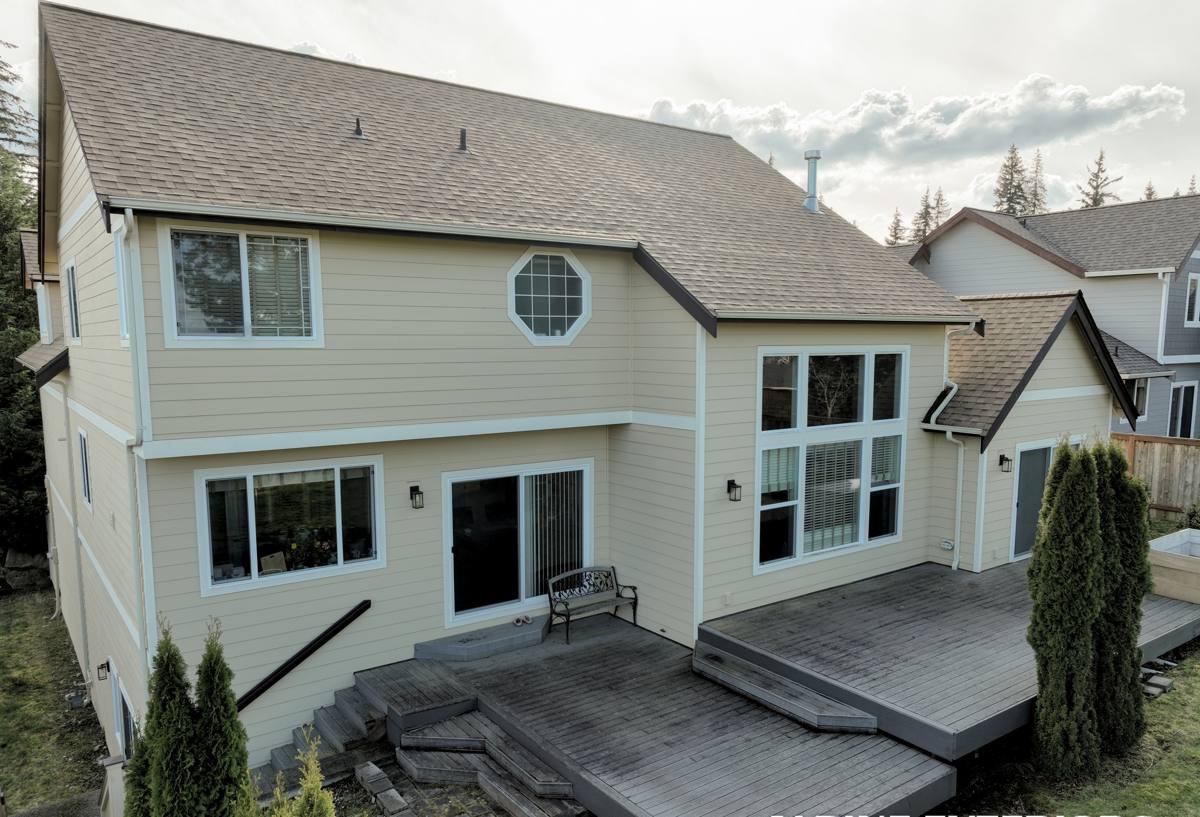
What the Fairhaven Climate Actually Does to a Deck
Salt Air and Metal Fasteners
Homes closer to the shoreline deal with airborne salt that accelerates corrosion on anything less than fully rated hardware. Standard interior-grade screws, joist hangers, and bolts will rust and stain the wood around them within a few seasons. Every fastener and connector we use on a Fairhaven deck is rated for coastal or ground-contact exposure — stainless steel or hot-dip galvanized, depending on the application — because a deck is only as durable as its weakest fastener.
Driving Rain and Water Management
Whatcom County gets long stretches of steady, wind-driven rain rather than short heavy downpours. That matters for deck design because water doesn't just fall straight down — it gets pushed under railings, into ledger board connections, and behind fascia. A deck that isn't flashed and sloped correctly will trap moisture in exactly the spots you can't see until there's rot underneath.
Moss and Shade
Fairhaven's tree cover and marine-layer humidity mean moss and algae growth on horizontal surfaces is a near-constant maintenance issue, not an occasional one. Decking material choice, board spacing, and even which direction the boards run all affect how fast moss takes hold and how easy it is to keep off.
Decking Material Options for This Climate
There's no single "best" decking material — there's a best material for your budget, your maintenance appetite, and how exposed your deck is. Here's how the common options actually perform in Fairhaven's conditions:
| Material | Moisture/Moss Behavior | Maintenance | Typical Lifespan Here |
|---|---|---|---|
| Pressure-treated fir/hemlock | Absorbs water readily; needs sealing to resist moss and cupping | Annual cleaning and re-sealing recommended | 10-15 years with upkeep |
| Cedar | Naturally moisture- and insect-resistant, but greys and can stain without maintenance | Periodic cleaning, optional stain/seal | 15-20 years |
| Composite decking | Doesn't absorb water or rot, but algae/moss can still grow on the surface film | Occasional wash-down; no sealing or staining | 25+ years, warranty-backed |
| PVC/capped polymer | Fully moisture-resistant surface; best moss resistance of the group | Lowest maintenance; wash-down only | 25+ years, warranty-backed |
We install all of these depending on what a homeowner wants, but for a shaded, damp Fairhaven lot we'll generally steer the conversation toward composite or capped polymer if low maintenance is a priority — not because treated lumber or cedar are bad products, but because the maintenance burden of a wood deck in constant shade is a real, ongoing cost that's worth knowing about upfront.
The Structural Details That Actually Matter
The visible decking is maybe a third of what makes a deck last. The framing and connections underneath do the real work of surviving this climate:
- Ledger board flashing — the connection to the house is the single most common failure point on older decks; proper flashing keeps water from migrating into the house rim joist.
- Joist tape or capping — sealing the tops of joists before decking goes down keeps standing water from soaking into end grain, which is where rot starts.
- Post bases set above grade — posts set directly in or near wet soil rot from the bottom up; proper post bases keep wood away from standing moisture.
- Corrosion-rated hardware throughout — every hanger, screw, and bolt rated for the exposure it will actually see.
- Adequate slope and gapping — decking needs a slight pitch away from the house and consistent gapping so water sheds instead of pooling.
Skipping any one of these to save money up front is the most common reason we get called out to repair a deck that's only seven or eight years old.
Railings, Fasteners, and Coastal Hardware
Railing systems face the same exposure as the deck surface but often get less attention. Wood railings need the same fastener and sealing standards as the decking itself. Metal cable or aluminum railing systems need to be specifically rated for coastal or marine exposure — standard powder-coated aluminum can pit and discolor faster than expected this close to the water. We spec hardware and railing components based on how exposed the specific deck location is, not a one-size-fits-all default.
Design Considerations Specific to Fairhaven Lots
Working With Slope and Tree Cover
Many Fairhaven properties have sloped lots and mature tree canopy, both of which affect deck design. Taller decks on sloped ground need engineered footings appropriate for the soil type. Decks under heavy tree cover need wider board gapping and material choices that shed moss more easily, since they'll rarely get direct sun to dry out.
Matching the Deck to the Home
Fairhaven has a mix of older craftsman homes and newer builds, and a custom deck should look like it belongs to the house rather than looking bolted on. We talk through railing style, decking color, and fascia trim as part of the design conversation, not as an afterthought.
Our Process for a Fairhaven Deck Project
- On-site assessment — we walk the property, check drainage, sun/shade exposure, and existing structure if this is a rebuild.
- Design and material selection — we go over decking material, railing style, and layout based on your budget and how the deck will actually be used.
- Permitting — most new decks and significant rebuilds in Whatcom County require a permit; we handle that process as part of the job.
- Framing and structural work — footings, posts, ledger flashing, and joists built to the standards outlined above.
- Decking, railing, and finish work — installation of the chosen decking material, railing system, stairs, and any trim.
- Final walkthrough — we go over the finished deck with you, including basic care instructions specific to the material installed.
New Build vs. Deck Repair or Replacement
Not every project is a full rebuild. We regularly get called to Fairhaven homes for:
- Soft or spongy decking boards, usually a sign of moisture trapped underneath
- Rust staining around fasteners, indicating non-rated hardware was used originally
- Railings that have loosened or show rot at post connections
- Persistent moss and algae buildup despite regular cleaning
- Ledger board separation or visible gaps at the house connection
Any of these is worth a look before it becomes a safety issue rather than a maintenance one. Sometimes the fix is targeted repair; sometimes the underlying framing has enough damage that replacement is the more honest recommendation. We'll tell you which situation you're in and why.
What a Fairhaven Deck Project Typically Costs
Deck pricing depends heavily on size, height, material, and how much structural work is involved, so we won't quote a number without seeing the site. In broad terms, a basic pressure-treated deck costs less upfront but carries ongoing maintenance costs over its life, while composite or PVC decking costs more initially but largely eliminates the sealing and staining cycle. Elevated decks, custom railings, and built-in features like benches or lighting add cost beyond a simple ground-level platform. We walk through these tradeoffs with every homeowner so the decision is based on total cost over time, not just the invoice for the build.
Why Hire a Crew That Already Works in Fairhaven
A deck built to a generic national spec sheet is not the same as a deck built for this specific stretch of Whatcom County coastline. Knowing how far salt air travels inland here, which lots hold moisture longest, and how much moss pressure a shaded yard actually sees changes real decisions — fastener grade, decking material, board spacing, drainage detailing. That's the kind of judgment that comes from working this area regularly, not from a spec sheet written for a different climate.
If you're planning a new deck, replacing an aging one, or dealing with a deck that's started showing rot, moss buildup, or loose railings, we're happy to take a look. Reach out for a free, no-pressure estimate using the form below — we'll walk the property, talk through your options honestly, and give you a clear picture of what the job involves before any work starts.