 Whatcom County
Deck Building Built for Fairhaven's Marine Climate
Fairhaven sits close enough to Bellingham Bay that its weather behaves differently than a deck built ten miles inland. Salt-laden air off the water, long stretches of driving rain through the fall and winter, and a moss season that can run most of the year all put extra demands on an outdoor structure. A deck built to a generic spec sheet, without accounting for that combination, tends to show problems early: soft spots in the decking, rust bleeding from fasteners, and a slick green film that never fully goes away. Building for Fairhaven specifically means choosing materials, hardware, and framing details that are meant to handle salt air and sustained moisture, not just occasional rain.
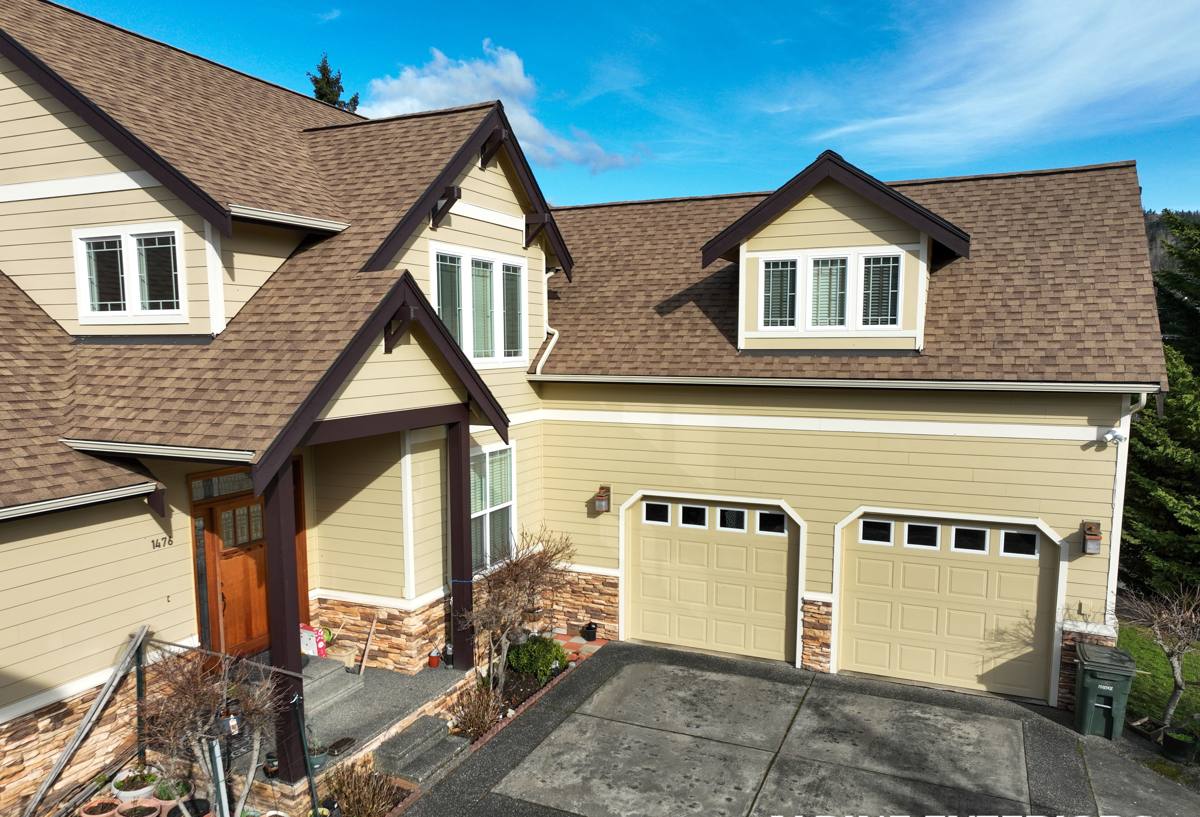
What Fairhaven's Weather Does to a Deck Over Time
It helps to understand the specific stresses at work before talking about materials or process. In Whatcom County's marine climate, a few things happen to decks near the water that don't happen the same way further inland:
- Salt air accelerates corrosion. Standard galvanized fasteners and hardware can start rusting years before they would in a drier, less coastal setting, especially where two dissimilar metals touch.
- Driving rain finds gaps. Wind-driven rain off the bay doesn't just fall straight down — it can push moisture sideways into ledger connections, stair stringers, and any joint that isn't properly flashed or sealed.
- Moss and algae hold moisture against wood. A long damp season means moss doesn't just look bad — it traps water against decking boards and framing, which is exactly the condition that leads to rot and slick, unsafe surfaces.
- Freeze-thaw cycles are milder but not absent. Whatcom County still gets enough cold snaps that trapped water in end grain or fastener holes can freeze, expand, and split wood over a few seasons.
None of this means a deck can't last for decades in Fairhaven. It means the design and material choices need to assume this climate from day one, rather than treating it as an afterthought.
Choosing the Right Decking Material for This Location
There's no single "best" decking material for every home — it depends on budget, how much upkeep you want to do, and how close the deck sits to the water and prevailing wind. Here's how the common options compare for a Fairhaven property specifically:
| Material | Salt Air Behavior | Moss Resistance | Maintenance Level |
|---|---|---|---|
| Pressure-treated wood | Good if fasteners are stainless or coated; wood itself holds up well when sealed | Needs regular cleaning and resealing to resist moss buildup | Higher — annual cleaning, periodic sealing |
| Cedar | Naturally rot-resistant, but surface can gray and soften faster in salt air without upkeep | Moderate — still needs cleaning, moss takes hold in shaded, damp areas | Moderate to high |
| Capped composite | Excellent — non-porous cap resists salt exposure and doesn't absorb moisture | Good — smooth or textured caps shed moss more easily and clean up with soap and water | Low — occasional washing |
| Uncapped composite | Fair — some older or budget composites can absorb moisture at cut edges | Fair — can develop surface mildew if not cleaned | Low to moderate |
We don't push one material on every job. A cedar deck under a covered porch that's protected from direct wind and rain can perform beautifully for years. The same board choice on an open, exposed deck facing the bay is a different conversation. Part of a correct estimate is walking the site and being honest about which material fits that specific exposure.
Fasteners and Hardware Matter as Much as the Decking
This is where a lot of decks quietly fail years before the boards do. In a salt-air environment, we specify stainless steel or coated fasteners rated for coastal or ACQ-treated lumber use, and we avoid mixing metals that can accelerate galvanic corrosion. Structural hardware — joist hangers, post bases, ledger bolts — gets the same attention. A deck can look fine on the surface while its connectors are quietly rusting away underneath.
What a Correctly Built Deck Actually Involves
A deck is a structural project, not just a surface to walk on. Building it right in this climate means getting several things correct at once:
Footings and Framing
Footings need to be sized and set below frost depth per Whatcom County requirements, with posts and beams sized for the actual span and load — not just "what looks about right." Framing lumber should be rated for ground contact where it's close to grade, and joists need proper spacing for the decking material chosen, since composite and wood often call for different joist spacing to avoid sagging.
Ledger Attachment and Flashing
Where a deck attaches to the house, the ledger board connection is one of the most common failure points in the entire structure — and one of the most common causes of water intrusion into the home itself. Proper flashing (not just caulk) needs to direct water away from the house band board, with a gap or drainage path so moisture doesn't sit trapped against the siding.
Drainage and Airflow Underneath
A deck built low to the ground with no airflow underneath traps moisture and speeds up moss growth and rot, especially in a climate that doesn't dry out quickly between rain events. Grading the ground below to shed water, and leaving adequate clearance, makes a real difference over the life of the structure.
Stairs and Railings
Stair stringers see concentrated foot traffic and are often the first place moss makes a deck genuinely dangerous underfoot. Railings need secure post attachment — not just toe-screwed into decking — since a loose railing is a liability regardless of how nice the boards look.
Our Process, Start to Finish
For a Fairhaven deck project, the process generally looks like this:
- On-site walk-through. We look at sun and wind exposure, drainage on the lot, how close the site is to the water, and what's realistic given the home's structure and grade.
- Honest material conversation. We go over the trade-offs in the table above based on your specific site — not a one-size-fits-all recommendation.
- Written estimate. Scope, materials, and timeline in plain language, including what's involved with permitting if the project requires it.
- Permitting. Deck projects above certain sizes or heights typically require a permit in Whatcom County; we handle that process rather than leaving it to guesswork.
- Construction. Footings, framing, ledger flashing, decking, and railings, built to hold up to the specific conditions this location sees.
- Final walk-through. We go over the finished deck with you, including what maintenance it will and won't need.
Maintaining a Deck in a Moss-Prone, Salt-Air Environment
Even a well-built deck needs some ongoing attention in this climate. What that looks like depends on material, but a general maintenance checklist for a Fairhaven deck includes:
- Sweeping debris and standing leaves off the surface regularly, especially in shaded corners where moss gets a foothold first
- Washing the deck surface at least once or twice a year to remove salt residue, pollen, and early moss growth before it embeds
- Checking railings and stair connections annually for looseness, which often shows up before visible wood damage does
- Inspecting fastener heads and hardware for early rust staining, particularly on decks with more direct exposure to wind off the bay
- Resealing or restaining wood decking on the manufacturer's recommended schedule — skipping this is the single biggest reason wood decks age poorly here
- Keeping gutters and downspouts near the deck clear so runoff isn't dumping extra water directly onto or under the structure
Why Local Experience in Fairhaven Matters
A contractor who mostly builds decks inland, away from the water, may not think twice about fastener grade or ledger flashing detail — because in a drier setting, those shortcuts don't show up for a long time. In Fairhaven's marine climate, they show up fast: a rusted hanger, a soft ledger connection, a deck that's slick with moss by the second winter. Working regularly in this specific part of Whatcom County means we've already seen which details matter here and which corners genuinely cannot be cut, rather than learning that on your project.
Permits and Whatcom County Requirements
Deck projects in and around Fairhaven generally fall under Whatcom County or City of Bellingham building requirements depending on the exact location, and most decks above a certain height or size need a permit and inspection. Setback rules, especially for properties closer to the water, can also affect where a deck can be built and how it's designed. We handle this as part of the project rather than treating it as the homeowner's problem to sort out separately.
If you're weighing your options for a new deck or need to replace one that hasn't held up to Fairhaven's weather, we're happy to take a look and give you a straightforward, no-pressure estimate — just fill out the form below.