 Whatcom County
 Fairhaven's Climate Is Harder on Siding Than Most Homeowners Realize
Fairhaven sits right on Bellingham Bay, which means homes here deal with a combination of stressors that inland Whatcom County properties simply don't face as often. Salt-laden air moves in off the water, wind-driven rain hits siding at angles that never let it fully dry, and the deep shade from mature evergreens combined with our long, wet winters creates ideal conditions for moss, algae, and mildew to take hold. Any one of these factors will shorten the life of the wrong siding material. Together, they're a genuine test of what a product and an installation crew can hold up to over 20 or 30 years.
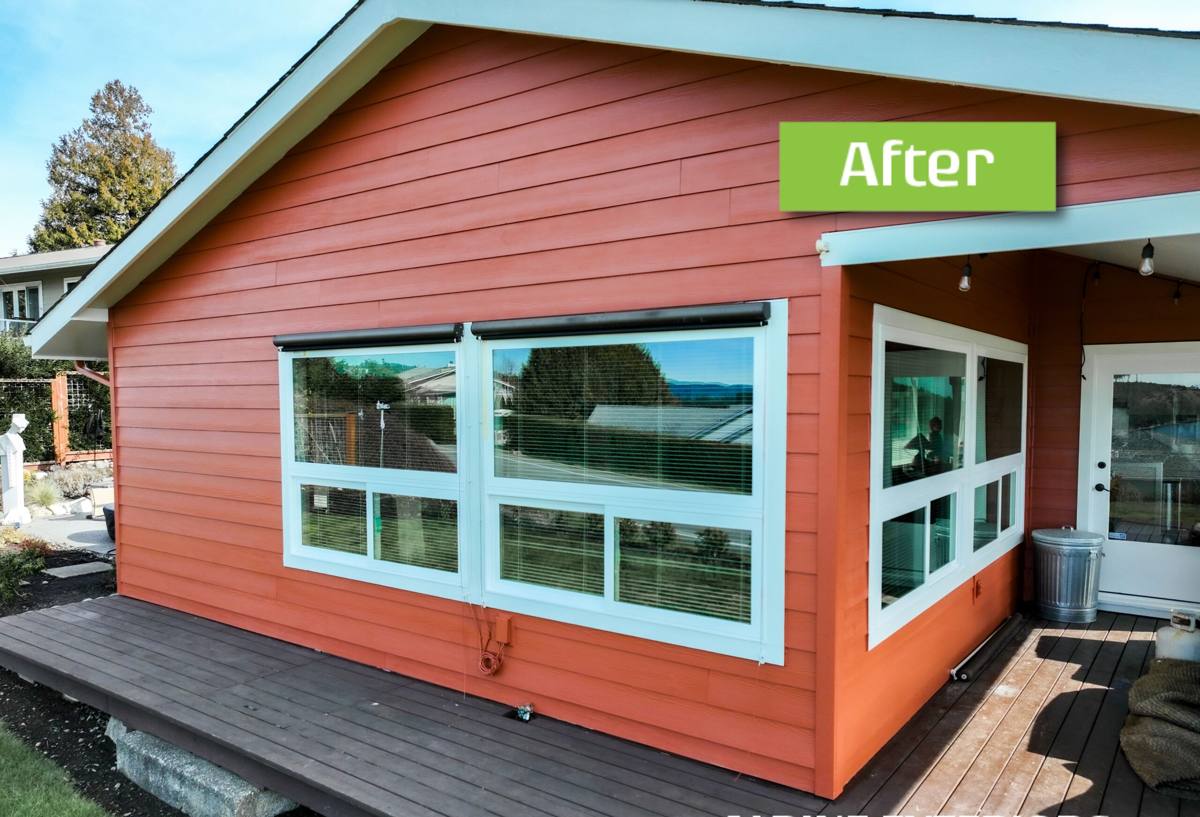
We install James Hardie fiber cement siding exclusively, and Fairhaven is one of the areas where that decision matters most. This page walks through what the local climate actually does to siding, what a correct Hardie installation looks like on a home this close to the water, and how our process is built around those realities rather than around a generic install checklist.
What Salt Air, Rain, and Moss Actually Do to a House
Salt Air and Corrosion
Airborne salt from the bay settles on every exterior surface, including siding, trim, and fasteners. It's not just cosmetic. Salt accelerates corrosion in metal flashing, nails, and screws, and it can degrade the finish on lower-quality siding products faster than inland weathering would. Fasteners that aren't rated for coastal exposure are often the first thing to fail on a Fairhaven home, well before the siding panels themselves show any wear.
Driving Rain
Whatcom County gets a lot of rain, but what matters more for siding is how much of it arrives horizontally. Wind off the bay pushes rain sideways into wall assemblies, which puts real pressure on laps, seams, and any point where siding meets a window, door, or trim board. A siding system that relies on caulk alone to keep water out will eventually let moisture behind the cladding, and once that happens, the sheathing and framing underneath are at risk long before anyone notices a problem from the street.
Moss and Organic Growth
Shaded, north-facing walls and anything under tree cover stay damp for extended stretches during our fall-through-spring wet season. That constant moisture is exactly what moss, algae, and mildew need to establish themselves. On porous or absorbent siding materials, organic growth doesn't just sit on the surface — it can hold moisture against the material and contribute to rot or delamination over time.
Why We Standardized on James Hardie for Homes Like This
James Hardie fiber cement is engineered specifically to resist the conditions that cause the most damage in a marine climate. It's non-combustible, dimensionally stable, and doesn't absorb water the way wood-based or wood-fiber products can. Hardie's HardieZone system assigns specific formulations to different climate regions, and Whatcom County falls into the zone engineered for moisture-heavy, humid conditions — which is precisely what Fairhaven throws at a house for most of the year.
The factory-applied ColorPlus finish is also a meaningful advantage here. It's baked on under controlled conditions and backed by its own finish warranty, which means the color and coating aren't dependent on job-site weather during installation — something that matters a great deal when you're trying to schedule painting or staining around a Pacific Northwest rain forecast. A factory finish also resists the fading and chalking that field-applied paint can show earlier, particularly on walls that take direct salt spray or prolonged UV exposure.
We don't install vinyl, LP SmartSide, Cemplank, Allura, or untreated wood siding, and Fairhaven's climate is a big part of why. Vinyl can warp and become brittle with temperature swings and doesn't hold up as well against wind-driven debris. Wood-based and wood-fiber products need consistent maintenance to keep moisture out, and a missed season of upkeep on a bay-facing wall can undo years of otherwise good care. Hardie isn't the cheapest option on the shelf, but it's the one we're willing to stand behind on homes that face this kind of exposure.
Comparing Siding Options for Coastal Whatcom County Homes
| Material | Salt Air Resistance | Moisture/Rot Risk | Moss Resistance | Typical Maintenance |
|---|---|---|---|---|
| James Hardie Fiber Cement | Strong | Very low | Strong | Occasional wash; no repainting needed |
| Vinyl | Moderate | Low (but traps moisture behind panels) | Moderate | Periodic cleaning; can warp or fade |
| Wood/Cedar | Weak | High without upkeep | Weak | Regular sealing/painting, moss treatment |
| LP SmartSide (engineered wood) | Moderate | Moderate, sensitive to cut-edge sealing | Moderate | Repainting cycle, edge maintenance |
What a Correct James Hardie Installation Requires Here
The product is only half the equation. On a bay-exposed home, installation details determine whether that product performs the way it's designed to for its full service life. A correct job in Fairhaven includes:
- A properly lapped weather-resistive barrier behind the siding, with all seams and penetrations sealed before a single piece of Hardie goes up
- A rainscreen or drainage gap where conditions call for it, so any moisture that does get behind the cladding can drain and dry instead of sitting against the sheathing
- Corrosion-resistant fasteners rated for coastal and coastal-adjacent exposure, installed at the spacing and edge distance Hardie specifies
- Correct clearances from grade, roofing, and horizontal surfaces so siding isn't sitting in standing water or constant splash-back
- Properly flashed and sealed transitions at windows, doors, and any place trim meets siding — the most common failure points during wind-driven rain
- Factory-cut or properly sealed field cuts, since an unsealed cut edge is one of the few places moisture can enter fiber cement
Skipping any one of these steps doesn't usually cause an immediate problem. It shows up two, five, or ten years later as a moisture issue that's far more expensive to fix than it would have been to install correctly the first time.
Our Process for a Fairhaven James Hardie Project
- On-site assessment: We look at wall exposure, existing moisture damage, current siding condition, and how much sun, shade, and wind each elevation of the house gets.
- Product and color selection: We help you choose the Hardie plank profile, panel style, and ColorPlus color that fits the home and holds up well against the specific exposure your walls face.
- Prep and repair: Any water-damaged sheathing or framing found during tear-off gets addressed before new siding goes on — we don't cover up a problem that's already started.
- Weather barrier and drainage installation: This is the layer that does the real work of keeping bulk water out, and it gets as much attention as the visible siding.
- Installation to Hardie's fastening and clearance specifications: Following the manufacturer's install requirements is what keeps the product warranty valid and the wall assembly performing correctly.
- Final detailing and cleanup: Trim, caulking at appropriate joints, touch-up, and a full site cleanup before we call the job done.
- Warranty registration: We make sure your project is properly registered so your Hardie product warranty is documented and in force.
What Affects the Cost of a Fairhaven Siding Project
| Cost Factor | Why It Matters |
|---|---|
| Home size and wall complexity | More corners, gables, and dormers mean more cutting, flashing, and labor time |
| Siding profile chosen | Lap siding, shingle-style panels, and board-and-batten each have different material and labor costs |
| Existing moisture damage | Rot found under old siding needs to be repaired before new siding goes on, which adds scope |
| Trim and detail work | Window and door surrounds, corner boards, and fascia detail add both material and labor |
| Access and site conditions | Grade, landscaping, and proximity to neighboring structures affect scaffolding and staging |
| Tear-off vs. new construction | Removing and disposing of old siding adds cost compared to new-build installation |
We give every Fairhaven homeowner a specific, written estimate based on their actual home rather than a per-square-foot guess — a shaded, bay-facing wall with existing moisture damage is simply a different job than a sheltered south wall in good condition.
Maintaining James Hardie Siding in a Marine Climate
Hardie siding is low-maintenance compared to wood or engineered wood products, but "low-maintenance" doesn't mean "no attention needed," especially this close to the water. A simple seasonal routine keeps it performing the way it's designed to:
- Rinse siding with a garden hose (not a pressure washer at close range) once or twice a year to remove salt residue and airborne grime
- Check shaded and north-facing walls for early moss or algae growth and treat it before it spreads
- Inspect caulking at trim and window transitions annually and re-caulk any joints that have cracked or pulled away
- Keep gutters and downspouts clear so overflow isn't running down or pooling against siding
- Trim back vegetation and tree cover that's keeping a wall section damp longer than the rest of the house
- Look at fastener heads and flashing periodically for early signs of corrosion, particularly on the walls facing the bay
Why Local Experience Matters for This Job
Fairhaven's mix of older homes, waterfront exposure, and dense tree cover means every property has its own combination of sun, wind, shade, and moisture patterns to design around. A crew that already works in this neighborhood knows which elevations typically take the worst weather, where moss tends to establish first, and how to detail a job so it holds up against conditions that a one-size-fits-all installation approach doesn't account for. That local pattern recognition — combined with a product built for this exact climate zone — is what separates a siding job that looks good on install day from one that still looks good in fifteen years.
If you're planning a siding project in Fairhaven or elsewhere in Whatcom County, we're happy to take a look at your home and walk you through what we'd recommend and why. Reach out for a free, no-pressure estimate using the form below.