 Whatcom County
New-Construction Windows Built for Fairhaven's Marine Climate
Fairhaven sits close enough to Bellingham Bay that salt-laden air, wind-driven rain, and a long stretch of damp, mossy weather are just part of building here. When a new home or addition goes up in this neighborhood, the windows aren't just a design choice — they're one of the first lines of defense against moisture intrusion that can quietly damage framing, sheathing, and interior finishes for years before anyone notices. Getting new-construction windows right the first time matters more here than in drier parts of Whatcom County, because a poorly flashed window opening in a marine climate doesn't just leak — it feeds mold, rot, and corrosion that's expensive to chase down later.
This page is about one job done one way in one place: installing new-construction windows correctly on homes being built or substantially framed in Fairhaven. It's not a general window guide — it's what we've learned works for this specific coastline, this rainfall pattern, and this housing stock.
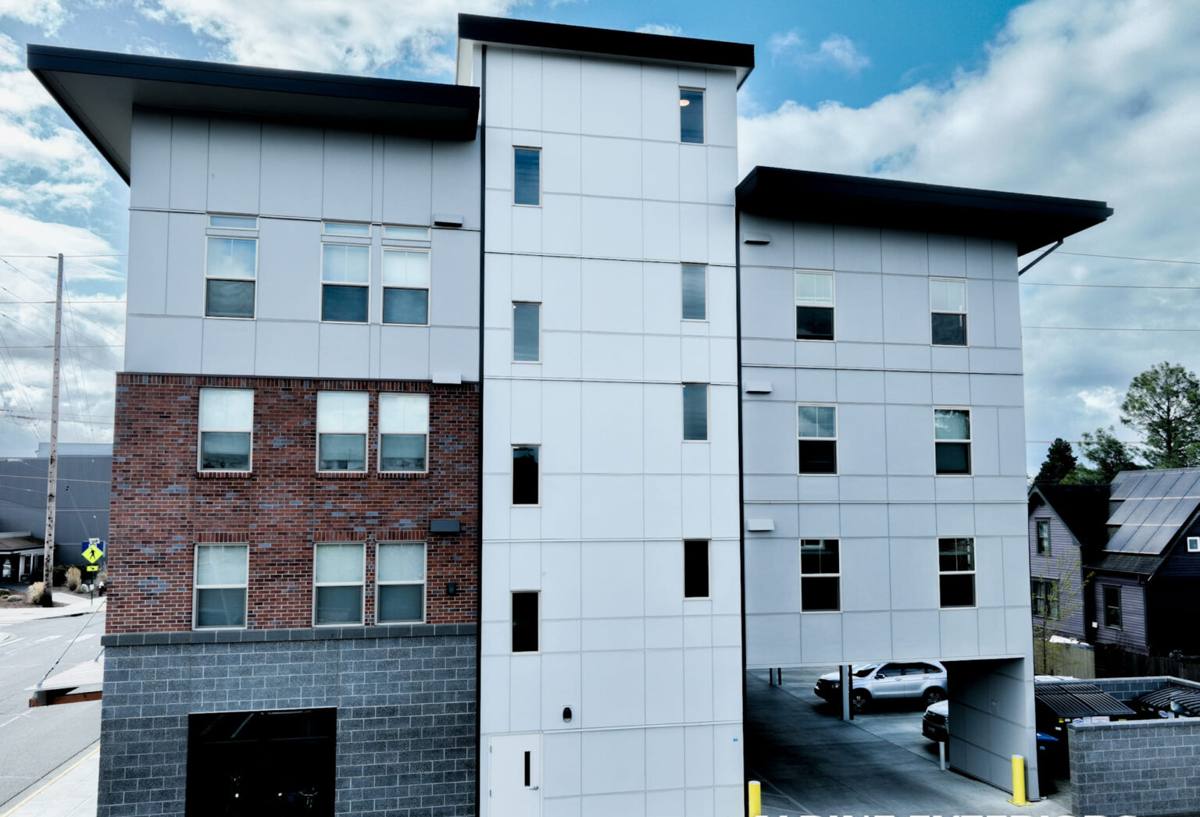
What Fairhaven's Climate Actually Does to Windows Over Time
Three climate factors show up again and again in the window work we do around Fairhaven:
- Salt air: Proximity to the bay means airborne salt settles on exterior surfaces, accelerating corrosion of untreated metal fasteners, hardware, and some lower-grade cladding finishes.
- Driving rain: Storms off the water often push rain sideways, not straight down. That means water pressure against window openings from angles that a lazy flashing job simply won't stop.
- Long moss season: Extended cool, wet stretches keep exterior surfaces damp for months at a time, which gives algae and moss a foothold anywhere water is allowed to sit or drain slowly — including window sills and trim.
None of these factors are dramatic on their own. The damage they cause is slow and cumulative, which is exactly why new-construction window installation has to be treated as a system — flashing, sealant, frame material, and drainage all working together — rather than a single product decision.
New-Construction Windows vs. Replacement Windows — Why It's a Different Job
A lot of homeowners assume window installation is window installation. It isn't. New-construction windows have a nailing flange and are installed into an open, unfinished wall before siding and house wrap are fully closed up. That gives us access to the full rough opening, the sheathing, and the framing — which is both an advantage and a responsibility.
Because everything is exposed during a new build, there's no excuse for shortcuts. Every flashing layer, every seam, and every drainage path can be built correctly from the studs out. A house going up in Fairhaven that gets this step right will handle decades of coastal weather far better than one where the crew rushed to close in the walls before winter.
What a Correct Installation Actually Involves
Flashing and Water Management
The single biggest factor in whether a new-construction window leaks in five, ten, or twenty years isn't the window brand — it's the flashing detail underneath it. A correct install follows a layered, shingle-style sequence so water is always directed outward and downward, never trapped behind the cladding:
- A sloped sill pan at the bottom of the rough opening, so any water that gets past the window drains back outside instead of pooling on the sill.
- Self-adhered flashing membrane at the jambs and head, lapped in the correct order (sill, then jambs, then head) so upper layers always shed onto lower ones.
- Proper integration with the house wrap or weather-resistive barrier — the flashing has to tie into the wall's drainage plane, not just sit on top of it.
- A weep path or drainage gap so incidental water can escape rather than accumulate at the bottom of the frame.
In a marine climate like Fairhaven's, skipping or rushing any one of these steps is where future leaks start. It's also the part of the job that's invisible once the siding goes on — which is exactly why it needs to be done right the first time, and why it's worth asking a contractor to walk you through it before they cover it up.
Sealant and Fastening Details
Fasteners and sealants near salt air need to be chosen deliberately. Corrosion-resistant fasteners rated for exterior and coastal-adjacent use hold up far longer than standard hardware, and sealant beads at the nailing flange and trim need to remain flexible through freeze-thaw cycles and constant damp without cracking. A quality sealant with a proper joint width does more long-term work than people expect — it's a small detail that either holds for twenty years or fails in five.
Choosing Frame Materials and Glass for This Location
Frame material and glass package both affect how a window performs against salt air, driving rain, and long wet winters. Here's how the common options stack up for a Fairhaven build:
| Frame Material | Coastal/Moisture Behavior | Maintenance |
|---|---|---|
| Vinyl | Won't corrode or rot; performs well against salt air and moisture | Low — occasional cleaning |
| Fiberglass | Very stable in wet, temperature-swinging conditions; strong moisture resistance | Low |
| Wood or wood-clad | Attractive but more vulnerable to moisture at joints if detailing isn't precise | Higher — periodic finish upkeep |
| Aluminum (uncoated) | Prone to corrosion and condensation in salt-air, marine settings | Higher — coating maintenance needed |
We generally steer new-construction clients in Fairhaven toward vinyl or fiberglass frames for this reason — not because wood or aluminum are bad products, but because they demand more upkeep and more precise detailing to perform well this close to the water. If a homeowner wants the look of wood, a clad option that pairs a wood interior with a weather-facing exterior shell is usually the better trade-off for this climate.
On glass, a dual-pane, low-E unit with warm-edge spacers is the practical baseline for this region — it manages condensation better through our damp winters and keeps heating costs down through Whatcom County's mild but persistent gray season. Argon-filled units add a modest efficiency bump and are worth considering for west- and south-facing openings that take the brunt of storm-driven rain.
How Our Process Works on a Fairhaven New Build
New-construction window work has to fit into a tight sequence with framing, house wrap, and siding crews. Our process is built around not being the bottleneck, and not being the reason a wall gets closed up before it's ready:
- Rough opening check — verifying dimensions, plumb, and square before any window arrives on site.
- Sill pan and flashing membrane installed in the correct shingle-lap order, tied into the house wrap.
- Window set, shimmed level and plumb, and fastened through the nailing flange per manufacturer spec.
- Head flashing and final membrane laps completed and inspected before siding crews close in the wall.
- Interior and exterior sealant applied at appropriate joints, with attention to gaps that could let moisture or air infiltrate.
- Final walk-through with photos of the flashing details, since that part of the job disappears once siding goes on.
That documentation step matters more than people expect. Once the wall is closed up, nobody can see whether the flashing was done correctly — so we make sure there's a record of it while it's still visible, for the homeowner's own peace of mind.
Common Mistakes We See in New-Construction Window Installs
Most window problems we get called to diagnose later trace back to a handful of avoidable errors during the original install:
- Flashing layers installed out of order, so water gets directed behind the barrier instead of over it.
- No sloped sill pan, leaving a flat surface where water can sit and eventually find its way inward.
- Nailing flange fastened but not sealed correctly at the corners, where most flashing tape fails first.
- Using standard, non-coastal-rated fasteners that begin corroding within a few years of salt-air exposure.
- Rushing the install to keep pace with framing crews, skipping inspection of laps before covering with siding.
None of these mistakes are visible on move-in day. They show up two, five, or ten years later as staining, soft trim, or interior moisture — long after the crew that installed them is gone.
Cost Factors for New-Construction Windows in This Area
Every new build is different, but the factors that typically move the price on a Fairhaven job are consistent:
| Factor | Why It Affects Cost |
|---|---|
| Frame material | Vinyl is generally the most economical; fiberglass and wood-clad cost more upfront but suit coastal exposure better |
| Glass package | Low-E, argon-filled, or impact-considerations add cost but reduce condensation and energy loss |
| Number and size of openings | More openings and larger units mean more flashing detail work and material |
| Wall height and access | Multi-story or hard-to-access openings add labor time |
| Coordination with other trades | Scheduling around framing and siding crews affects how efficiently the install can proceed |
Broadly, homeowners should expect new-construction window packages to range from a modest per-opening cost for standard vinyl units up into a considerably higher range for larger, high-performance, or clad units — the honest answer is that it depends heavily on the specifics of the build, which is exactly what a walk-through and estimate are for.
Why Hiring a Crew That Already Works Fairhaven Matters
A contractor who's worked other parts of Whatcom County but not specifically along the Fairhaven waterfront may not think twice about a flashing detail that's optional inland but non-negotiable here. Salt air, wind-driven rain off the bay, and the long moss season aren't abstract talking points to a crew that's already dealt with the callbacks from getting them wrong. Local experience means knowing which frame materials hold up, which fastener grades are worth the extra cost, and which flashing sequence actually stands up to a Fairhaven winter storm — not just what a manufacturer's install sheet says in general terms.
It also means being available if something does come up after the build is finished. A crew with a real, ongoing presence in this neighborhood has a reputation to protect here and isn't disappearing to the next county over once the final invoice is paid.
If you're planning new-construction windows for a home or addition in Fairhaven, we're happy to walk the site, talk through frame and glass options suited to this stretch of Whatcom County, and put together a straightforward, no-pressure estimate — just fill out the form below.