 Whatcom County
Asphalt Shingle Roofing in Ferndale, Washington
Ferndale sits close enough to the water and the refineries north of Bellingham that its roofs deal with a specific combination of stress most inland Washington towns don't see: salt-laden air moving in off Bellingham Bay and the Strait, long stretches of driving rain through fall and winter, and a moss season that can run eight months or more. Asphalt shingle roofing is still the right call for most Ferndale homes — it's cost-effective, well understood, and easy to repair — but only when it's specified and installed with this climate in mind. A shingle roof that would hold up fine in a drier part of the state can underperform here if the underlayment, ventilation, and flashing details aren't matched to what Whatcom County actually throws at a roof.
This page covers what we look at, what we install, and how we run a Ferndale roofing job specifically — not a generic overview of asphalt shingles.
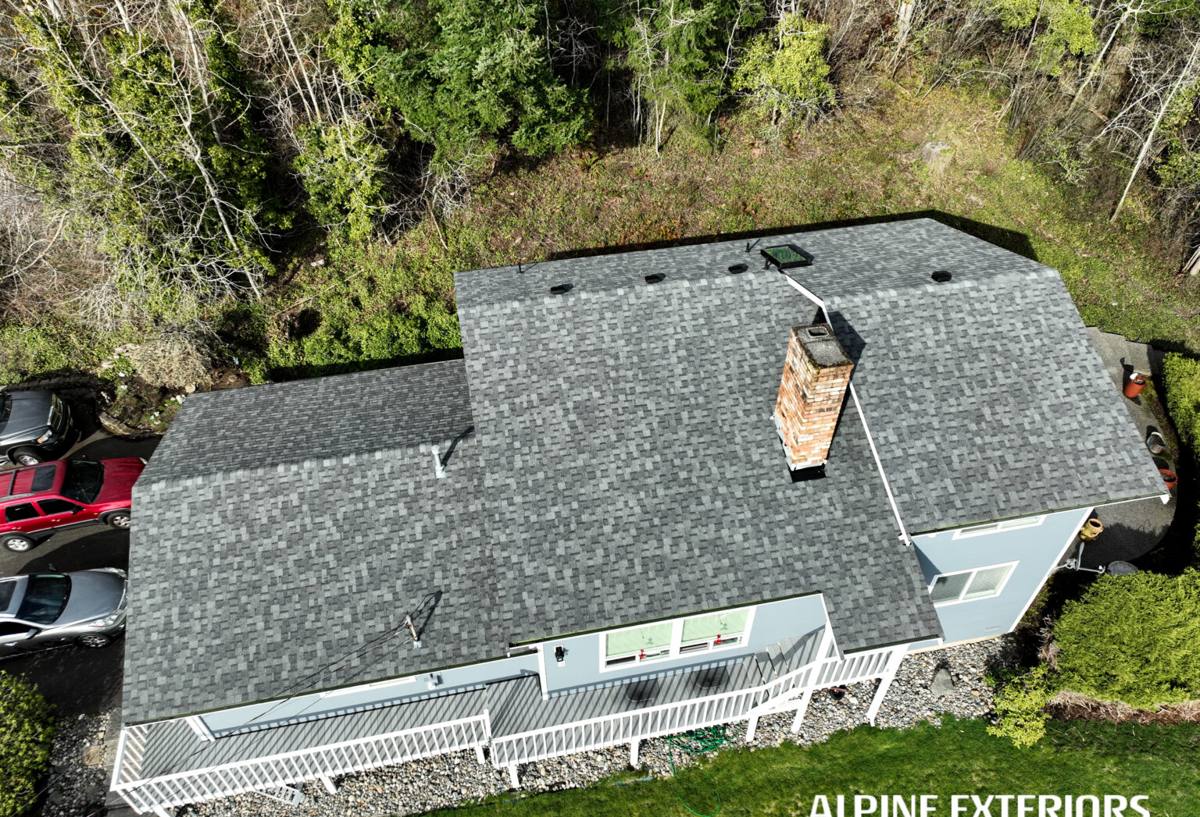
What Ferndale's Climate Actually Does to a Roof
Salt Air and Metal Components
Ferndale's proximity to saltwater means metal roofing components — flashing, drip edge, nail heads, vent stacks — corrode faster here than they do twenty or thirty miles inland. Cheap galvanized fasteners and bargain flashing show rust streaks and pitting years before they should. We spec corrosion-resistant metal for anything exposed, because replacing flashing on a roof that's only a few years old is a waste of money that's easy to avoid up front.
Driving Rain and Wind-Driven Water
Rain in this part of Whatcom County doesn't always fall straight down. Wind off the water pushes it sideways, which means water finds its way under shingles at valleys, eaves, and anywhere the roof plane changes. Standard shingle installation assumes mostly vertical water flow — a roof built for Ferndale needs extra attention at those transition points, or the "roof leak" homeowners eventually deal with is really a water-intrusion problem that was baked in at installation.
Moss and Sustained Moisture
Moss needs shade, moisture, and time — Ferndale's tree cover and long damp season supply all three. Moss doesn't just look bad; it holds water against the shingle surface, lifts shingle edges as it grows, and works its way under tabs and flashing. A roof with poor airflow underneath or heavy shade exposure will grow moss faster than one that's been designed to shed water and dry out between rain events.
What a Correctly Installed Shingle Roof Needs Here
- Ice-and-water shield at eaves and valleys — not just a code minimum, but extended coverage where wind-driven rain and ice dams are most likely to force water backward under shingles.
- Balanced ventilation — intake at the soffits and exhaust at the ridge, sized to actually move air through the attic, which slows moss growth on the deck side and prevents condensation that rots sheathing from underneath.
- Corrosion-resistant metal for all flashing, drip edge, and fasteners, given the salt air moving inland from the bay.
- Proper valley treatment — closed-cut or open metal valleys installed correctly matter more here than in drier climates, because valleys are where driving rain concentrates.
- Starter strip and sealed tabs at eaves and rakes — the first line of defense against wind uplift during winter storms.
- Shingle wind rating matched to exposure — a roof exposed to open wind off the water needs a higher wind rating than one tucked into a sheltered lot.
Choosing the Right Shingle for a Ferndale Roof
Not every asphalt shingle product is built the same, and the differences matter more in a wet, salty, moss-prone climate than they would somewhere drier.
| Factor | What to Look For | Why It Matters in Ferndale |
|---|---|---|
| Algae/moss resistance | Shingles with copper- or zinc-infused granules | Slows moss and algae growth on a roof that stays damp much of the year |
| Wind rating | 110 mph+ rated products for exposed sites | Protects against gusts off the water and winter storm systems |
| Warranty structure | Manufacturer warranty backed by certified installation | Many warranties are voided by incorrect ventilation or flashing — installation quality is part of the coverage |
| Shingle weight/thickness | Architectural (laminated) over 3-tab where budget allows | Heavier shingles hold up better to sustained rain and wind cycling over time |
| Underlayment pairing | Synthetic underlayment plus ice-and-water membrane at vulnerable zones | A shingle is only as good as what's under it when water gets past the surface layer |
We don't push homeowners toward the most expensive product on the shelf. In most cases a mid-tier architectural shingle with algae-resistant granules and correct installation outperforms a premium shingle that was installed without attention to ventilation and flashing detail. Installation quality closes more of the performance gap than the shingle brand does.
Our Process on a Ferndale Roofing Job
1. Roof Assessment
We walk the roof and the attic, not just the roof. Ventilation problems, moisture staining on the underside of the deck, and existing moss patterns tell us more about what the roof needs than a look from the ground ever will.
2. Honest Scope and Estimate
We tell homeowners plainly whether they're looking at a full tear-off and replacement or whether targeted repairs will hold for a few more years. We don't sell a full roof when a repair is the honest answer, and we don't recommend a patch job on a roof that's past the point where patching makes sense.
3. Tear-Off and Deck Inspection
Once the old roofing is off, we check the deck itself for soft spots, rot, or delamination — common where moss has been holding moisture against the sheathing for years. Bad deck sections get replaced before anything new goes down; covering a compromised deck just hides the problem.
4. Underlayment and Flashing First
This is where a Ferndale roof earns its long-term performance. Ice-and-water shield at eaves, valleys, and penetrations; synthetic underlayment across the field; new corrosion-resistant flashing and drip edge throughout. This layer does more to prevent future leaks than the shingle itself does.
5. Shingle Installation
Installed to manufacturer spec for nailing pattern, exposure, and starter courses — details that affect both wind performance and warranty validity.
6. Ventilation Check
We confirm intake and exhaust airflow is balanced before we call the job finished. A new roof with old, inadequate ventilation will still trap moisture and grow moss faster than it should.
7. Final Walkthrough
We walk the finished roof and the site with the homeowner, explain what was done and why, and answer questions before we consider the job complete.
Why a Crew That Already Works Ferndale Matters
Roofing crews that work across a wide, varied territory tend to default to generic specs because it's simpler than adjusting for every microclimate they encounter. A crew that regularly works Ferndale and the surrounding Whatcom County area already knows which lots sit exposed to wind off the water, which neighborhoods deal with heavier tree cover and moss pressure, and which older homes in the area were built with ventilation that doesn't meet what a modern shingle roof needs. That local pattern recognition shows up in fewer callbacks and roofs that actually perform the way they're supposed to for their full warranty life, not just the first few dry summers.
Maintenance That Actually Extends Roof Life Here
- Keep gutters clear — clogged gutters back water up under the shingle edge, especially during heavy fall rain.
- Have moss treated or gently removed before it builds up thick mats, rather than after — moss removal on a heavy growth can damage shingle granules if it's not done carefully.
- Trim back overhanging branches where possible to reduce shade and speed up drying time after rain.
- Have the roof looked at after major wind events — lifted or missing tabs are easy to fix early and expensive to ignore.
- Check attic ventilation periodically — blocked soffit vents (often from insulation or debris) quietly undermine an otherwise good roof.
What Affects Cost on a Ferndale Roofing Project
Every roof is different, but a few factors consistently move the number for homes in this area: roof size and pitch, how many layers of existing roofing need to be removed, deck condition once the old roofing is off, the number of valleys and penetrations requiring flashing work, and the shingle tier selected. Homes with heavier moss history or deck damage from long-term moisture exposure typically need more deck repair than homes that have been maintained consistently. We give straightforward, itemized estimates so homeowners can see exactly what they're paying for and why.
If your Ferndale home needs a roof inspection, a repair, or a full asphalt shingle replacement, we're glad to take a look and give you a straight answer — no pressure, no upsell. Use the form below to request a free estimate.