 Whatcom County
Composite Decking Built for Ferndale's Climate
Ferndale sits close enough to Bellingham Bay and the Salish Sea that salt-laden air is a regular part of the weather, and it's far enough north and west that rain isn't seasonal here — it's a year-round condition to design around. Add in the long stretch of low-angle winter sun, damp shade under mature trees, and the moss that follows both, and you've got a climate that is genuinely hard on outdoor living spaces. A deck built here doesn't just need to look good on installation day. It needs to survive repeated wet-dry cycles, resist moss and mildew in shaded corners, and hold up to salt air without the surface breaking down or the fasteners corroding underneath.
Composite decking exists largely because of climates like this one. It doesn't mean every composite board is a good fit for every yard, or that installation details don't matter — they matter more here than almost anywhere else. This page covers what Ferndale homes actually need from a composite deck, what a correct installation looks like, and why the details of that installation matter more than the brand name on the board.
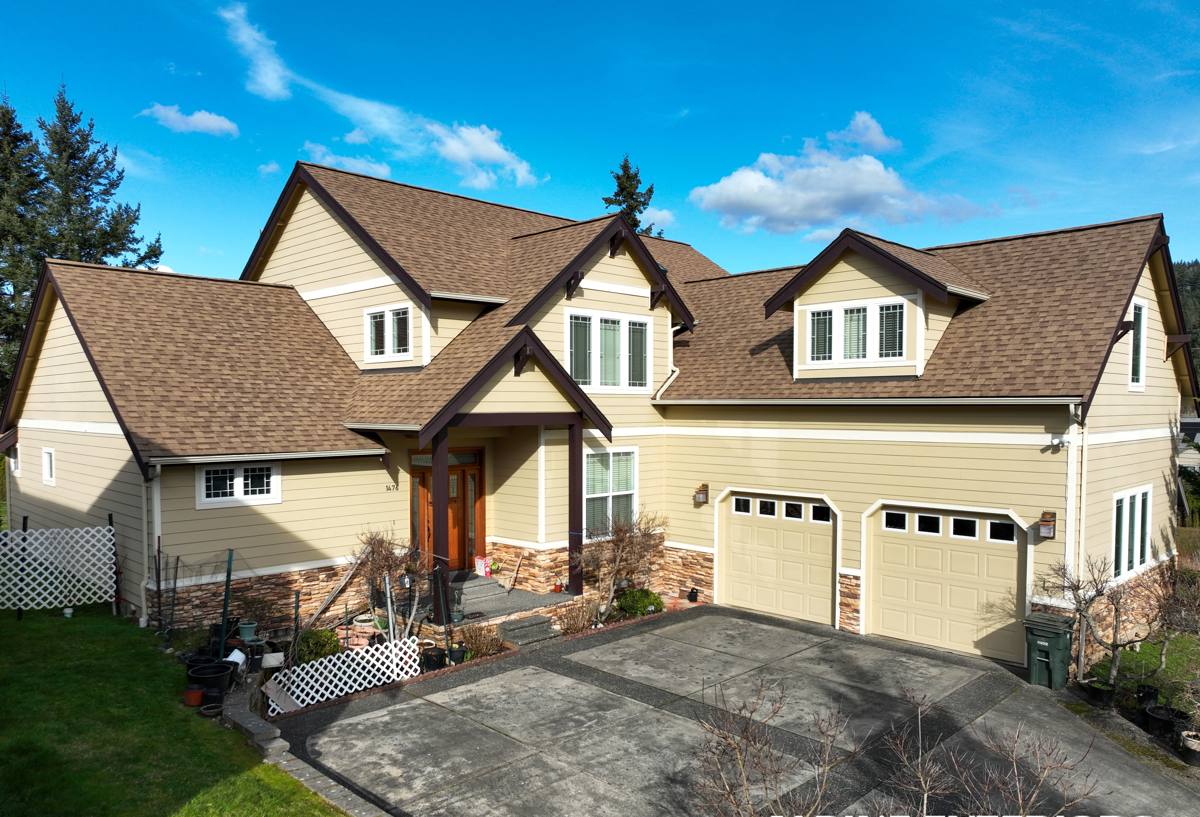
What Whatcom County Weather Does to a Deck Over Time
Most deck problems we see in this area aren't dramatic failures — they're slow, cumulative damage from moisture that never fully dries out between rain events. A few specific patterns show up again and again around Ferndale:
- Moss and algae growth on north-facing or shaded sections that stay damp for days at a time, especially under overhangs or near fence lines.
- Fastener corrosion where standard hardware wasn't rated for coastal humidity and salt exposure, leading to rust streaks and loosened boards.
- Substructure rot hidden under the decking surface, where joists and beams trap moisture long after the top of the deck looks dry.
- Warping and cupping in wood boards that absorb water unevenly through repeated wet winters and drier summers.
- Slippery surfaces from a mossy film that builds up faster than most homeowners expect, particularly on boards with a smooth, low-texture face.
None of these are unusual for the region — they're just what happens when a deck isn't built or maintained with this specific climate in mind. Composite decking addresses several of these issues at the material level, but the substructure, drainage, and fastening decisions underneath the boards still determine whether a deck actually performs the way it should.
Why Composite Makes Sense for Ferndale Homes
Composite boards are made from a blend of wood fiber and plastic, which gives them a meaningful advantage over solid wood in a wet climate: they don't absorb water the way wood does, so they're far less prone to warping, splintering, or rot at the board level. Most modern composite boards also have a capped or shell exterior that resists surface staining and makes moss and algae easier to rinse off rather than letting it work into the grain.
That said, composite isn't maintenance-free, and we don't tell clients it is. A capped composite board still needs periodic cleaning to keep moss from getting a foothold in shaded, low-airflow areas, and the color can shift slightly over years of UV exposure even under Whatcom County's relatively mild sun. What composite does reliably deliver, when installed correctly, is a board that won't rot, won't need refinishing, and won't require the annual staining cycle that keeps wood decks looking presentable in a climate this wet.
Where Composite Isn't Automatically the Right Call
There are situations — a very tight budget, a short-term ownership horizon, or a strong preference for the exact look and feel of real wood — where a homeowner may reasonably choose wood or a different material instead. Our job is to lay out the real trade-offs (upfront cost, maintenance burden, expected lifespan in this climate) honestly rather than push one product because it's what we happen to stock.
Composite vs. Wood vs. PVC: How They Hold Up Here
| Factor | Composite | Pressure-Treated Wood | PVC (Cellular) |
|---|---|---|---|
| Moisture resistance | Strong — minimal water absorption | Weak — absorbs and releases water constantly | Excellent — essentially non-porous |
| Moss/algae resistance | Good with capped boards, needs periodic cleaning | Poor — grain traps moisture and organic growth | Very good, smooth surface |
| Maintenance | Occasional wash, no staining or sealing | Annual staining/sealing to prevent rot | Minimal — occasional wash |
| Upfront cost | Mid to upper range | Lowest | Highest |
| Feel underfoot / heat | Wood-like texture, can warm in direct sun | Natural wood feel | Can run hotter in direct sun |
| Expected lifespan (this climate) | 25–30+ years | 10–15 years before major repairs | 25–30+ years |
Wood remains a reasonable choice for homeowners who want the lowest upfront cost and are willing to keep up with annual maintenance. PVC performs similarly to composite in wet conditions but generally costs more and can feel less like traditional decking underfoot. For most Ferndale homeowners looking for a long-term, low-maintenance deck that still looks like a deck, composite lands in the middle in a way that works well for this climate.
What a Correct Composite Deck Installation Involves
The board itself is only part of a deck's performance. In a climate with this much rain and humidity, the substructure and installation details are what actually determine whether the deck lasts.
Substructure and Drainage
Joists and beams need to be either naturally rot-resistant or properly protected, and the framing layout needs to allow water to shed away from the structure rather than pool underneath it. We check ledger board flashing, joist spacing rated for the specific composite product being installed, and grading beneath the deck so standing water isn't a long-term problem.
Fastening and Board Spacing
Composite boards expand and contract with temperature and humidity more than people expect, and Whatcom County's swings between soggy winters and drier summers make this a real factor. Board gapping has to account for that movement, and fasteners need to be corrosion-resistant hardware rated for coastal and high-humidity environments — not standard interior-grade screws that will rust and stain the deck surface within a few seasons.
Ventilation Underneath
Low-clearance decks and decks built close to grade need enough airflow underneath to keep the substructure from staying damp indefinitely. This is one of the most commonly skipped details in decks that fail early, and it's invisible once the deck is finished — which is exactly why it has to be done right the first time.
Our Process, Start to Finish
- On-site assessment — we look at drainage, sun/shade exposure, existing structure (if this is a replacement), and how the space will actually be used.
- Material and layout selection — honest guidance on board options, color, and layout based on your budget and how much maintenance you want to do long-term.
- Permitting and structural planning — confirming footings, ledger attachment, and framing meet code for the size and height of the deck.
- Substructure build — framing, flashing, and drainage work done before a single composite board goes down.
- Decking installation — board fastening, spacing, and trim work using hardware rated for this climate.
- Final walkthrough — checking fastener lines, board gaps, railing security, and drainage before we consider the job done.
Maintaining a Composite Deck Through Whatcom County's Wet Season
Composite cuts down maintenance significantly compared to wood, but "low-maintenance" isn't "no-maintenance," especially with the moss pressure this region sees.
- Rinse and sweep debris (leaves, needles, pollen) off the deck regularly so organic material doesn't sit and feed moss growth.
- Scrub shaded or low-airflow sections a couple of times a year with a soft-bristle brush and a composite-safe cleaner.
- Keep gutters and downspouts near the deck clear so runoff isn't dumping extra water directly onto the surface or substructure.
- Check railing and stair fasteners annually for corrosion, especially if the deck is exposed to direct salt air.
- Trim back overhanging branches and shrubs that keep sections of the deck shaded and slow to dry.
Why It Matters to Hire a Crew That Already Works in Ferndale
Composite decking installation isn't complicated in theory, but getting the substructure, drainage, and fastening details right for this specific climate is where quality separates from a deck that looks fine for a few years and one that actually holds up. A crew that regularly works in and around Ferndale already knows how the local moisture patterns and salt exposure behave through a full year, not just on a dry installation day. That familiarity shows up in decisions you won't see once the deck is finished — flashing details, hardware choices, and how the substructure is vented — but that determine how the deck performs a decade from now.
If you're weighing composite decking for your Ferndale property, we're happy to walk the site, talk through honest trade-offs between materials, and put together a straightforward estimate — no pressure, no upsell. Use the form below to get started.