 Whatcom County
Deck Repair Built for Ferndale's Climate
Ferndale sits close enough to Bellingham Bay and the Strait of Georgia that salt-laden air reaches decks year-round, and Whatcom County's long wet season keeps most outdoor structures damp from October through May. That combination is hard on decks. Moisture gets into end grain and fastener holes, salt air accelerates corrosion on hardware, and moss and algae hold water against the surface long after a storm has passed. A deck that looks fine in July can be hiding soft boards, rusted ledger bolts, or a joist that's lost real strength by the following spring.
We repair decks in Ferndale and the surrounding areas regularly enough to know which failure patterns show up here specifically, and we build every repair to hold up through another wet season, not just to look good for a few months.
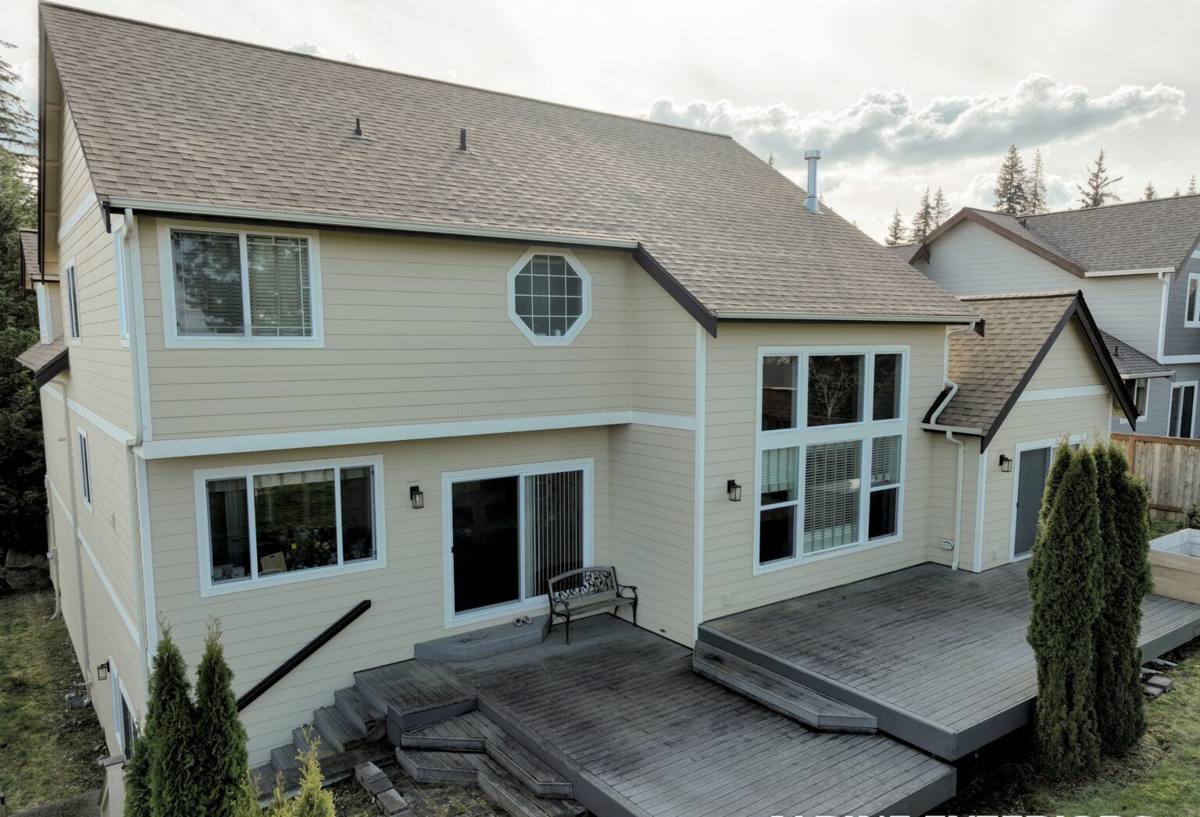
What Ferndale's Weather Actually Does to a Deck
Driving Rain and Standing Water
Whatcom County storms often come with wind off the water, which drives rain sideways under railings, into board gaps, and against the house where the deck ledger attaches. Water that would run off a flat surface elsewhere gets pushed into joints and fastener holes here. Over time that means rot starts at connection points — ledger boards, joist hangers, post bases — before it shows up on the open deck surface.
The Long Moss Season
Moss and algae take hold on decking, especially on the north or shaded side of a house, anywhere sun doesn't reach the boards for most of the day. A mossy deck surface isn't just unattractive — it holds moisture against the wood or composite surface far longer than bare boards would, and on wood decks that constant dampness is what leads to soft, spongy spots. On composite decking, heavy moss buildup can trap grit that wears at the surface over time.
Salt Air and Hardware Corrosion
Being within reach of salt air means metal fasteners, joist hangers, and structural screws corrode faster than they would further inland. We see this most often on older decks where standard hardware was used instead of stainless or coated fasteners rated for coastal exposure. Once a fastener starts rusting, it loses holding strength well before it visibly fails, which is part of why structural connections need a hands-on inspection rather than a glance.
Common Repairs We Handle in Ferndale
- Ledger board repair or replacement — the board that attaches the deck to the house is the single most important structural connection, and the one most exposed to water running off the roofline or siding.
- Joist and beam sistering or replacement — reinforcing or swapping out structural framing that's lost integrity from sustained moisture exposure.
- Board replacement — swapping individual soft, cracked, or cupped boards without tearing up a deck that's otherwise sound.
- Railing and post repair — posts and railings take direct weather exposure and see the most fastener stress from daily use.
- Stair stringer repair — stairs flex and take foot traffic in a way that flat decking doesn't, so stringers often need attention before the deck surface does.
- Fastener and hardware upgrades — replacing corroded hardware with fasteners rated for coastal, wet-climate exposure.
- Flashing repair at the ledger — correcting or adding flashing where water has been getting behind the ledger board and into the house rim joist.
How We Diagnose a Deck Before We Touch It
A deck repair that only addresses what's visible on the surface tends to come back within a season or two. Before we recommend anything, we check the structure itself:
- Probe the ledger board and rim joist connection for soft wood, since this is the most common hidden failure point in wet climates.
- Check joist hangers and structural fasteners for rust and loose connections.
- Test decking boards for soft spots, cupping, or delamination, especially in shaded, moss-prone areas.
- Inspect posts and footings for movement, rot at grade, or inadequate original construction.
- Check railing connections, since these see constant hand pressure and are a safety item, not just a cosmetic one.
- Look at flashing and drainage where the deck meets the house, since that's where most moisture intrusion into the home itself originates.
That inspection tells us whether a deck needs targeted board and hardware repair, structural reinforcement, or in some cases a partial rebuild. We give you a straight answer about which one it is before any work starts.
Repair vs. Rebuild: How We Make the Call
Not every deck problem needs a full rebuild, and not every deck is worth repairing indefinitely. The honest answer usually comes down to how much of the structure — not just the surface boards — has been compromised.
| Condition Found | Usual Approach | Why |
|---|---|---|
| A few soft or cracked boards, structure sound | Targeted board replacement | The framing is doing its job; only the wearing surface needs attention. |
| Rusted or loose hardware, framing otherwise solid | Hardware and fastener replacement | Restores connection strength without disturbing sound lumber. |
| Soft ledger board or rim joist | Ledger repair with corrected flashing | This connection carries significant structural load and moisture protection. |
| Multiple joists or beams compromised | Structural sistering or replacement | Isolated framing failure can often be reinforced without rebuilding the whole deck. |
| Widespread rot across framing and decking | Partial or full rebuild | Past a certain point, patch repairs cost nearly as much as a rebuild and don't last as long. |
Decking Material Considerations for This Climate
When we're replacing boards or sections of a deck, the material choice matters more here than it would in a drier climate. Pressure-treated lumber is the most common and cost-effective choice, but it needs regular sealing to hold up against Whatcom County's wet season — skipping that maintenance is how boards end up soft again within a few years. Cedar has natural resistance to rot and insects and weathers well, but it's a softer wood that still benefits from periodic sealing near the coast. Composite decking costs more upfront but sheds moisture without absorbing it and doesn't need staining or sealing, which is worth factoring in if moss and mildew have been a recurring problem on a particular deck. We'll talk through the real trade-offs for your specific deck rather than push one material as a default — the right call depends on budget, how much shade the deck gets, and how much annual maintenance you want to take on.
Maintenance That Actually Extends a Deck's Life Here
- Clean moss and algae off the surface at least once a year, more often on shaded decks — a stiff brush and a deck-safe cleaner is usually enough; pressure washing can damage soft wood if done carelessly.
- Reseal or restain wood decking every one to three years depending on sun exposure and traffic.
- Keep gutters and downspouts clear so roof runoff isn't dumping extra water directly onto the deck or ledger area.
- Check railing and stair connections for looseness each spring, since freeze-thaw cycles and constant dampness work fasteners loose over time.
- Address soft or discolored boards as soon as you notice them — isolated rot is far cheaper to fix than rot that's spread into the framing.
Why Hire a Crew That Already Works in Ferndale
Deck repair done right depends on recognizing patterns specific to a region, not just following a generic checklist. A crew that regularly works Ferndale and the rest of Whatcom County already knows where salt air tends to corrode hardware first, which deck orientations hold moss longest through the wet season, and how driving rain off the water typically finds its way into a ledger connection. That local experience means less time spent diagnosing and more time spent fixing the actual problem — and it means repairs that are built with this specific climate in mind, not a one-size-fits-all approach.
We also stand behind our work with straightforward communication: if a deck needs a full rebuild instead of a patch repair, we'll tell you why, and if a repair will genuinely hold up, we won't upsell you into more than the deck needs.
Get a Straight Answer About Your Deck
If your deck in Ferndale has soft spots, rusted hardware, a spongy area near the house, or just hasn't been looked at structurally in a few years, we're happy to come take a look. We'll give you a clear, honest assessment of what it actually needs — repair, reinforcement, or rebuild — and a free, no-pressure estimate to go with it. Use the form below to get started.