 Whatcom County
 Ferndale's Climate Is Harder on Siding Than It Looks
Ferndale sits close enough to saltwater that homes here deal with a marine climate most inland Whatcom County properties don't fully share. Salt-laden air corrodes fasteners and trim faster than dry-climate installers expect, driving rain off the water pushes moisture sideways into wall assemblies during fall and winter storms, and the long stretch of overcast, low-sun months keeps north-facing and shaded walls damp for weeks at a time. Add in the tree cover and rural lot layouts common around Ferndale, and you get near-ideal conditions for moss and algae to take hold on anything that stays wet.
None of that is unique to one house or one street — it's a function of geography and weather patterns that affect the whole area. But it means siding decisions that work fine in a drier part of the state don't automatically hold up here. Paint film breaks down faster in persistent damp. Untreated or lightly treated wood products swell, crack, and rot at the seams. Fastener corrosion shows up as rust streaks years before the siding itself would otherwise need replacing. A siding choice for a Ferndale home has to be evaluated against this specific set of conditions, not a generic climate average.
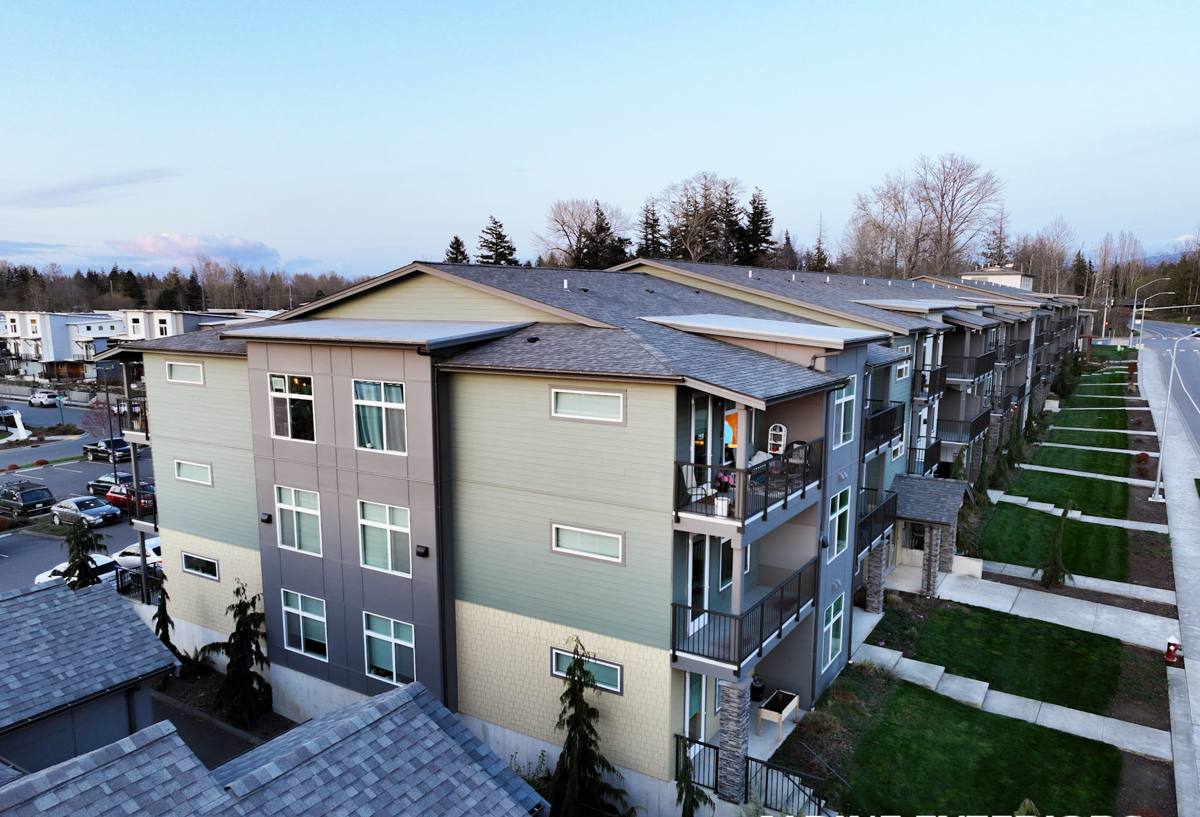
Why We Install Only James Hardie Fiber Cement
We standardized on James Hardie fiber cement siding for every home we work on, including here in Ferndale, because it's engineered specifically for climates like this one. Hardie's HZ5 product line is formulated for regions with harsher moisture and freeze-thaw cycling, which matches Whatcom County's coastal weather better than a general-purpose siding product. Fiber cement itself is made from cement, sand, and cellulose fibers — it doesn't absorb water the way wood does, it won't rust, and it's non-combustible, which matters for wildfire-adjacent risk even in a wet region.
What This Means Compared to Other Materials
Vinyl siding is affordable and low-maintenance, but it flexes with temperature and can crack in a hard freeze, and it doesn't hold paint if a homeowner ever wants to change color. Cedar and other wood sidings look great when new but need consistent re-staining or re-painting to keep moisture out — skip a cycle in a climate this damp and rot can set in fast, especially at butt joints and end cuts. Engineered wood products like LP SmartSide use a wood-strand core that's treated for moisture resistance, but any breach in the factory coating (a cut edge, a fastener hole, a scratch during installation) exposes that wood core to exactly the kind of sustained dampness Ferndale gets for months at a stretch. Fiber cement doesn't have that vulnerability because there's no wood core to expose.
We're not saying every other product is a bad product — vinyl and engineered wood both have legitimate uses. We're saying that for the specific combination of salt air, driving rain, and moss-friendly shade that Ferndale homes face, fiber cement with a factory-applied finish is the material we're willing to stand behind long-term, and it's the only one we install.
What Correct Installation Actually Involves
Fiber cement siding is only as good as the installation behind it. It's a precise product — installed to spec it performs for decades; installed loosely or with shortcuts, it can trap moisture and fail early, which gives the material an undeserved bad reputation. A correct install in a wet coastal climate includes:
- A properly lapped weather-resistive barrier behind the siding, with all seams taped and all penetrations flashed before a single board goes up
- Correct clearance between the bottom of the siding and grade, decks, and roof lines so water sheds away instead of wicking upward
- Manufacturer-specified fastener spacing and depth — overdriven or underdriven nails are one of the most common causes of early siding failure
- Corrosion-resistant fasteners rated for coastal exposure, not standard interior-grade hardware
- Factory-primed or ColorPlus finished cut edges sealed per Hardie's published detail, since a raw cut edge left exposed is a moisture entry point
- Proper caulking at trim and joints using a sealant compatible with fiber cement, not whatever's on the truck
Every one of these details is in James Hardie's published installation instructions, and every one of them is easy to skip if a crew is moving fast. It's also exactly the kind of thing a homeowner can't easily verify after the siding is up and painted — which is why who you hire matters as much as what material you choose.
How Fiber Cement Compares in a Ferndale Climate
| Material | Moisture/Salt Air Resistance | Moss & Algae Resistance | Maintenance Burden | Fire Resistance |
|---|---|---|---|---|
| James Hardie Fiber Cement | Strong — doesn't absorb water, factory finish holds up in salt air | Good, especially with periodic gentle cleaning | Low — no repainting cycle needed | Non-combustible |
| Vinyl Siding | Doesn't rot, but seams and fastener flanges can trap moisture behind panels | Moderate — smooth surface but grows algae in shaded, damp spots | Low, but limited repair and no color change option | Combustible, can warp near heat sources |
| Cedar/Wood Siding | Vulnerable — swells, checks, and rots without diligent upkeep | Poor in shaded, damp conditions without regular treatment | High — recoating every few years | Combustible |
| Engineered Wood (LP SmartSide) | Good if coating stays intact; vulnerable at cuts, fastener holes, and damage | Moderate, depends on coating condition | Moderate — coating and edge sealing need monitoring | Combustible |
Our Process for a Ferndale Fiber Cement Job
- On-site assessment. We look at existing siding condition, sheathing underneath where accessible, moisture staining, and problem areas like north-facing walls and spots under heavy tree cover.
- Removal and substrate check. Old siding comes off and we inspect the wall sheathing for hidden rot or moisture damage before anything new goes up — this is the step that gets skipped when a job is rushed, and it's the one that matters most.
- Weather barrier and flashing. A continuous, properly lapped weather-resistive barrier goes on with flashing detailed at every window, door, and penetration.
- Hardie installation to manufacturer spec. Boards or panels go up with correct fastener pattern, clearances, and joint treatment, following James Hardie's published details for this climate zone.
- Trim, caulking, and finish work. Cut edges are sealed, joints are caulked with a compatible sealant, and factory ColorPlus finish is left to do its job — no field-painting needed.
- Final walk-through. We go over the finished work with the homeowner and point out anything worth knowing for long-term upkeep.
Living With Moss Season: What Actually Helps
Ferndale's moss season is long, and no siding material is completely immune to organic growth if it stays shaded and damp long enough. Fiber cement's advantage isn't that moss never touches it — it's that moss and algae sit on the surface rather than working into the material, so cleaning restores the original look instead of masking damage underneath. A little basic upkeep goes a long way:
- Rinse siding with a garden hose or soft wash setup once or twice a year, focusing on shaded north- and west-facing walls
- Trim back tree limbs and shrubs that keep siding in constant shade or brush against it
- Clear debris from gutters regularly so overflow doesn't run down the wall face
- Check caulking at trim and joints annually and touch it up before gaps let water behind the siding
- Watch for dark streaking near downspout outlets and hose bibs, which usually points to a drainage fix rather than a siding problem
Cost Factors Worth Understanding
Every Ferndale home is different, so we're not going to throw out a number that doesn't reflect your actual house. What does move the price on a fiber cement project:
| Factor | Why It Matters |
|---|---|
| Home size and wall complexity | More square footage, dormers, and corners mean more cutting and detail work |
| Condition of existing sheathing | Hidden rot found during tear-off adds repair scope before new siding can go on |
| Trim and accessory choices | Board-and-batten accents, trim profiles, and soffit work add labor and material |
| Access and site conditions | Steep lots, mature landscaping, or tight setbacks can slow staging and installation |
| Tear-off vs. new construction | Removing and disposing of old siding is additional scope beyond the install itself |
Why It Matters That We Already Work in Whatcom County
A crew that installs siding across different climate zones every week doesn't always catch the small things that matter in a marine environment — where the driving rain actually hits hardest on a given lot orientation, which details need extra attention near the coast, or how much clearance a particular site really needs given local drainage patterns. A crew that regularly works Ferndale and the surrounding Whatcom County area sees the same climate stresses repeat across job after job, which means fewer surprises and fewer callbacks. That local pattern-recognition is part of what separates a technically correct install from one that's actually built for the conditions your home faces every winter.
If you're weighing a siding replacement or new build in Ferndale, we're happy to take a look and walk you through what we'd recommend for your specific home — no pressure, no hard sell. Fill out the form below for a free estimate.