 Whatcom County
What Happy Valley's Climate Does to Siding
Happy Valley sits close enough to the water and the wet weather patterns that move through Whatcom County that siding here takes a different kind of beating than siding fifty miles inland. It isn't one dramatic event that wears a house down — it's the accumulation of small, constant exposures: salt-laden air drifting in off the water, driving rain that hits walls sideways during winter storms, and long stretches of gray, damp months where moss and algae get a foothold and never really let go.
Any siding product can look fine on install day. The real test is what it looks like and how it performs after five, ten, and twenty years of that cycle repeating. That's the lens we use when we talk to Happy Valley homeowners about siding — not what looks good in a showroom, but what holds up on a home that sits in this specific weather pattern year after year.
Salt Air and Corrosion
Homes closer to the water deal with airborne salt that settles on exterior surfaces and accelerates corrosion of fasteners, trim, and any siding material that isn't dimensionally stable. Salt exposure doesn't just affect metal — it also speeds up the breakdown of caulks, sealants, and lower-grade composite products that weren't engineered with coastal exposure in mind.
Driving Rain
Wind-driven rain doesn't just fall on a wall, it gets pushed into laps, seams, and fastener penetrations. Siding that relies on a tight, well-caulked surface to stay dry is fighting a losing battle in a climate where rain regularly comes in sideways. What matters more is how water is managed once it inevitably gets behind the surface layer — which is a function of installation, not just the product label.
Moss and Algae Season
Whatcom County's long wet season, combined with shaded lots and tree cover common in established neighborhoods, creates ideal conditions for moss and algae growth on north-facing and shaded walls. Some siding materials absorb moisture and give organic growth something to hold onto. Others resist it because the surface itself doesn't retain water the same way.
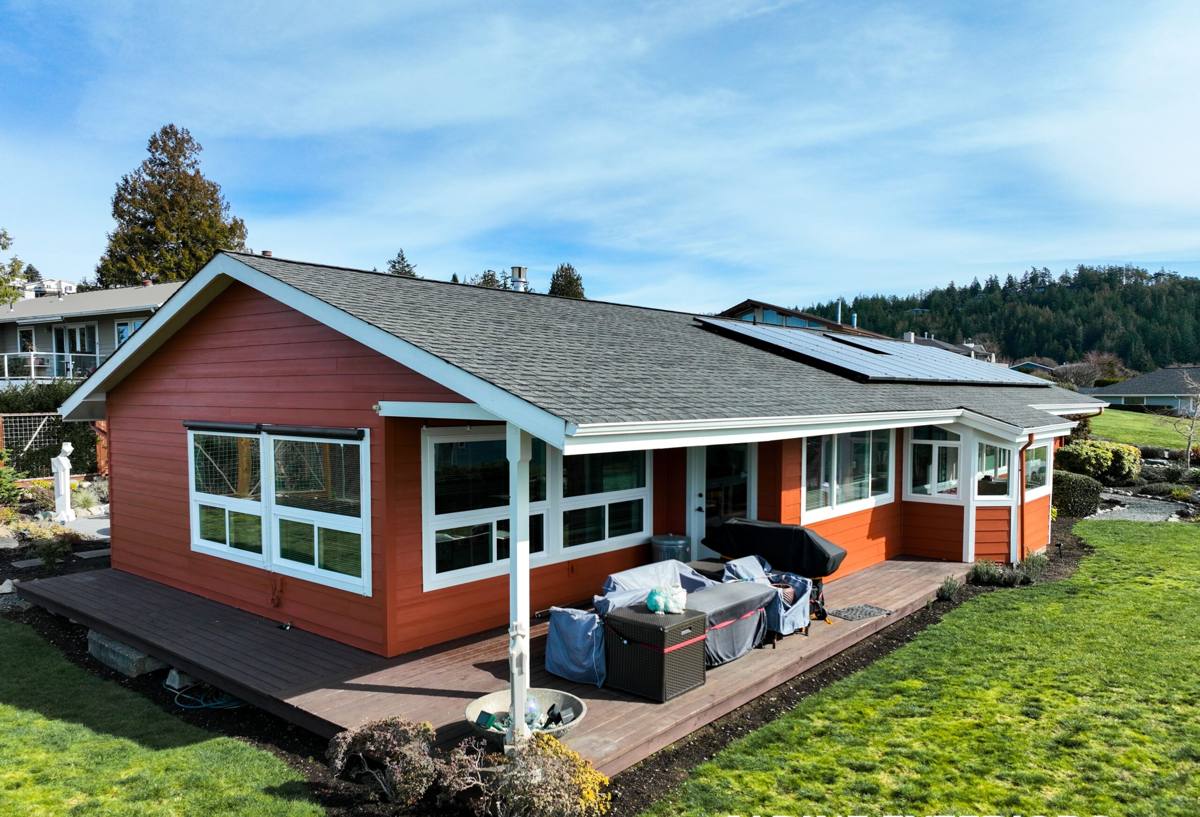
Why We Only Install James Hardie in This Climate
We standardized on James Hardie fiber cement siding for every home we work on, including in Happy Valley, because it's engineered around exactly the conditions described above. It's a decision we made after weighing what other products get right and where they fall short in wet, marine-influenced climates — not a default we fell into.
Hardie's fiber cement composition is non-combustible and dimensionally stable, meaning it doesn't expand, contract, warp, or absorb moisture the way wood-based or some engineered composite products can. That stability matters enormously in a climate with constant humidity swings and driving rain — a board that stays put doesn't open up gaps at the seams over time, and a board that doesn't wick moisture doesn't feed the moss and mildew cycle as readily.
James Hardie also builds region-specific product lines, and for Pacific Northwest homes we typically install their HZ5 line, engineered for climates with more moisture exposure and freeze-thaw variation than the drier regions their other product lines are built for. That's a meaningful distinction — siding engineered generically isn't the same as siding engineered for this specific weather pattern.
The factory-applied ColorPlus finish is another piece of the equation. It's baked on under controlled conditions rather than field-applied, which gives it better fade and moisture resistance than a job-site paint job, and it comes backed by its own finish warranty separate from the product warranty.
Why We Don't Install Vinyl, LP SmartSide, or Other Composites Here
We get asked why we don't offer vinyl or engineered wood siding as a lower-cost option. The honest answer is that in a climate like this one, those trade-offs show up faster than they would somewhere drier. Vinyl can warp and become brittle with UV and temperature cycling, and its seams and expansion joints give wind-driven rain more opportunities to find a way behind the surface. Engineered wood products depend heavily on maintaining an intact factory coating — any breach at a cut edge or fastener hole can let moisture in, and moisture is not in short supply here. We're not saying these products fail everywhere; we're saying that in Whatcom County's specific combination of salt air, driving rain, and moss season, we don't think they're the right long-term bet, and we'd rather install one product correctly than offer several options at different quality tiers.
What a Correct Installation Actually Involves
The siding material is maybe half the equation. The other half is installation, and this is where a lot of the long-term performance difference actually comes from — including between two houses that both have James Hardie siding on them.
- Water-resistive barrier: A continuous, properly lapped weather barrier behind the siding, with all penetrations sealed correctly.
- Rain screen gap: A drainage gap between the siding and the wall assembly so any water that does get behind the boards can drain and dry rather than sitting against the sheathing.
- Flashing at every transition: Windows, doors, roof lines, and deck ledgers all need flashing details that shed water outward, not just caulk covering a gap.
- Correct fastening: Hardie specifies fastener type, spacing, and placement precisely — over-driven or misplaced nails are one of the most common causes of premature failure.
- Manufacturer-specified gapping and clearances: Proper clearance from grade, roof lines, and decks so the bottom edge of the siding isn't sitting in standing water or constant splash-back.
- Caulking only where specified: Over-caulking can trap moisture behind the siding instead of letting it drain, which is the opposite of what you want in a wet climate.
Every one of these steps is invisible once the job is finished. That's exactly why they matter — a poor installation and a correct one can look identical on day one and diverge dramatically by year seven or eight, especially under the rain load Whatcom County sees.
Our Process for Happy Valley Homes
Assessment
We start by walking the exterior and looking at exposure patterns specific to the lot — which walls take the most wind-driven rain, which sides stay shaded and damp longer, and where moss and algae are already visible. That assessment shapes decisions like rain screen detailing and trim choices, not just the siding color.
Removal and Sheathing Check
Once the old siding comes off, we inspect the sheathing and framing underneath for any moisture damage that's been hidden — which is common on homes that have gone years with siding that wasn't managing water correctly. Any rot or compromised sheathing gets addressed before new siding goes on; covering up a problem is worse than finding it.
Water Management Installation
This is where the barrier, rain screen, and flashing details described above get built correctly the first time, before a single piece of visible siding is installed.
Hardie Installation
Boards, panels, or trim go on per James Hardie's fastening and clearance specifications, with attention to the details that are easy to rush — corner treatments, butt joints, and transitions around windows and doors.
Final Walkthrough
We walk the finished job with the homeowner, checking sightlines, caulking, and trim details before calling it complete.
Cost Factors for a Happy Valley Siding Project
Every home is different, but the same handful of factors tend to drive cost up or down on jobs in this area. This isn't a quote — it's meant to help you understand what you're actually paying for.
| Factor | Why It Matters Here |
|---|---|
| Sheathing condition | Homes with hidden moisture damage from prior siding require repair before new siding goes on |
| Wall exposure | Sides facing prevailing wind and rain may need additional flashing detail work |
| Siding profile chosen | Lap siding, panel systems, and shingle-style Hardie products vary in material and labor cost |
| Trim and accent work | Corner boards, window trim, and accent details add labor time |
| Home height and access | Multi-story homes or difficult site access affect staging and labor time |
| Existing moss/algae remediation | Heavily affected walls may need additional prep before new siding installation |
Keeping Hardie Siding Looking Right Between Services
Correctly installed James Hardie siding is low-maintenance, but "low" isn't "none," especially in a climate that grows moss on nearly everything left alone long enough.
- Rinse siding annually with a garden hose to clear pollen, salt residue, and light organic buildup — avoid high-pressure washing directly into seams.
- Check caulking at trim and window transitions yearly and have any cracked or missing caulk redone before wet season.
- Trim back vegetation and tree branches that keep walls shaded and damp longer than they need to be.
- Address moss or algae growth early with a gentle cleaning approach rather than letting it establish and spread.
- Have a professional look at any area where you notice discoloration, soft spots, or separation at seams — these are early signs worth catching, not cosmetic issues to ignore.
Why a Crew That Works in Whatcom County Matters
Siding installation isn't identical everywhere, and a crew that mostly works drier inland climates can miss the details that matter in a place like Happy Valley. Knowing to prioritize rain screen detailing, understanding how salt air affects fastener choice, and recognizing early moss patterns on a specific lot's exposure aren't things you pick up without doing this work regularly in this exact climate. A crew that already works throughout Whatcom County has seen how homes in this weather pattern age over ten and twenty years, and builds toward that outcome instead of just toward a clean-looking install day.
Warranty Protection
James Hardie backs its fiber cement products with a strong, transferable limited warranty, and the ColorPlus factory finish carries its own separate finish warranty covering fade and chipping. Warranty coverage depends on installation meeting manufacturer specifications, which is another reason correct installation practices aren't optional extras — they're what keeps the warranty valid if you ever need it.
If you're planning a siding project in Happy Valley or elsewhere in Whatcom County, we're happy to walk your home, look at its specific exposure, and give you a straightforward, no-pressure estimate using the form below.