 Whatcom County
Metal Roofing in Happy Valley: Built for the Weather That's Actually Here
Happy Valley sits close enough to the water and the hills around it that roofs here take a specific kind of beating: salt-tinged air off Bellingham Bay, long stretches of driving rain through the fall and winter, and a moss season that seems to start earlier every year. A roof that would hold up fine in a drier inland climate can start showing problems within a few seasons here if it wasn't matched to these conditions in the first place. Metal roofing, installed correctly, handles this combination better than most alternatives — but "installed correctly" is doing a lot of work in that sentence, and it's the part that separates a roof that lasts three decades from one that starts leaking at the fasteners in year six.
We work on homes throughout Whatcom County, and Happy Valley's mix of older bungalows, mid-century homes, and newer infill construction gives us a good cross-section of what metal roofing needs to do well in this specific neighborhood. This page covers what that actually looks like — not generic metal roofing talk, but the details that matter for a house sitting under Whatcom County's rain and moss load.
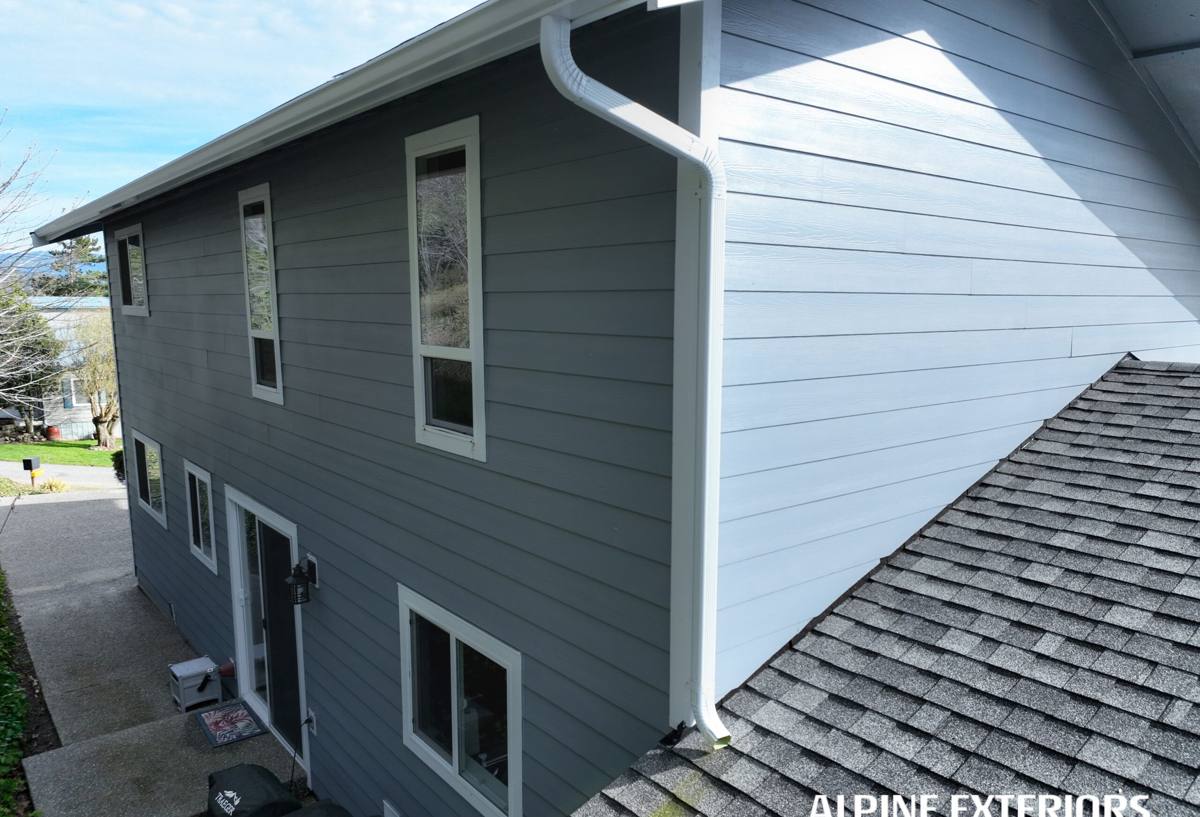
What Happy Valley's Climate Does to a Roof
Salt Air and Corrosion
Proximity to the bay means airborne salt finds its way onto roofing surfaces, fasteners, and flashing. Over years, that accelerates corrosion on lower-grade steel or on fasteners that weren't rated for coastal exposure. It's not dramatic — you won't see it happen — but it shows up eventually as rust streaking at panel seams, screw heads, and cut edges if the wrong materials went in.
Driving Rain and Wind-Driven Moisture
Rain here doesn't always fall straight down. Wind pushes it sideways under eaves, into ridge caps, and against wall-to-roof transitions. A roofing system that relies on gravity alone to shed water — rather than proper laps, sealed seams, and underlayment that can handle incidental moisture — will eventually let water find a way in, usually at a penetration or transition point rather than the open field of the roof.
Moss and Organic Growth
Whatcom County's moss season is long, and shaded or north-facing roof sections stay damp for extended stretches. On asphalt shingles, moss roots into the granule surface and holds moisture against the material. Metal doesn't give moss the same foothold, but moss and debris can still accumulate in valleys, at panel laps, and around penetrations if a roof wasn't detailed to shed debris cleanly. A metal roof isn't moss-proof on its own — the profile and installation details determine how well it resists buildup.
Why Metal Roofing Fits This Climate
Metal isn't the right fit for every home or every budget, and we'll tell a homeowner that honestly if it's not the right call. But for the conditions Happy Valley deals with, it has real advantages:
- Sheds water fast off a slick, continuous surface rather than relying on granule-covered mat that can absorb and hold moisture
- Doesn't provide the fibrous surface moss needs to establish itself the way shingles do
- Holds up to wind-driven rain better when seams and laps are installed with the right overlap and fastening pattern
- Typically outlasts asphalt shingle roofing by two to three times when installed and maintained correctly
- Performs consistently in the freeze-thaw swings Whatcom County sees each winter, without the granule loss and brittleness that shortens shingle life
The trade-off is upfront cost and the fact that a poor installation shows up faster and costs more to correct than a poor asphalt job. That's why the installer matters as much as the material.
What a Correct Metal Roof Installation Involves
Deck Inspection and Prep
Before any panel goes down, the existing roof deck needs to be checked for soft spots, rot, or prior water damage — especially around chimneys, skylights, and valleys, which are the most common places we find hidden damage on older Happy Valley homes. Metal roofing amplifies the importance of a solid deck because panels are rigid; a deck with soft spots or unevenness will telegraph through the finished roof.
Underlayment Selection
Given the rain load here, we use a synthetic or self-adhered underlayment rated for the exposure, not a minimal felt layer. This is the roof's backup line of defense if wind-driven rain gets under a panel edge or a seam is stressed over time. Skipping or under-speccing this layer is one of the most common shortcuts on cheap metal roof installs, and it's invisible until there's a leak.
Panel and Fastener Selection
Given the salt air, fastener and panel material matter more here than in an inland install. We spec corrosion-resistant fasteners and panel coatings rated for coastal-adjacent exposure, and we avoid mixing incompatible metals (for example, certain fastener metals against certain panel metals) that can cause galvanic corrosion over time.
Seams, Laps, and Flashing Details
This is where most metal roof failures actually originate — not in the open field of the roof, but at valleys, ridge caps, wall transitions, and penetrations for vents or chimneys. Correct lap direction relative to prevailing wind and rain, properly sealed and fastened seams, and flashing that's integrated with the underlayment (not just caulked on top) are what keep a metal roof watertight through Whatcom County winters.
Ventilation
Metal roofing needs proper attic or roof-deck ventilation to manage condensation, especially in a damp climate like this one. Without it, moisture can build up on the underside of the deck even if the roof surface itself is performing perfectly.
Comparing Roofing Options for a Happy Valley Home
| Factor | Metal Roofing | Asphalt Shingle |
|---|---|---|
| Typical lifespan | 40–60 years with correct install | 15–25 years in this climate |
| Moss resistance | Higher — smooth surface, less organic foothold | Lower — granule surface holds moisture and debris |
| Wind-driven rain performance | Strong if seams/laps installed correctly | Adequate but more vulnerable at edges over time |
| Upfront cost | Higher | Lower |
| Maintenance needs | Periodic debris clearing, fastener check | Regular moss treatment, more frequent repair |
| Coastal/salt air durability | Good with correct materials and fasteners | Granules and edges degrade faster near salt air |
Our Process for a Happy Valley Metal Roof Project
1. On-Site Assessment
We walk the roof, check the deck condition where accessible, look at existing flashing and ventilation, and talk through what the home actually needs — not a generic package.
2. Honest Scope and Estimate
We lay out what the job involves, what materials we're recommending and why, and give a straightforward estimate. If metal isn't the right fit for the budget or the home, we'll say so.
3. Deck Repair Before Cover
Any deck damage found gets addressed before panels go on. Covering a compromised deck with new roofing just hides a problem that gets more expensive later.
4. Installation
Underlayment, panels, seams, flashing, and ventilation go in following the details above — with attention to the specific exposure of that home's site (how sheltered or exposed it is, roof pitch, and prevailing wind direction).
5. Final Walkthrough
We check seams, fastener lines, flashing, and cleanup before calling the job done, and go over basic maintenance expectations with the homeowner.
What to Ask Before Hiring for a Metal Roof in This Area
Not every roofing crew that installs metal panels does it with coastal Whatcom County conditions in mind. A homeowner should feel comfortable asking direct questions before signing a contract.
- What underlayment are you using, and is it rated for wind-driven rain exposure?
- Are the fasteners and panel coating rated for salt air exposure, not just standard-grade?
- How will valleys, ridge caps, and wall transitions be flashed and integrated with the underlayment?
- What ventilation does the roof deck have, and does it need to be improved as part of this project?
- Can you walk me through how you'll handle the deck if you find rot or soft spots once the old roofing is off?
- What's the warranty structure — does it cover materials, workmanship, or both, and for how long?
Maintenance: What a Metal Roof Actually Needs
One of metal roofing's real advantages is low maintenance compared to shingles, but "low" isn't "none." In Happy Valley's climate, we recommend homeowners periodically clear debris and moss buildup from valleys and low-slope sections, check that gutters and downspouts are clear so water isn't backing up against roof edges, and have seams and flashing points visually checked every few years, especially after major windstorms. None of this is intensive, but skipping it entirely over a decade or more is how small issues turn into deck damage.
Why Local Experience with This Climate Matters
A metal roof installed by a crew that's only worked drier, inland climates can look identical to one installed by a crew that understands Whatcom County's rain and salt exposure — right up until the first real windstorm season tests the seams and flashing. We've worked on homes throughout the area long enough to know which details matter here: how much lap overlap driving rain actually requires on an exposed roof face, which fastener grades hold up against salt air over decades rather than years, and where moss tends to collect on Happy Valley's shadier, tree-covered lots. That's the kind of knowledge that doesn't show up in a spec sheet — it comes from doing the work in this specific place, repeatedly, and seeing how roofs actually perform a few winters later.
If you're considering a metal roof for your Happy Valley home, we're happy to take a look and talk through what makes sense for your specific house — no pressure, no hard sell. Reach out for a free estimate using the form below.