 Whatcom County
Roof Repair Built for Happy Valley's Climate
Happy Valley is one of Bellingham's older, tree-shaded residential neighborhoods, and like most of Whatcom County it sits close enough to the water and the Cascades foothills to get the worst of both worlds: salt-tinged marine air rolling in off Bellingham Bay and a long, wet moss season that runs from fall through spring. A roof here doesn't fail the way a roof does in a dry climate. It fails slowly, from the top down and the edges in, as moisture works into places it was never supposed to reach.
Roof repair in this neighborhood is a different job than roof repair in a place that gets two dry months a year and calls it good. We're not just patching a hole. We're trying to figure out why water got where it got, and making sure the fix holds through the next ten wet seasons, not just the next dry week.
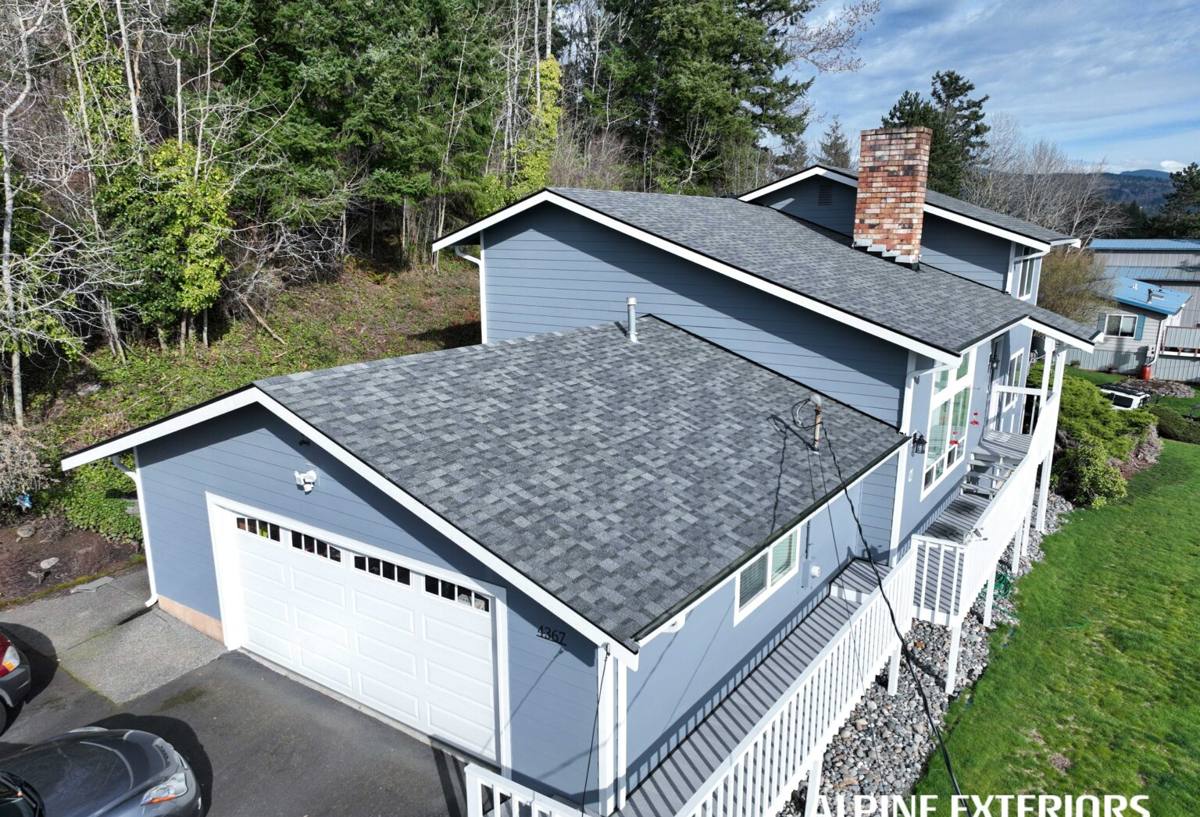
What Whatcom County Weather Does to a Roof
Salt Air and Corrosion
Homes within a few miles of Bellingham Bay deal with a slow corrosive effect on exposed metal — flashing, fasteners, gutter hardware, and vent caps. Standard galvanized fasteners and thin flashing can start showing rust and pinholing years before they would inland. It's not dramatic, but it's steady, and it's one of the most common reasons a "small leak" traces back to a corroded flashing seam rather than the shingles themselves.
Driving Rain
Whatcom County rain rarely falls straight down. Wind off the Strait and the bay pushes it sideways, which means water finds its way under shingle edges, around chimney flashing, and into any gap that a calmer climate would never test. A repair that looks fine on a dry day can still leak the first time a real windstorm blows through.
Moss and the Long Wet Season
Northwest Washington's combination of shade, moisture, and mild temperatures is close to ideal moss-growing conditions. Moss holds water against the roof surface far longer than the surface would otherwise stay wet, and its root structure works into shingle granules and seams. Left alone, it doesn't just look bad — it shortens the life of the roofing material underneath it.
Signs a Happy Valley Roof Needs Repair
Most roof problems here give warning signs well before they turn into an interior leak. Homeowners who catch these early save real money, because a repair caught in the moss-and-drip stage is a fraction of the cost of repairing water damage to decking, insulation, and drywall.
- Moss or dark streaking concentrated on the north-facing or shaded slopes
- Granules collecting in gutters or at downspout outlets
- Shingles that look cupped, curled, or lifted at the edges
- Rust staining below metal flashing, vents, or valleys
- Soft spots or slight sagging when walked, felt through the attic decking
- Daylight visible through the roof deck from inside the attic
- Water stains on ceilings that appear or worsen after windy rainstorms specifically
- Gutters pulling away from the fascia, which lets water run behind rather than off the roof
What an Honest Roof Repair Actually Involves
Finding the Real Source
The spot where water shows up inside a house is often several feet from where it's actually getting in — water travels along rafters and decking before it drips. A proper repair starts with tracing the path, usually from the attic side first, then confirming from the roof surface. Patching the ceiling stain without finding the entry point just buys a few dry months before it comes back.
Matching Materials, Not Just Covering the Spot
A repair patch that doesn't match the existing shingle profile, color, or exposure will shed water differently than the surrounding roof, and it will stand out. We try to match the existing material when it's still available, and when it isn't, we blend the patch into a less visible slope or explain honestly what the color mismatch will look like before we do the work.
Flashing and Valleys Get the Most Attention
The overwhelming majority of roof leaks in this region trace back to flashing — around chimneys, skylights, sidewalls, and valleys — rather than to field shingles failing outright. Any repair that doesn't address the flashing at the leak site is treating a symptom, not the cause.
Ventilation Gets Checked, Even for a Small Repair
Poor attic ventilation traps moisture that condenses on the underside of the decking, which can mimic or worsen a roof leak and rot decking from below. If we're already up there for a repair, we check soffit and ridge venting as part of the diagnosis, not as an upsell.
Common Roof Types in Happy Valley and What They Typically Need
| Roof Type | Common Issue in This Climate | Typical Repair Approach |
|---|---|---|
| Asphalt composition shingle | Moss intrusion, granule loss, wind-lifted edges | Moss removal, spot shingle replacement, re-sealing lifted tabs |
| Cedar shake (older homes) | Moisture retention, splitting, moss and moss-driven rot | Selective shake replacement, moss treatment, improved airflow under shakes |
| Metal roofing/panels | Fastener corrosion, seam and flashing failure | Fastener replacement, seam re-sealing, flashing repair or replacement |
| Flat or low-slope sections | Ponding water, membrane seam separation | Membrane patching, drainage correction, seam re-sealing |
Repair vs. Replacement: What Actually Drives the Decision
Not every roof problem in Happy Valley needs a full replacement, and we'd rather tell a homeowner honestly that a repair will hold than push a bigger job. But there's a point where repeated patching stops making financial sense. Here's how we think through it.
| Factor | Leans Toward Repair | Leans Toward Replacement |
|---|---|---|
| Roof age | Under roughly 15 years, or within expected material lifespan | Near or past the material's typical service life |
| Damage extent | Localized to one slope, valley, or penetration | Widespread granule loss, curling, or moss coverage |
| Decking condition | Solid, no soft spots found on inspection | Soft, spongy, or visibly rotted decking underneath |
| Leak history | First or isolated occurrence | Recurring leaks in different spots over multiple seasons |
When the honest answer is "repair," that's what we recommend and price. When a roof has multiple compounding issues that point toward replacement, we'll explain why in plain terms rather than let a homeowner keep paying for patches on a roof that's past the point of cost-effective repair.
Our Repair Process
1. Inspection
We get on the roof and in the attic where access allows, tracing suspected leak paths and checking flashing, valleys, penetrations, and general shingle condition rather than just looking at the spot the homeowner pointed out.
2. Written Estimate
Before any work starts, the homeowner gets a clear, written scope: what we found, what we're fixing, what materials we're using, and what it costs. No verbal-only quotes, no surprise add-ons once we're already on the roof.
3. The Repair Itself
Work is done with attention to the surrounding roof, not just the failure point — that includes clearing moss and debris in the work area, checking fasteners nearby, and confirming flashing laps correctly with the repair.
4. Cleanup and Follow-Up
The site gets cleared of old material, nails, and debris, and we walk the homeowner through what was done and what to watch for going forward, including realistic guidance on moss treatment and gutter maintenance specific to a Whatcom County wet season.
Why a Crew That Already Works Happy Valley Matters
Roofing crews unfamiliar with this part of Washington sometimes treat every leak like a shingle problem and every roof like it needs the same fix regardless of local conditions. A crew that regularly works Bellingham and greater Whatcom County neighborhoods has already seen how salt air ages flashing here, how moss behaves on shaded slopes near mature trees, and how sideways rain finds the weak points that a drier climate would never expose. That local experience shows up in fewer callbacks, not in a sales pitch — it means the diagnosis is more likely to be right the first time.
It also matters for response time. A roof leak during a Whatcom County windstorm isn't something that should wait a week for a crew driving in from out of the area. Working locally means we can prioritize active leaks and get a tarp or temporary fix on quickly when it's actually urgent.
Maintenance Between Repairs
A repair holds longer when the rest of the roof is kept in reasonable shape between service calls. A few habits make a real difference in this climate:
- Keep gutters clear so water isn't backing up under shingle edges, especially before the fall rains start
- Have moss treated before it spreads across a full slope, not after
- Trim back overhanging branches that keep shaded areas of the roof damp longer
- Walk the attic once or twice a year looking for daylight, staining, or musty odor
- Address small flashing rust or lifted shingles early rather than waiting for an interior leak
If you're seeing moss, staining, or a leak on a Happy Valley roof, we'll come take an honest look and give you a straightforward, no-pressure estimate — repair or replacement, whichever the roof actually needs. Use the form below to get started.