 Whatcom County
Siding Repair Built for Happy Valley's Climate
Happy Valley homes sit in one of the wetter, moss-prone corners of Whatcom County, and the siding on those homes takes a beating that homeowners further inland rarely deal with in the same combination. You've got salt-laden air drifting in off the water, long stretches of driving rain that push moisture sideways into seams and laps, and a moss season that seems to start earlier and last longer every year. None of these things alone is unusual for Western Washington. Together, over years, they add up to a very specific set of siding failures — and a very specific set of repairs that actually fix the problem instead of just covering it up.
We work on siding repair calls in Happy Valley and the surrounding Whatcom County area regularly enough to know what tends to fail first, why it failed, and what a correct repair looks like versus a patch that buys you twelve more months before the same spot rots again.
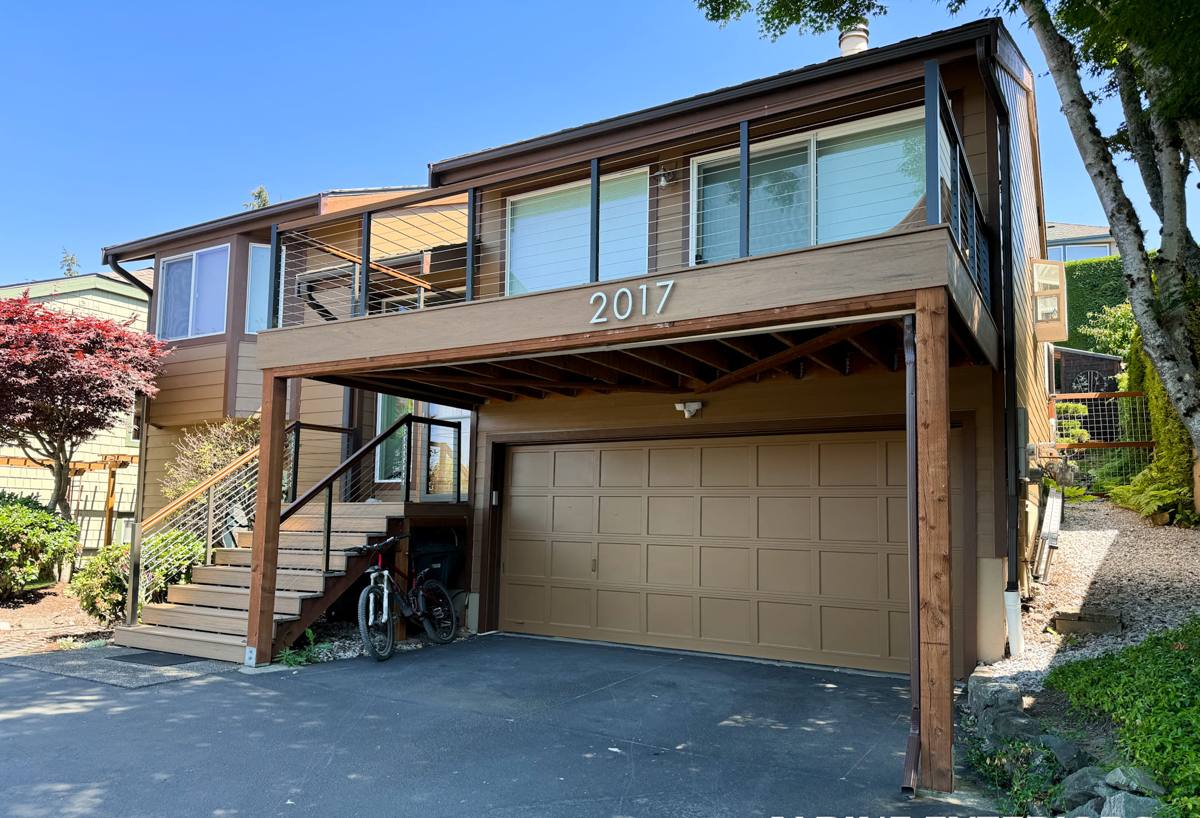
What Salt Air, Rain, and Moss Actually Do to Siding
Salt Air
Airborne salt doesn't just sit on the surface — it accelerates corrosion on fasteners, flashing, and any exposed metal trim tying into your siding system. Once a nail head or a piece of flashing starts corroding, water finds a path in around it, and the siding board itself starts absorbing moisture from the inside out. By the time you see a visible stain or a soft spot, the damage underneath is usually further along than it looks from the ground.
Driving Rain
Whatcom County storms don't always fall straight down. Wind-driven rain gets forced up under laps, into butt joints, and around window and door trim that isn't sealed the way it should be. Siding systems are designed to shed water, not fight wind-driven intrusion at every seam, so the quality of the original installation — caulking, flashing, lap spacing — matters enormously here. A lot of the repair calls we get trace back to installation shortcuts from years ago that finally caught up with the house.
Moss and Sustained Moisture
Moss doesn't just grow on roofs. It takes hold on north-facing siding, in shaded side yards, and anywhere siding stays damp for days at a time without full sun exposure to dry it out. Moss and the organic buildup around it hold moisture directly against the siding surface, which is exactly the condition that leads to rot in wood-based products and finish failure in almost anything else. In a lot of Happy Valley's tree-covered, shaded lots, moss pressure is a bigger long-term threat to siding than any single storm.
Signs Your Siding Needs Repair, Not Just Cleaning
Homeowners often assume discoloration or a rough patch just needs a wash. Sometimes that's true. Other times it's the first visible sign of a problem that's been developing behind the surface for a while. Here's what should prompt an actual inspection rather than a pressure wash:
- Soft, spongy, or bubbling spots when you press on the siding by hand
- Visible gaps, warping, or buckling at seams and corners
- Paint or finish that's peeling, cracking, or flaking in patches rather than evenly across the wall
- Dark staining that keeps reappearing in the same spot after cleaning
- Persistent moss or algae growth that comes back within a season of removal
- Visible daylight or drafts felt from inside near exterior walls
- Rust streaking from fasteners or metal trim
- Higher-than-usual heating bills with no other obvious cause, which can point to moisture-compromised insulation behind damaged siding
If you're seeing more than one of these, it's worth having someone look at it before the next round of fall storms rather than after.
What a Correct Siding Repair Actually Involves
A repair that actually solves the problem goes further than swapping a damaged board for a new one. In our experience working on Whatcom County homes, the difference between a repair that lasts and one that fails again in a year usually comes down to what happens underneath the visible siding, not the siding itself.
A correct repair typically includes:
- Removing enough surrounding material to see the actual extent of water or rot damage, not just the visible spot
- Inspecting and repairing the weather-resistive barrier (house wrap) underneath, since a torn or improperly lapped barrier is often the real source of the leak
- Correcting flashing details at windows, doors, and penetrations rather than just resealing over old flashing
- Replacing fasteners with corrosion-resistant hardware appropriate for coastal exposure
- Matching new material and finish as closely as possible so the repair doesn't stand out as an obvious patch
- Re-checking caulking and sealant joints in the surrounding area, since failed sealant nearby is often what caused the original damage
Skipping the underlying inspection is the single most common shortcut we see from patch jobs — a new piece of siding goes up over a still-damp or still-torn barrier, and the same spot fails again within a season or two.
Repair vs. Replacement: How We Help You Decide
Not every damaged section needs full replacement, and not every repair is worth doing instead of replacing a wall section outright. The right call depends on how far the damage has spread, what's underneath, and the age and condition of the rest of the siding.
| Factor | Points Toward Repair | Points Toward Replacement |
|---|---|---|
| Extent of damage | Isolated to one or two boards/sections | Spread across multiple walls or hidden rot found in several spots |
| Age of existing siding | Siding is relatively young and otherwise sound | Siding is near or past its expected service life |
| Underlying barrier condition | House wrap intact around the damaged area | Barrier compromised or missing in multiple areas |
| Material match | Close match available for a clean patch | Discontinued product or no reasonable match |
| Root cause | Isolated failure (one bad flashing detail) | Systemic issue (original installation defects throughout) |
We'll always tell you honestly which side of that table your home falls on. If a repair genuinely solves the problem, that's what we'll recommend — we're not trying to sell a full replacement when a targeted fix will hold up.
Our Siding Repair Process in Happy Valley
When we come out for a repair estimate, the process is straightforward:
- Inspection. We look at the damaged area and the surrounding siding, checking for related issues nearby that homeowners often don't notice from ground level.
- Diagnosis. We explain what caused the damage — whether it's a flashing issue, a moisture trap from moss buildup, or a sealant failure — so you understand what you're actually paying to fix.
- Honest scope. We give you a clear picture of what repair involves, what it will and won't address, and whether replacement makes more sense for that section or the whole wall.
- The repair itself. Removal, barrier and flashing correction where needed, new material installed and finished to match, and a final check of surrounding seams and sealant.
- Follow-up guidance. We'll tell you what to watch for and what routine maintenance — like moss control on shaded walls — will help the repair last.
Why Local Experience in Happy Valley Matters
Siding repair isn't uniform across Whatcom County. A house a mile from the water deals with different moisture and salt exposure than one further inland, and a shaded, tree-lined lot in Happy Valley has a moss problem that a sunny, open lot doesn't. A crew that's worked on homes in this specific area already knows which failure patterns to expect and where to look first — which means a faster, more accurate diagnosis and fewer surprises once the old siding comes off.
It also means we're not guessing at appropriate materials or fastener choices for coastal, high-moisture conditions. We know what holds up here and what doesn't, because we've seen both.
What We Repair To: Our James Hardie Standard
When a repair calls for new siding material — whether it's a small patch or enough of a wall to warrant it — we install James Hardie fiber cement, and that's the only siding product we install, period. We made that call because Hardie's fiber cement holds up to the specific combination of salt air, driving rain, and sustained moisture that Whatcom County throws at siding, without the swelling, rot, or paint-adhesion problems that come with wood-based or vinyl products in this climate. Its factory-applied ColorPlus finish resists the fading and peeling that shows up fastest on shaded, moisture-prone walls, and Hardie's climate-engineered HZ product lines are built specifically for wet, marine-influenced regions like ours.
That means when we patch a section of your existing siding with Hardie, you're not introducing a weak point that will age and weather differently than the rest of your home over the next decade — you're adding material engineered for exactly the conditions Happy Valley homes deal with.
Get an Honest Look at Your Siding
If you're seeing soft spots, recurring moss, staining, or gaps in your siding, it's worth having someone look before another wet Whatcom County season adds to the damage. We'll give you a straightforward, no-pressure assessment of what's actually going on and what it will take to fix it right — request a free estimate using the form below.