 Whatcom County
 Why Blaine Homes Need a Different Approach to Siding
Blaine sits right where the salt air off the water meets the wet, moss-friendly climate that defines the rest of Whatcom County. That combination is harder on exterior siding than most inland Washington towns ever see. Homes here take on airborne salt, near-constant seasonal moisture, and long stretches of shade and dampness that keep surfaces wet far longer than a sunnier location would. Siding that isn't built for that combination shows it early — chalking, staining, soft spots, and moss creeping up from the ground line within a few years of installation.
We only install James Hardie fiber cement siding, and Blaine is one of the areas where that decision matters most. This page covers what the local climate actually does to siding, what a correct James Hardie install looks like on a Blaine home, and how our process is built around conditions here rather than a generic national spec.
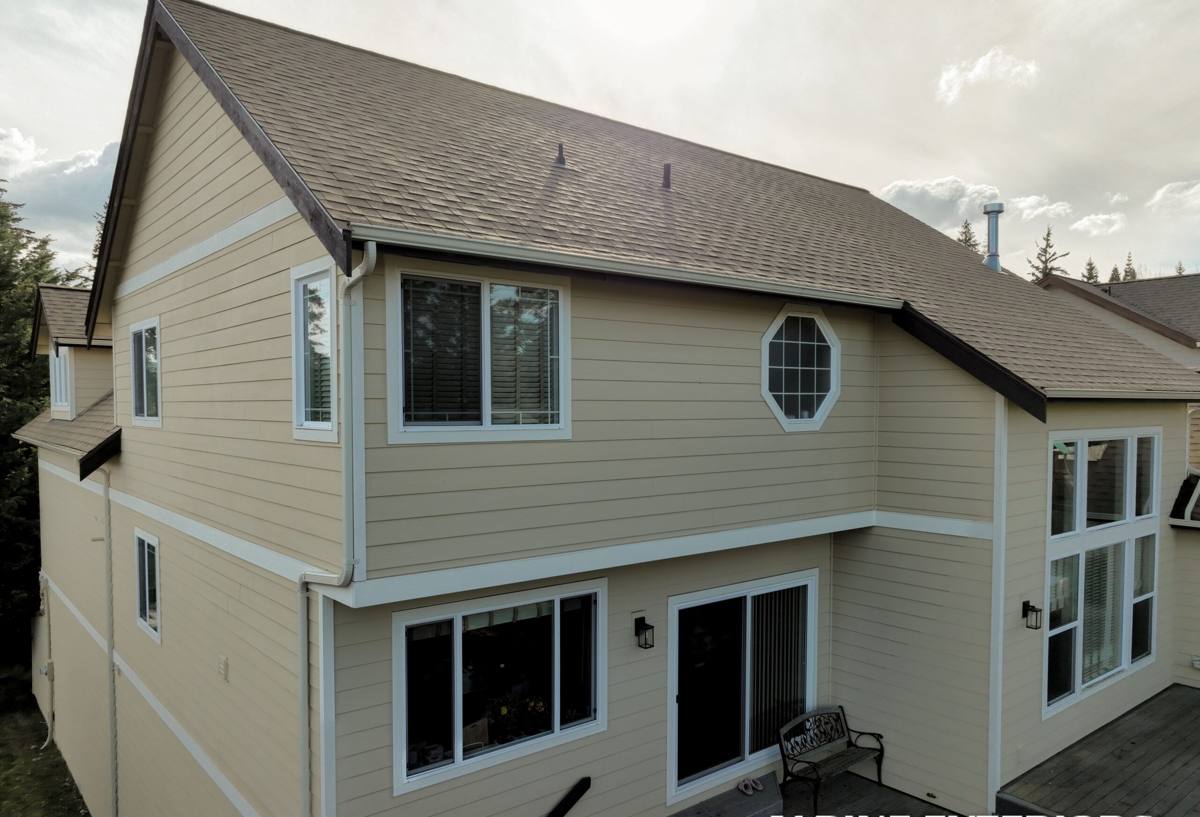
What Salt Air, Rain, and Moss Actually Do to Siding
Salt Air
Proximity to saltwater means airborne salt settles on exterior surfaces and works into any material that isn't dimensionally stable or properly sealed. Over time, salt exposure accelerates corrosion on fasteners and trim hardware, and it can degrade paint films and coatings that weren't formulated to handle it. Products that rely on a field-applied finish are the most exposed to this problem, because the coating is the only thing standing between the salt and the substrate underneath.
Driving Rain
Rain in this part of the county doesn't just fall — wind off the water pushes it sideways into wall assemblies. That means siding needs a real drainage plane behind it, tight seams, and a material that doesn't swell or wick water at the joints. Any siding product with weak moisture resistance at cut edges or panel joints becomes a slow leak point in this kind of weather, even if it looks fine from the street.
Moss and Prolonged Dampness
Long, cool, wet stretches with limited direct sun are ideal conditions for moss and algae growth on north-facing walls, under eaves, and near grade. Moss holds moisture against the siding surface for extended periods, which is exactly the condition that causes rot in wood-based products and accelerates wear on lower-grade composites. Siding that can't tolerate sustained dampness without breaking down is a poor match for this environment.
Why James Hardie Is the Right Material Here
James Hardie fiber cement is cement, sand, and cellulose fiber — an inorganic composition that doesn't rot, doesn't swell with moisture, and isn't a food source for moss or mold the way wood-based siding can be. That alone makes it a strong match for Blaine's climate. A few specifics matter beyond that baseline:
- ColorPlus Technology finish — a factory-applied, baked-on finish that resists fading and holds up to UV and moisture exposure far better than field-applied paint, which matters when salt air is working against the coating year-round.
- HZ5 product engineering — Hardie's HZ5 line is engineered for wetter, harsher climates and is the appropriate choice for coastal Pacific Northwest exposure rather than a warmer-climate HZ variant.
- Non-combustible core — not a coastal-specific benefit, but a real one: fiber cement doesn't contribute fuel to a fire the way wood-based sidings do.
- Dimensional stability — fiber cement doesn't expand and contract with moisture the way wood and some composites do, which keeps joints tighter over time in a climate that never fully dries out.
None of this means Hardie is maintenance-free. It means the material itself isn't the weak point — the installation is what determines whether the siding performs the way it's engineered to.
What a Correct Install Looks Like on a Blaine Home
Most siding failures we see on fiber cement in this area trace back to installation shortcuts, not the product. In a climate that pushes rain sideways and keeps surfaces damp for long stretches, the details below are not optional.
Water Management Behind the Siding
Correct installation starts with a proper weather-resistive barrier and flashing at every window, door, and penetration — installed so water that gets past the siding has somewhere to go besides the wall sheathing. This is the layer homeowners never see, and it's the one that matters most in driving rain.
Clearances That Respect Moss and Ground Moisture
Hardie siding needs proper clearance from grade, roof lines, decks, and other horizontal surfaces where moisture and debris collect. Skipping these clearances is one of the most common shortcuts we see, and it's exactly what invites moss growth and trapped moisture at the bottom courses.
Fastening and Fastener Choice
With salt air in play, fastener material matters. Fasteners need to be corrosion-resistant and set correctly — not overdriven, not underdriven — following Hardie's fastening specifications for the specific product and climate zone. Poor fastening shows up years later as streaking, popped nails, or loose panels.
Joint and Seam Treatment
Butt joints, seams, and cut edges are where fiber cement is most vulnerable to moisture intrusion if they aren't treated correctly — factory edges are pre-primed, but field cuts need to be sealed per specification before they're closed up. In a climate this wet, this step doesn't get skipped.
Caulking and Sealant Selection
Not every sealant holds up to sustained coastal moisture and salt exposure. Using the right sealant at trim, corners, and penetrations — and applying it correctly — is a small detail with an outsized effect on how the siding performs over the next 15 years.
Our Process for a Blaine Siding Project
- On-site assessment — we look at wall orientation, drainage, existing moisture or moss issues, and any rot or damage on the current siding before we quote anything.
- Product and color selection — we walk through the appropriate Hardie line and ColorPlus color options for the home, factoring in sun exposure and how colors read in this region's grey-sky light.
- Tear-off and inspection — removing the old siding lets us check sheathing condition and address any hidden moisture damage before new material goes on.
- Weather barrier and flashing — the water-management layer goes in correctly, with attention to every window, door, and penetration.
- Installation to Hardie's climate-zone specification — correct clearances, fastening, joint treatment, and sealant, done to spec rather than to the fastest path.
- Final walkthrough — we go over the finished work with the homeowner and confirm everything meets both Hardie's installation requirements and our own standard.
Why a Crew That Already Works in Blaine Matters
A crew that regularly works Whatcom County's coastal towns already knows how differently this environment treats siding compared to a drier inland install. That shows up in small decisions — how tight to run clearances, which sealants actually hold up to salt exposure, how to sequence a tear-off around the area's rain patterns — that a crew unfamiliar with the region might get wrong without realizing it until the callback comes years later. It also means we're not learning the local climate on your project.
Cost Factors for a Blaine Hardie Siding Project
Every home is different, but the factors below are what actually move the price on a fiber cement re-side in this area:
| Factor | Why It Affects Cost |
|---|---|
| Home size and wall complexity | More corners, dormers, and cutouts mean more labor and material waste |
| Current siding removal | Tear-off and disposal of old siding adds labor, especially with hidden rot |
| Sheathing or moisture repair | Damage found after tear-off (common on older coastal homes) needs to be fixed before new siding goes on |
| Hardie product line chosen | Lap, panel, and shingle styles carry different material and labor costs |
| Trim and accessory scope | Full trim replacement vs. reusing existing trim changes both cost and long-term performance |
| Access and site conditions | Tight lots, multi-story walls, and limited staging area affect labor time |
Signs Your Current Siding Is Already Losing the Fight
- Moss or dark streaking that keeps coming back on north-facing or shaded walls
- Soft spots, bubbling, or visible swelling, especially near the bottom courses or trim
- Paint that's chalking, peeling, or fading faster than it should on a home this close to the water
- Visible gaps at seams, corners, or trim where caulking has failed
- Rising energy bills that suggest the wall assembly behind the siding is no longer doing its job
If any of that sounds familiar, it's worth having someone look before the damage moves from the siding into the sheathing underneath.
Get a Straight Answer for Your Home
If you're weighing a re-side in Blaine, we're happy to take a look, tell you honestly what condition your current siding is in, and walk you through what a correctly installed James Hardie system would look like on your home. Reach out for a free, no-pressure estimate — there's no obligation, just a straight assessment.