 Whatcom County
Window Installation Built for Lynden's Climate
Lynden sits in the heart of Whatcom County, where long wet winters, frequent driving rain, and a moss season that can stretch nine months out of the year put real stress on a home's windows. It's not just about weather resistance on paper — it's about how a window and its installation hold up to weeks of saturated air, wind-driven rain hitting the wall at an angle, and the kind of persistent dampness that lets moss and algae take hold on anything that stays wet too long. Window installation done right in this area has to account for all of that, not just the glass itself.
A lot of window problems we see in Lynden homes aren't really window problems — they're installation problems. The window itself is fine, but the flashing was skipped, the sealant was the wrong type, or the rough opening wasn't prepped correctly. Once water finds a way behind the trim, it doesn't dry out quickly here. That's the piece that matters most, and it's the piece a lot of installers rush.
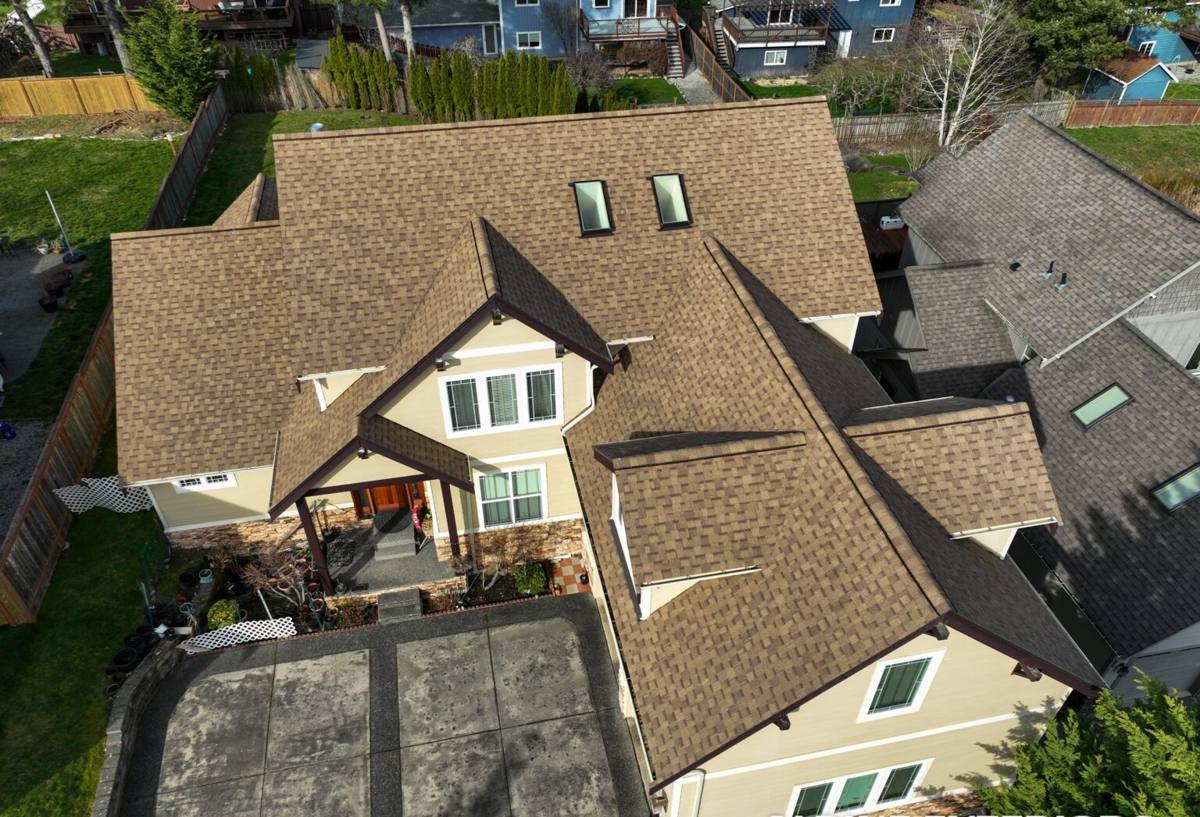
What Whatcom County Weather Does to Windows Over Time
Whatcom County's marine-influenced climate means moisture is almost always present in the air, even on dry-looking days. For Lynden homes, that shows up in a few predictable ways:
- Driving rain pushed by wind finds gaps around poorly sealed frames, especially on the west and southwest-facing walls that catch the brunt of Pacific storm systems.
- Prolonged dampness keeps wood trim, sills, and even some vinyl components wet longer than they would be in a drier climate, accelerating rot and seal failure.
- Moss and algae growth on sills, tracks, and exterior trim isn't just cosmetic — it holds moisture against the surface and can work into small gaps over a season or two.
- Temperature swings between cold, damp winters and mild summers cause materials to expand and contract, which stresses seals and caulk lines that weren't installed with enough flexibility built in.
None of this means windows fail quickly in Lynden. It means the margin for error in the installation is smaller. A window that would tolerate a sloppy install in a dry climate for ten years might show problems here in three or four.
Signs Your Windows Need Attention
Homeowners usually notice a problem well before it becomes serious. Common signs we're called out for in Lynden include:
- Fogging or condensation between panes on double- or triple-glazed windows, which usually means a failed seal
- Soft or discolored wood trim around the window, especially at the bottom corners of the sill
- Visible gaps, cracked caulk, or daylight showing around the frame
- Drafts you can feel near the window even when it's fully closed and locked
- Difficulty opening, closing, or locking — often a sign the frame has shifted slightly from moisture damage
- Moss or dark staining building up on the sill or exterior casing
Any one of these on its own might not mean full replacement is needed. But if you're seeing two or three together, especially soft wood plus condensation, it's worth having someone look at the whole opening, not just the glass.
What Correct Installation Actually Involves
Window installation has a reputation for being simple — pull the old one, drop in the new one, caulk the edges. That approach is exactly how moisture problems get built into a wall. A proper installation in a climate like ours involves several steps that don't show once the trim is back on, but matter for the next twenty years:
Opening Prep and Inspection
Before a new window goes in, the rough opening needs to be checked for existing damage — rot in the framing, compromised sheathing, or old flashing that's already failed. Installing a new window into a damaged opening just seals the problem inside the wall.
Flashing, in the Right Order
Flashing tape and pan flashing need to be layered correctly — sill first, then jambs, then head flashing over the top — so that any water that does get past the window sheds down and out, not into the wall cavity. This shingle-style layering is the single most important step for long-term performance in a wet climate, and it's the step most often shortcut on a fast job.
Insulation and Air Sealing
The gap between the window frame and the rough opening needs to be filled with a material that stays flexible — typically low-expansion foam or backer rod and sealant — not packed with rigid foam or left with fiberglass batting, which can compress and leave gaps over time.
Exterior Sealant Selection
Not all caulks and sealants perform the same in constant damp conditions. We use exterior-grade sealants rated for the temperature range and moisture exposure they'll actually see here, applied to clean, dry surfaces so they bond properly the first time.
Choosing Materials for Lynden's Conditions
Whatcom County homeowners typically choose between a few common frame materials. Each has real trade-offs, and the right choice depends on your home, your budget, and how much upkeep you want to take on.
| Material | Moisture Performance | Maintenance | Typical Trade-Offs |
|---|---|---|---|
| Vinyl | Good — won't rot, low water absorption | Low — occasional cleaning | Fewer color/finish options, can look plain on older homes |
| Fiberglass | Very good — dimensionally stable in temperature swings | Low | Higher upfront cost |
| Wood (clad exterior) | Depends heavily on the cladding and install quality | Higher — exposed wood needs monitoring | Classic look, but more sensitive to installation errors in wet climates |
| Aluminum | Fair — can conduct cold and condense on interior | Low | Less energy-efficient in our winters unless thermally broken |
We don't push one material on every home. What we will say plainly: any material can underperform if the installation skips proper flashing and sealing, and no material fully makes up for a bad install. We talk through the trade-offs honestly rather than steering every homeowner toward the same product.
Our Installation Process
- On-site assessment — we look at each opening individually, check for existing rot or moisture damage, and take accurate measurements.
- Honest recommendation — we walk through material and style options based on your home's exposure, budget, and what you actually want the windows to do (energy performance, noise reduction, appearance).
- Removal and opening repair — old windows come out carefully, and any damaged framing or sheathing gets addressed before anything new goes in.
- Flashing and installation — proper shingle-lap flashing, correct shimming and leveling, and flexible insulation around the frame.
- Sealing and finish work — exterior-grade sealant, trim reinstalled or replaced as needed, and interior finish work to match your home.
- Final check — we test operation, look for square and level, and walk the job with you before we consider it done.
What Affects the Cost
Every home is different, so we won't quote a number without seeing the job, but these are the main factors that move the price up or down:
| Factor | Why It Matters |
|---|---|
| Number and size of windows | More or larger openings mean more material and labor |
| Frame material chosen | Vinyl, fiberglass, and clad-wood carry different material costs |
| Condition of existing openings | Rot or water damage found during removal adds repair time |
| Access and second-story work | Upper-floor windows can require more setup time and equipment |
| Replacement vs. new construction | New construction openings involve more framing and exterior finish work than a like-for-like swap |
Broadly, homeowners in this area should expect a wide range depending on these factors — a single small window swap costs far less than a full-home replacement. We give a firm number after we've actually looked at your windows, not a phone estimate.
Why It Matters to Hire a Crew That Already Works in Lynden
Window installation isn't identical everywhere. A crew that mostly works in a drier climate may not think twice about flashing order or sealant cure times, because in their market, small shortcuts don't show up for years, if ever. In Lynden, and across Whatcom County generally, those same shortcuts show up fast — a wet winter or two is often enough to expose a bad install through staining, soft trim, or a musty smell near the window.
Working this area regularly also means knowing which parts of a property typically take the worst weather exposure, what kind of moss and moisture buildup to expect on older trim, and how to sequence a job around the rain rather than rushing sealant application into wet or marginal conditions. That local familiarity isn't a sales pitch — it's the difference between an install that's still tight in ten years and one that needs revisiting in three.
Simple Maintenance That Extends Window Life
Even a well-installed window benefits from basic upkeep in this climate. A short seasonal routine goes a long way:
- Clear moss, leaves, and debris from sills and tracks before they trap moisture
- Check exterior caulk lines once a year for cracking or separation and have gaps resealed promptly
- Keep gutters and downspouts clear so water isn't sheeting down over window heads
- Wipe down sills after heavy storms if water tends to pool there
- Watch for soft spots in exterior trim and address them before they spread
None of this replaces a proper installation, but it protects the investment once the windows are in.
Get a Free, No-Pressure Estimate
If your Lynden home has windows showing signs of wear, or you're planning ahead of another wet Whatcom County winter, we're happy to take a look and give you a straight assessment — no pressure, no upsell. Fill out the form below to schedule a free estimate.