 Whatcom County
 Building New in Happy Valley Means Building for the Weather From Day One
When a home is going up from the ground in Happy Valley, the windows aren't an afterthought — they're one of the first weatherproofing decisions the whole envelope depends on. Get the window openings right during framing and rough-in, and the house stays dry and comfortable for decades. Get them wrong, and you're chasing rot, mold, and callbacks before the paint has even cured. In Whatcom County, where salt-laden air off the water, driving rain off the strait, and a long moss season all put steady pressure on a building envelope, there's very little margin for shortcuts on new construction.
We work as a local siding and exterior crew, and new-construction window installation is a service we handle in close coordination with the rest of the shell — flashing, house wrap, and siding all have to work together as one system. This page focuses specifically on what that looks like for a new build in Happy Valley: what the climate demands, what a correct install actually involves, and why it matters that the crew doing it already knows this area.
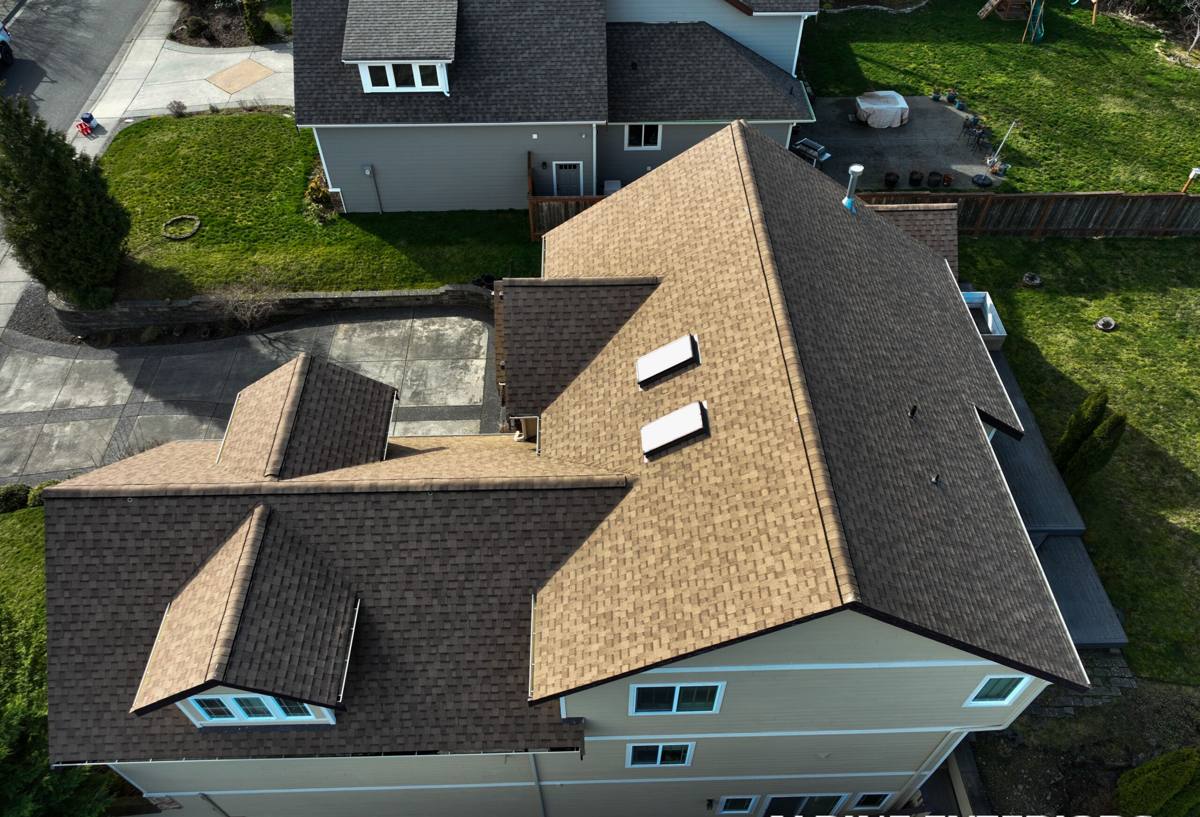
What "New-Construction Windows" Actually Means
New-construction windows are different from replacement windows in a meaningful way, and it's worth being clear about it up front. A new-construction window typically has a nailing fin (sometimes called a nail flange) around its perimeter that gets fastened directly to the wall sheathing before the house wrap and siding go on. That fin is what ties the window into the drainage plane of the whole wall — it's not just holding the window in place, it's part of how water gets shed away from the framing.
Replacement windows, by contrast, are built to fit into an existing opening without disturbing the surrounding siding, using the old frame or a pocket install. That's a fine approach for a remodel, but it's the wrong tool for a home that's still open to the studs. On a new build, doing it right means thinking about the window as part of the wall assembly, not a box dropped into a hole.
Why This Distinction Matters for Builders and Homeowners
If a general contractor or homeowner asks a crew to "replace" or "swap in" windows on a new build using replacement-style hardware or shortcuts because it's faster, the wall loses a layer of protection it's supposed to have. On a home that will spend its life absorbing coastal moisture, that's not a corner worth cutting.
What Whatcom County's Climate Asks of a New Window Opening
Every region has its own list of things a window opening has to survive. In and around Happy Valley, the list looks like this:
- Wind-driven rain: Storms coming off the water don't just fall straight down — they push rain sideways into wall assemblies, which means flashing details at the head, jambs, and sill all have to actually work, not just look finished.
- Salt-bearing air: Proximity to the water means metal flashing, fasteners, and hardware are under more corrosion pressure than they would be further inland. Fastener and flashing choice matters more here than in a dry climate.
- A long moss and mold season: Extended damp, low-light stretches of the year give organic growth plenty of time to take hold anywhere water sits or drainage is sluggish — including around window trim and sills that don't shed water cleanly.
- Repeated wet-dry and temperature cycling: Framing lumber and sheathing expand and contract with moisture more than people expect. Sealants and flashing tape have to tolerate that movement without failing at the seams.
None of this means a house in Happy Valley needs exotic materials. It means the ordinary details — sill pans, flashing laps, sealant joints — have to be done correctly and in the right order, every time, because the climate won't forgive a skipped step the way a drier region might.
Getting the Installation Sequence Right
A correct new-construction window install follows a specific order, and it's the sequencing — not any single product — that determines whether water goes where it's supposed to.
- Sill pan first. A sloped, sealed pan at the bottom of the rough opening gives any water that gets past the window a way out, instead of a place to collect.
- Weather-resistant barrier (WRB) integration. The house wrap has to be cut, lapped, and taped so it directs water over the window flange, not behind it — this is where a lot of hurried installs go wrong.
- Window set square, level, and plumb. Shimming has to support the frame without distorting it, since a racked frame binds hardware and strains seals over time.
- Flashing at the jambs and head, in the correct lap order. Every layer should overlap the one below it, so water is always moving down and out, never trapped behind a seam.
- Sealant at the interior air seal, not just the exterior. An airtight interior seal paired with a drainable exterior detail is what actually controls both moisture and energy performance.
Any one of these steps done out of order can undo the ones around it. We treat the sequence as non-negotiable, not a checklist to speed through.
Frame Material Comparison for a Marine Climate
Homeowners and builders often ask which frame material makes sense for a new build this close to the water. There's no single right answer for every project — it depends on budget, maintenance appetite, and the look the build is going for — but here's how the common options actually behave in this climate:
| Frame Material | Moisture & Salt-Air Behavior | Maintenance | General Cost Position |
|---|---|---|---|
| Vinyl | Doesn't corrode or rot; performs well in coastal air | Low — occasional cleaning | Lower |
| Fiberglass | Very stable dimensionally; strong resistance to moisture and temperature cycling | Low | Mid to higher |
| Wood-clad | Exterior cladding protects the wood, but any breach in the cladding or seal invites rot over time | Higher — finish and seals need periodic attention | Higher |
| Aluminum | Strong and slim profile, but conducts heat/cold and can be prone to condensation and corrosion at fasteners if not properly finished | Moderate | Mid to higher |
Our general standard for new construction in this area leans toward vinyl or fiberglass frames for most homes, simply because they hold up with the least ongoing attention in a climate that's damp for a large part of the year. That's a maintenance and moisture-management judgment on our part, not a knock on wood-clad or aluminum products — those have their place, especially where a specific look or performance spec calls for them, and we're glad to install what a homeowner or architect specifies.
What Drives the Cost of New-Construction Windows
Because every new build is different, we don't quote from a fixed price list — but the same handful of factors move the number up or down on almost every job:
| Factor | How It Affects the Job |
|---|---|
| Number and size of openings | More and larger windows mean more material and labor hours |
| Frame material | Vinyl is generally the most economical; fiberglass and wood-clad run higher |
| Glass package | Double vs. triple pane, Low-E coatings, and gas fills all add cost but also improve comfort and energy performance |
| Custom shapes or sizes | Non-standard openings (arches, oversized units, odd angles) cost more than stock sizes |
| Site access and scheduling | Coordinating around framing crews, weather windows, and site conditions affects labor time |
| Local code requirements | Washington's energy code sets minimum performance targets that can steer material choice |
We'd rather walk a site and give an honest number than guess in the abstract — broad ranges without seeing the plans and openings tend to mislead more than help.
Our Process on New-Construction Jobs
On a new build, we're one piece of a bigger sequence, and we treat coordination as part of the job:
- We review the plans and window schedule before framing is finished, so sizes, swing directions, and egress requirements are confirmed early.
- We time our install to land right after sheathing and WRB are up, ahead of siding — not squeezed in as an afterthought.
- We communicate directly with the general contractor or framer on scheduling, so there's no gap where an open rough opening sits exposed to weather longer than it needs to.
- We document flashing and sill-pan details as we go, so there's a clear record of how each opening was built.
- We do a final check of reveal, operation, and seals before siding closes the opportunity to make adjustments.
That coordination matters more here than in a drier climate, because every day a rough opening sits uncovered during a wet stretch is a day water can get into framing that's supposed to stay dry until it's sealed up.
A Practical Checklist Before Windows Go In
Whether you're a homeowner managing your own build or a GC bringing in a window crew, these are the things worth confirming before installation day:
- Sill pans specified and on-site for every rough opening
- WRB installed and ready to be integrated with window flashing, not just stapled up and left
- Fasteners and flashing tape rated for the exposure and compatible with the WRB and window materials being used
- Window sizes and swing/operation confirmed against the approved plans
- A clear plan for how long openings will sit exposed before siding closes them up, with weather in mind
- Written confirmation of who is responsible for flashing details — the window crew, the siding crew, or both
Why a Local Whatcom County Crew Matters Here
New-construction window installation isn't a job that transfers cleanly from a dry climate to a wet coastal one. A crew that mostly works inland, or in a region with a shorter wet season, doesn't build the same instincts around sill pan slope, flashing lap direction, or how long an opening can sit unsealed before it's a problem. Working in Happy Valley and across Whatcom County day in and day out means we've built our sequencing and material choices around this specific climate — not adapted them from somewhere drier after the fact.
It also means practical familiarity with how local jobs actually run: typical weather windows for exterior work, how to sequence around the wetter months, and what a durable install looks like five and ten years out in this specific air and rainfall pattern, not just on installation day.
If you're planning new-construction windows for a home in Happy Valley or anywhere else in Whatcom County, we're glad to walk the site, review your plans, and give you a straightforward, no-pressure estimate. Use the form below to get started.