 Whatcom County
New-Construction Windows for Lynden Homes
Building new in Lynden gives you one advantage every remodel project envies: the chance to get window installation right the first time, before siding, trim, and interior finishes cover up the details that matter most. Whatcom County's climate is not dramatic, but it is relentless — long stretches of driving rain off the Strait, salt-tinged air moving up from the coast, and a moss season that can run eight months out of the year. New-construction windows installed correctly account for all of that from the start. Installed carelessly, they set up problems that don't show up until year three or four, once the framing has already been closed in around them.
This page covers what a correct new-construction window install actually involves in Lynden specifically, what local conditions demand from the work, and how our process fits into a build schedule without becoming the bottleneck.
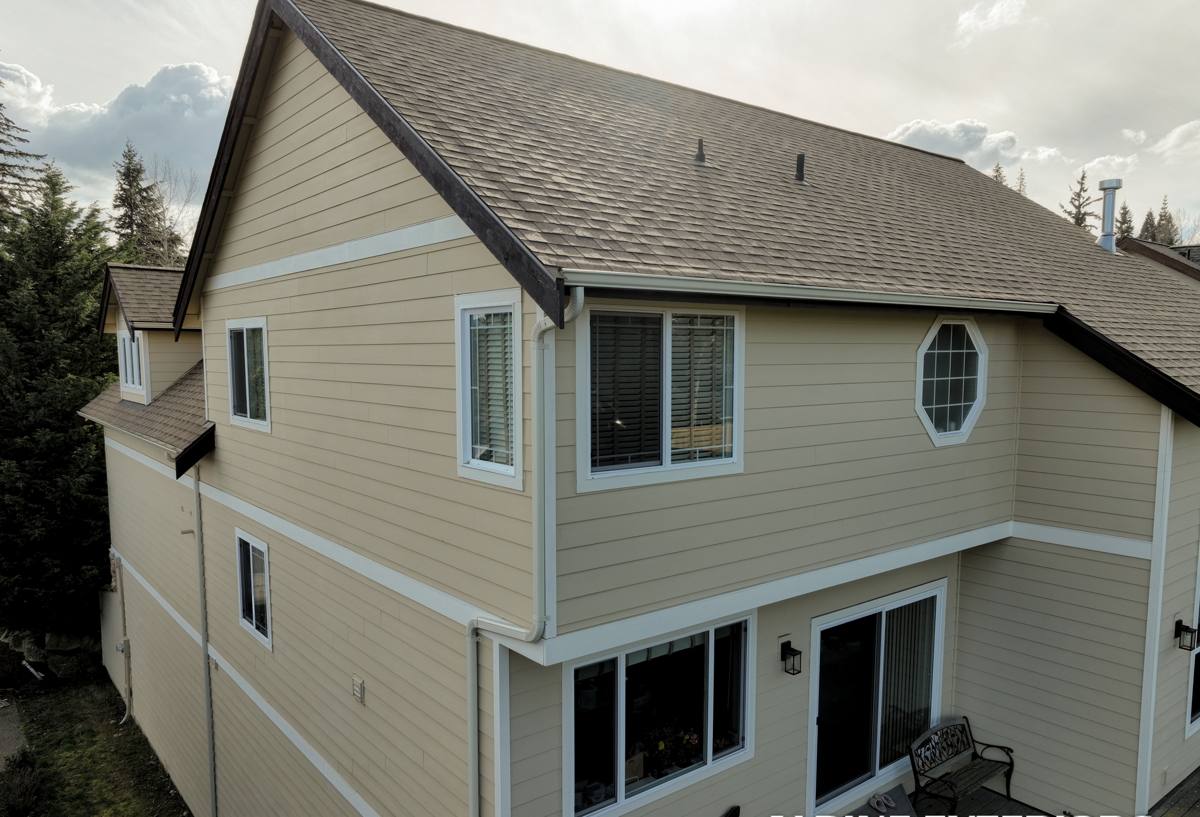
Why Lynden's Climate Changes the Job
Lynden sits in the Nooksack Valley, close enough to the water and the foothills that homes here deal with a specific combination of moisture stressors:
- Sustained wind-driven rain. Storms coming off the Strait of Georgia don't just fall straight down — they push rain sideways against west and south-facing walls for hours at a time. A window flashing detail that would hold up fine in a drier inland climate can fail here.
- Salt-influenced air. Even well inland from the coast, salt content in the air accelerates corrosion on exposed fasteners, low-quality flashing tape, and unprotected metal components around window openings.
- Long moss and algae season. Persistent damp and shade encourage moss and algae growth on north-facing walls and anywhere water sits instead of shedding. Around windows, that means sill details and drainage paths need to actually work, not just look finished.
- Freeze-thaw swings. Whatcom County doesn't get brutal winters, but it gets enough freeze-thaw cycling that trapped moisture behind a window opening can do real damage over a few seasons — expanding, contracting, and working joints loose.
None of this makes Lynden an extreme climate to build in. It does mean that flashing sequence, house-wrap integration, and sill pan drainage are not optional refinements — they're the difference between a window that performs for 25+ years and one that starts showing interior staining or soft framing within a decade.
What a Correct New-Construction Install Includes
Rough Opening and Sill Pan
Before a window ever goes in, the rough opening needs to be square, correctly sized, and protected. In this climate, a sloped sill pan — not just a strip of tape — is the right call on the majority of openings. It gives incidental water a real path out of the wall assembly instead of relying on caulk alone to keep it out.
Flashing Sequence
Flashing has to be installed in the correct shingle-lap order: sill first, then jambs, then head flashing over the top, each layer overlapping the one below it so water is directed outward and down, never trapped behind the window or diverted into the wall cavity. On new construction, this integrates directly with the house-wrap — head flashing should tuck behind the wrap above the opening, and side/sill flashing should lap over the wrap below and to the sides. Get this sequence backwards and you've built a funnel instead of a barrier.
House-Wrap Integration
New construction gives you a clean shot at doing this correctly, since the wrap isn't compromised by decades of prior work. Every seam and penetration around the window opening should be taped and lapped correctly before siding goes on. This is one of the biggest advantages of new-construction window work over retrofit — there's no guessing what's hidden behind existing material.
Air Sealing and Insulation
The gap between the window frame and rough opening needs to be sealed with a compatible low-expansion foam or backer rod and sealant — not packed with fiberglass alone, which does nothing to stop air infiltration. Over-filling with high-expansion foam can bow window frames and cause operational problems, so the product and application matter as much as doing it at all.
Fasteners and Hardware
Given the salt content in the air here, corrosion-resistant fasteners are worth the modest upcoint difference over standard galvanized options, especially on homes closer to the water side of the county.
Our Process on a New Build
- Plan review and rough opening verification. We check window schedule against actual framed openings before installation day — catching sizing mismatches now is far cheaper than after siding is on.
- Sill pan and flashing installation. Sloped sill pans, shingle-lap flashing sequence, and house-wrap integration, done in the correct order at each opening.
- Window setting and leveling. Units are set plumb, level, and square, with shims placed to manufacturer spec so the frame doesn't rack and hardware operates smoothly for the life of the window.
- Air sealing. Compatible low-expansion foam and/or backer rod and sealant around the perimeter, sized to the actual gap rather than a one-size-fits-all approach.
- Exterior trim coordination. We coordinate with your siding and trim crew (or handle both under one job) so flashing laps correctly with whatever cladding is going on next — critical if you're also planning siding work in Lynden's damp conditions.
- Final walkthrough. Every opening gets checked for level, square, smooth operation, and a clean, weathertight seal before we call it done.
Choosing Window Products for This Climate
Whatcom County builders have plenty of good options in vinyl, fiberglass, and wood-clad windows. Our recommendations lean toward materials and glass packages that hold up to sustained damp and temperature swings without high maintenance demands:
| Factor | What to Look For in Lynden |
|---|---|
| Frame material | Vinyl and fiberglass resist moisture-driven rot better than unclad wood exteriors; fiberglass holds paint and color longest under UV and damp cycling |
| Glass package | Dual-pane, low-E glass is standard for our climate; argon fill adds modest efficiency gains worth considering for west/south exposures |
| Weatherstripping | Quality compression seals matter more here than in drier climates — they're doing real work most of the year |
| Hardware finish | Corrosion-resistant coatings are worth the upgrade on homes with coastal exposure |
| Warranty structure | Ask what's covered on seal failure (fogging between panes) specifically — that's the most common long-term issue in wet climates |
We install from a range of manufacturers rather than pushing one brand, because the right product depends on your budget, the home's exposure, and your builder's overall spec. Our job is to make sure whatever you choose gets installed in a way that lets it perform to its warranty terms.
Common Mistakes We See in New Construction
- Skipping or shortcutting sill pans because "the flashing tape should be enough" — it isn't, once wind-driven rain gets involved.
- Flashing installed out of shingle-lap order, directing water into the wall instead of away from it.
- House-wrap seams left untaped or under-lapped around the opening before siding covers the mistake.
- Over-foaming the perimeter gap, which can bow frames and cause windows to stick or operate poorly.
- Using standard fasteners in coastal-exposed openings where corrosion-resistant hardware would last significantly longer.
Every one of these is invisible once the siding goes up — which is exactly why they're worth getting right during the build rather than discovering them during a remodel a decade later.
Why Local Experience on This Specific Job Matters
New-construction window work isn't complicated in the abstract — the flashing sequence is well documented and the same in principle everywhere. What changes from region to region is judgment: how much sill pan slope is enough for the rain this area actually gets, which fastener spec makes sense given the salt exposure, and how to sequence the work with siding crews who are used to Whatcom County's build calendar and weather windows. A crew that installs windows in Lynden regularly has already made the adjustments that matter here — they're not learning the local climate on your build.
We also coordinate directly with builders and GCs on scheduling, since window installation sits on the critical path for dry-in. Delays or callbacks at this stage ripple through the rest of the build, so getting it right the first time isn't just a quality issue — it's a schedule issue too.
Planning Checklist for Your Build
- Confirm window schedule matches actual framed rough openings before delivery
- Decide on sill pan approach with your builder before framing inspection
- Choose glass package and frame material based on your home's sun and wind exposure
- Coordinate window install timing with house-wrap and siding crews
- Ask your window installer directly how they sequence flashing — shingle-lap order should be a given answer, not a hesitant one
- Review warranty terms for seal failure coverage before finalizing product choice
If you're building in Lynden and want new-construction windows installed right the first time — flashed correctly, integrated with your house-wrap, and coordinated with your build schedule — we're happy to talk through your plans. Reach out for a free, no-pressure estimate using the form below.