 Whatcom County
Why Barkley Roofs Wear Differently Than Roofs Inland
Barkley sits close enough to Bellingham Bay and the Salish Sea that homes here deal with a specific combination of stresses most inland Whatcom County neighborhoods don't see as intensely: airborne salt, wind-driven rain that hits roof planes sideways instead of straight down, and a moss season that can run eight or nine months out of the year under the tree canopy that gives Barkley its character. None of these are dramatic, one-time events. They're slow, constant pressure, and that's exactly what wears out a roof before its material rating says it should.
A roof that's engineered for a dry climate, or even a moderate one, often underperforms here — not because the shingle or metal panel is bad, but because the installation details that matter in a marine, moss-prone environment weren't prioritized. When we install a new roof in Barkley, we're not just covering a house. We're building a system that sheds water fast, resists moss colonization, and holds up to corrosion from salt air over decades, not years.
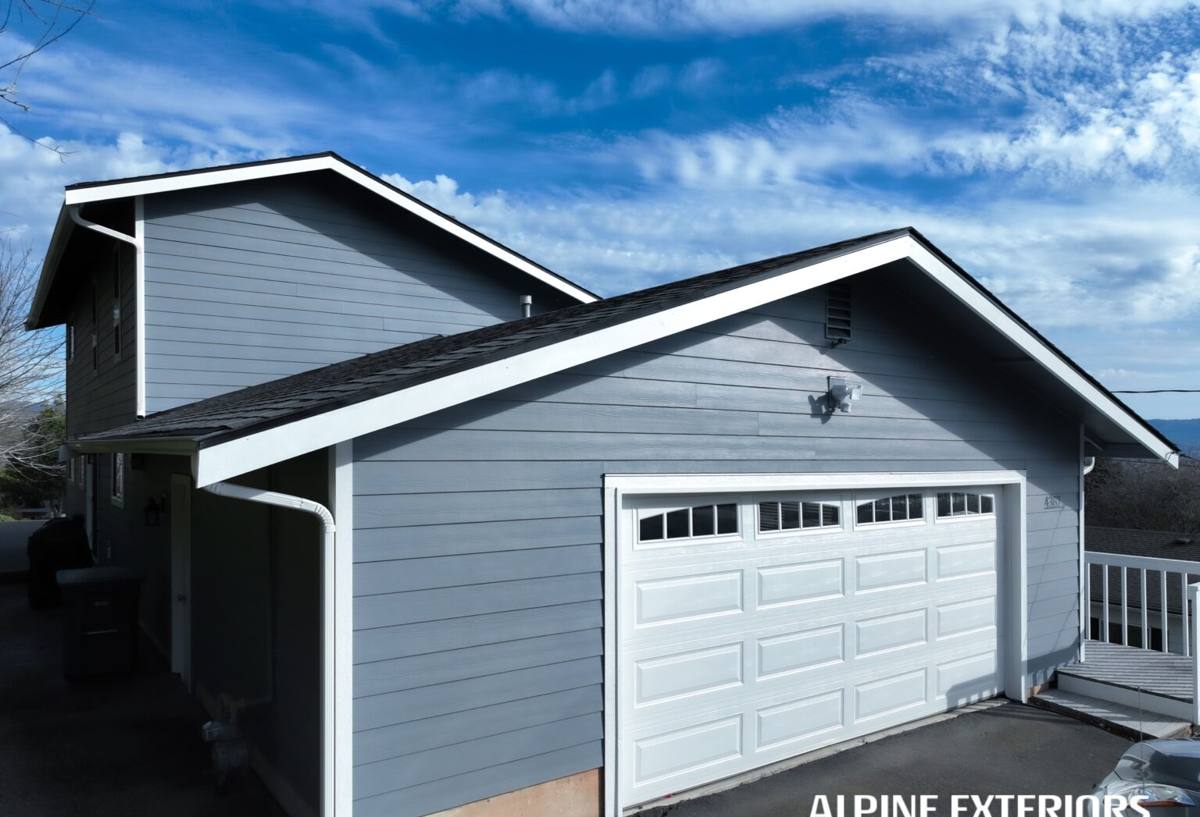
What Whatcom County's Climate Actually Does to a Roof
Salt Air and Corrosion
Proximity to saltwater accelerates corrosion on any exposed metal — fasteners, flashing, vents, and gutter hardware. Standard galvanized fasteners can start showing rust streaks and weakening well before a roof's expected service life is up. This is a materials and hardware decision made at installation, not something you can fix later without tearing into the roof again.
Driving Rain
Whatcom County storms frequently come with sustained wind, which pushes rain sideways and upward under roof edges, around penetrations, and into any gap in flashing or underlayment that would be a non-issue in calmer weather. A roof built for "average" rainfall assumes water runs straight down the slope. Barkley roofs need details built for water that's actively trying to find a way sideways and under.
Moss Season
Shaded, tree-lined lots — common throughout Barkley — stay damp longer after every rain, which is exactly what moss and algae need to establish. Moss doesn't just look bad. It holds moisture against the roofing material, lifts shingle edges as it grows, and can work its way under flashing over time. In a region where moss season can realistically run most of the year, the roof itself needs to be part of the defense, not something you scrub twice a year and hope for the best.
What a Correct New Roof Installation Includes Here
A roof that's actually built for this climate isn't just "shingles nailed down correctly." It's a layered system, and every layer matters more here than it would in a drier, calmer region.
- Tear-off and deck inspection: Full removal of the old roofing so the deck underneath can be checked for rot, soft spots, or moisture damage before anything new goes down — covering a compromised deck just traps the problem.
- Ice and water shield at vulnerable points: Extra waterproof membrane at eaves, valleys, and around penetrations, where wind-driven rain and moss buildup cause the most trouble.
- Synthetic underlayment across the full deck: A durable, water-resistant layer under the primary roofing material as a second line of defense.
- Corrosion-resistant fasteners and flashing: Hardware rated for coastal/marine exposure, not standard-grade galvanized, especially on chimneys, skylights, and roof-to-wall transitions.
- Balanced ventilation: Intake and exhaust venting sized to keep the attic dry, which reduces moisture buildup that feeds moss and rot from underneath.
- Moss-resistant roofing material or treatment: Algae-resistant shingles (often copper- or zinc-infused granules) or, for metal roofs, finishes and profiles that shed debris and dry out faster.
- Properly sealed and flashed penetrations: Every vent pipe, chimney, and skylight is a potential entry point — flashing here is not an area to cut corners.
Choosing the Right Roofing Material for a Barkley Home
There isn't one "correct" material for every house — it depends on the roof's slope, the amount of tree cover, your budget, and how the home is built. Here's how the common options actually compare for this specific climate.
| Material | Moss/Algae Resistance | Salt Air Durability | Typical Lifespan Here |
|---|---|---|---|
| Architectural (laminate) asphalt shingle, algae-resistant | Good, with AR granules | Good with corrosion-resistant fasteners | 20–30 years |
| Standard 3-tab asphalt shingle | Fair — more prone to moss holding moisture | Fair | 15–20 years |
| Standing seam metal | Very good — sheds debris and dries fast | Excellent with proper coating/fasteners | 40–60+ years |
| Composite/synthetic shake | Good | Good | 30–50 years |
| Cedar shake | Poor without diligent maintenance | Fair — needs regular treatment | 20–30 years with upkeep |
For heavily shaded Barkley lots, we're often steering homeowners toward algae-resistant architectural shingles or metal roofing specifically because both dry out faster and resist moss colonization better than standard shingle or untreated cedar. We're not against cedar shake on principle — it's a real, traditional material with genuine character — but on a shaded, damp lot it demands a maintenance commitment many homeowners underestimate, and we say so upfront rather than let a beautiful roof become a high-upkeep one nobody was warned about.
Signs Your Barkley Roof Needs Replacement, Not Another Repair
Not every roofing issue calls for a full replacement. But there's a point where patching becomes throwing money at a roof that's fundamentally past its service life. Watch for:
- Granule loss showing up in gutters consistently, not just after one storm
- Shingles that are curling, cupping, or cracking across multiple areas of the roof
- Persistent moss growth that returns within weeks of cleaning, even after treatment
- Soft spots or sagging when walked on, which usually points to deck damage underneath
- Daylight visible through the roof deck from inside the attic
- Repeated leaks in different locations rather than one isolated spot
- A roof approaching or past its material's expected lifespan, especially if the original installation didn't account for this climate
Our Installation Process
1. On-Site Assessment
We walk the roof and attic, check the deck condition, look at ventilation, and talk through what your current roof is telling us — moss patterns, wear locations, and drainage all point to specific weaknesses worth addressing in the new install.
2. Honest Material Recommendation
We'll lay out real options for your roof's slope, sun exposure, and budget, with the trade-offs explained plainly — no upselling a product your house doesn't need, no downplaying maintenance a material actually requires.
3. Tear-Off and Deck Repair
Full removal of old roofing, deck inspection, and repair or replacement of any compromised sheathing before new materials go down.
4. Waterproofing and Ventilation Build-Out
Ice and water shield at vulnerable points, synthetic underlayment across the deck, and balanced ventilation sized correctly for your attic space.
5. Installation with Coastal-Grade Hardware
Roofing material installed with corrosion-resistant fasteners and properly flashed penetrations, valleys, and edges.
6. Final Walkthrough
We review the completed roof with you, confirm ventilation is working as intended, and go over what maintenance (if any) the specific material you chose will need going forward.
Why Hire a Crew That Already Works in Barkley
A roofing crew unfamiliar with this specific stretch of Whatcom County will often default to generic installation standards — the kind that work fine in a dry inland climate but leave gaps here. A crew that already works Barkley knows which roof orientations catch the worst wind-driven rain, which lots hold shade long enough to need extra moss-resistant material, and which detailing actually holds up against salt air over a decade rather than just at the final inspection. That local pattern recognition is the difference between a roof that needs attention again in eight years and one that goes the full distance of its warranty.
What a New Roof Typically Costs
Costs vary based on roof size, pitch, material choice, deck condition, and access — we won't quote a number without seeing the roof. But the honest cost drivers are worth knowing upfront:
| Factor | Why It Affects Cost |
|---|---|
| Roof size and complexity | More valleys, dormers, and penetrations mean more labor and flashing detail |
| Deck condition | Rotted or soft sheathing found during tear-off requires repair before install |
| Material choice | Asphalt shingle, metal, and composite carry different material and labor costs |
| Roof pitch and access | Steep or hard-to-access roofs require more safety setup and time |
| Ventilation upgrades | Adding or correcting attic ventilation adds scope but protects the new roof |
Think of these as the honest variables rather than a fixed price list — a straightforward, single-story roof in good structural shape will always cost less than a complex, multi-valley roof on a home that needs deck repair.
Get a Straight Answer on Your Roof
If your Barkley roof is showing its age, dealing with recurring moss, or just due for an honest look, we'll come out, assess it, and tell you plainly what it needs — replacement or otherwise. Estimates are free and there's no pressure to move forward. Fill out the form below to get started.