 Whatcom County
Roof Repair Built for Fairhaven's Climate
Fairhaven sits close enough to the water that salt-laden air, near-constant tree cover, and a long, wet moss season all show up on local roofs faster than they do a few miles inland. If you own one of the neighborhood's older homes — many with steep pitches, dormers, and a mix of roof-to-siding transitions — you already know that a small leak here rarely stays small for long. Whatcom County's marine climate keeps things green, but it's hard on shingles, flashing, and fasteners.
This page covers what roof repair actually looks like for a Fairhaven property: what the local climate does to a roof over time, what a correct repair involves, and why hiring a crew that already knows this neighborhood's housing stock and weather pattern matters more than it might seem.
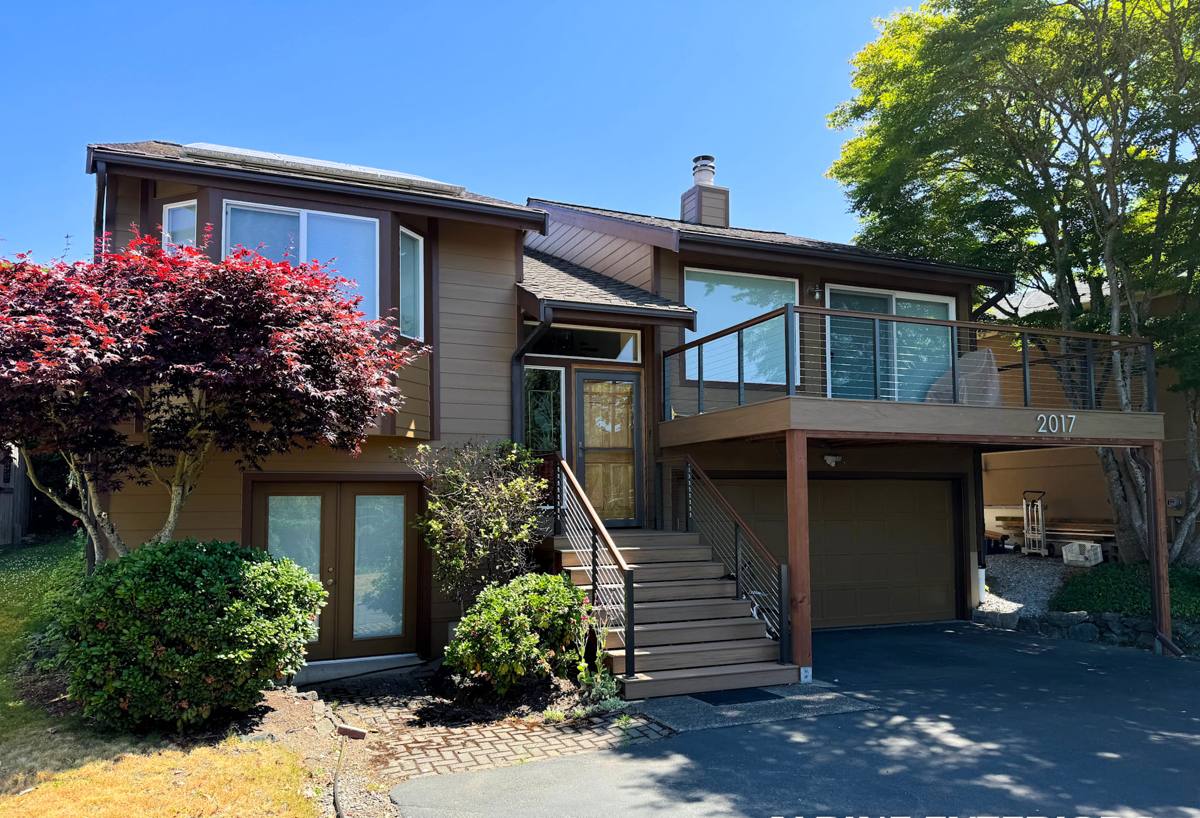
What Driving Rain, Salt Air, and Moss Do to a Roof
Driving Rain
Storms off the Salish Sea don't just drop rain straight down — wind-driven rain gets pushed sideways under shingle edges, around chimney flashing, and into any gap at a roof-to-wall intersection. Over years, this is how small flashing failures turn into hidden rot in the roof deck, even when the shingles themselves still look fine from the ground.
Salt Air
Proximity to the water means metal components — flashing, fasteners, gutter hardware, vent caps — corrode faster than they would inland. Once a fastener starts to rust, it loses grip on the material it's holding down, and that's often the first domino in a repair that could have been caught earlier.
Moss Season
Whatcom County's shaded, tree-lined streets keep roofs damp longer after every rain, and that moisture is exactly what moss needs to take hold. Moss doesn't just look bad — its root structure lifts shingle edges and holds water against the roofing material, which accelerates granule loss and, eventually, leaks. A roof that stays shaded most of the day will grow moss faster than one that gets regular sun, which is common in Fairhaven's mature, wooded lots.
Signs a Fairhaven Roof Needs Repair, Not Just Cleaning
Homeowners often ask whether a mossy or aged-looking roof needs cleaning, repair, or full replacement. Here's a practical checklist to work through before you decide:
- Moss growth concentrated in shaded valleys, north-facing slopes, or under tree canopy
- Granules collecting in gutters or at downspout outlets
- Curling, cupping, or cracked shingles, especially on south- and west-facing slopes
- Rusted or lifted flashing around chimneys, skylights, and roof-to-wall transitions
- Water stains on interior ceilings or in the attic, particularly near exterior walls
- Sagging or soft spots when walked on (a sign of deck-level moisture damage)
- Daylight visible through the roof deck from inside the attic
- Gutters pulling away from the fascia or showing signs of overflow staining on siding
If you're only seeing the first two items, you're likely looking at maintenance. Once flashing, deck moisture, or interior staining are in play, you're in repair territory — and the earlier that repair happens, the smaller and cheaper it stays.
Where Repairs Usually Start on Fairhaven Homes
Flashing First
Most leaks we trace on repair calls in this area come back to flashing — around chimneys, skylights, dormers, and the point where a roof plane meets a wall or a section of siding. Flashing is thin, mechanically fastened metal, and it's the first thing salt air and driving rain go after. Repairing flashing correctly means removing and replacing it, not just caulking over a gap, which only buys a season or two before the same spot fails again.
Moss and Granule Loss
On roofs with heavy moss, repair often includes careful manual removal (never pressure washing, which strips granules and shortens shingle life), treatment to slow regrowth, and replacement of any shingles that have already lost their protective granule layer underneath the moss.
Roof-to-Siding Transitions
Because we work on siding as much as roofs, we pay close attention to the transition points where a roof edge meets a wall — step flashing, kickout flashing at gutter lines, and the housewrap or building paper behind the siding. A roof repair that ignores this transition can leave water an easy path behind the siding, which shows up later as a siding problem instead of a roofing one.
Deck Repair
If moisture has reached the plywood or OSB roof deck, that section has to be cut out and replaced before new shingles go down. Shingling over a soft or rotted deck is a shortcut that fails within a few years.
Repair vs. Replacement: How We Help You Decide
| Factor | Leans Toward Repair | Leans Toward Replacement |
|---|---|---|
| Roof age | Under 15–18 years (asphalt) | At or past manufacturer lifespan |
| Damage extent | Localized (one slope, one flashing area) | Widespread across multiple slopes |
| Deck condition | Solid, no soft spots | Multiple soft or rotted sections |
| Moss history | First occurrence, caught early | Repeated regrowth with granule loss |
| Interior damage | None or minor staining | Ongoing leaks, insulation damage |
We'll always tell you honestly which side of this table your roof falls on. A well-timed repair can add years to a roof's life; patching a roof that's already past its practical lifespan usually just delays a bigger bill.
What a Correct Repair Looks Like, Step by Step
- Inspection — We get on the roof (not just a ground look) to check flashing, deck condition, ventilation, and shingle condition slope by slope.
- Diagnosis — We trace leaks to their actual source, which is often several feet from where the interior stain shows up, since water travels along the deck before it drips through.
- Scope and estimate — You get a clear, written explanation of what needs fixing and why, with honest pricing before any work starts.
- Repair — Damaged shingles, flashing, or deck sections are removed and replaced to match the existing roof as closely as possible.
- Moss treatment — Where relevant, we address the moss itself, not just the symptoms, so the repair isn't undone by regrowth within a year.
- Final check — We confirm the repair is watertight and walk you through any maintenance that will help it last.
Why Local Experience in Fairhaven Actually Matters
Roofing crews that mostly work drier, sunnier parts of the state don't always account for how much shade, moisture, and salt air change a roof's maintenance needs here. A crew that regularly works Whatcom County's coastal neighborhoods already knows which flashing details tend to fail first in this climate, how aggressive moss can get under heavy tree cover, and how older Fairhaven-area homes were typically framed and roofed — which matters when you're matching a repair into an existing roof rather than starting from scratch.
It also means faster response. When a leak shows up during a fall or winter storm, a crew already working in and around Fairhaven can usually get eyes on the problem sooner than one dispatching from farther away.
What We Prioritize on Every Repair
- Matching existing shingle color and profile as closely as possible
- Using corrosion-resistant flashing and fasteners suited to a marine climate
- Checking attic ventilation, since poor ventilation accelerates moss growth and shingle aging from underneath
- Confirming the repair ties in cleanly with any adjacent siding or trim
Products and Materials: Our Standard
For repairs in this climate, we lean toward materials with a track record of handling sustained moisture and salt exposure well — corrosion-resistant metal flashing, quality architectural shingles, and moss-resistant shingle lines where a full section is being replaced. We're generally cautious about lower-cost 3-tab shingles for repair work in heavily shaded, moss-prone areas like parts of Fairhaven, simply because their thinner profile and lower algae/moss resistance mean they tend to need attention again sooner — that's a maintenance trade-off worth knowing about up front, not a claim that they're unusable everywhere.
Maintenance That Extends a Repair's Life
A repair is only as good as the upkeep that follows it. For Fairhaven homes specifically, we recommend:
- Clearing gutters and downspouts at least twice a year, more often under heavy tree cover
- Trimming back branches that keep sections of roof in constant shade
- A moss check each fall before the wet season sets in
- A quick visual inspection after any major windstorm off the water
If you're seeing moss, staining, or a shingle that's clearly out of place on a Fairhaven roof, it's worth getting it looked at before winter's driving rain finds the gap. We offer free, no-pressure estimates — use the form below to get a straightforward assessment of what your roof actually needs.