 Whatcom County
Ferndale Roofs Take a Different Kind of Beating
Ferndale sits close enough to open water that homes here deal with a marine climate most inland roofers rarely see day to day. Salt-laden air off the Salish Sea works on exposed metal fasteners, flashing, and vent caps in ways drier climates don't. Add Whatcom County's long, wet fall-through-spring stretch of driving rain, and you get roofs that are constantly damp, constantly cooling, and constantly growing something on the north-facing slopes. None of that means a roof is doomed — it means the repair has to account for conditions a generic patch job ignores.
We've worked enough roofs in and around Ferndale to know the failure patterns are predictable: corroded fasteners before the shingles themselves are worn out, moss lifting tabs at the eaves, and flashing that was fine when installed but has since been undermined by years of standing moisture. A roof repair here needs to solve the actual cause, not just cover the symptom.
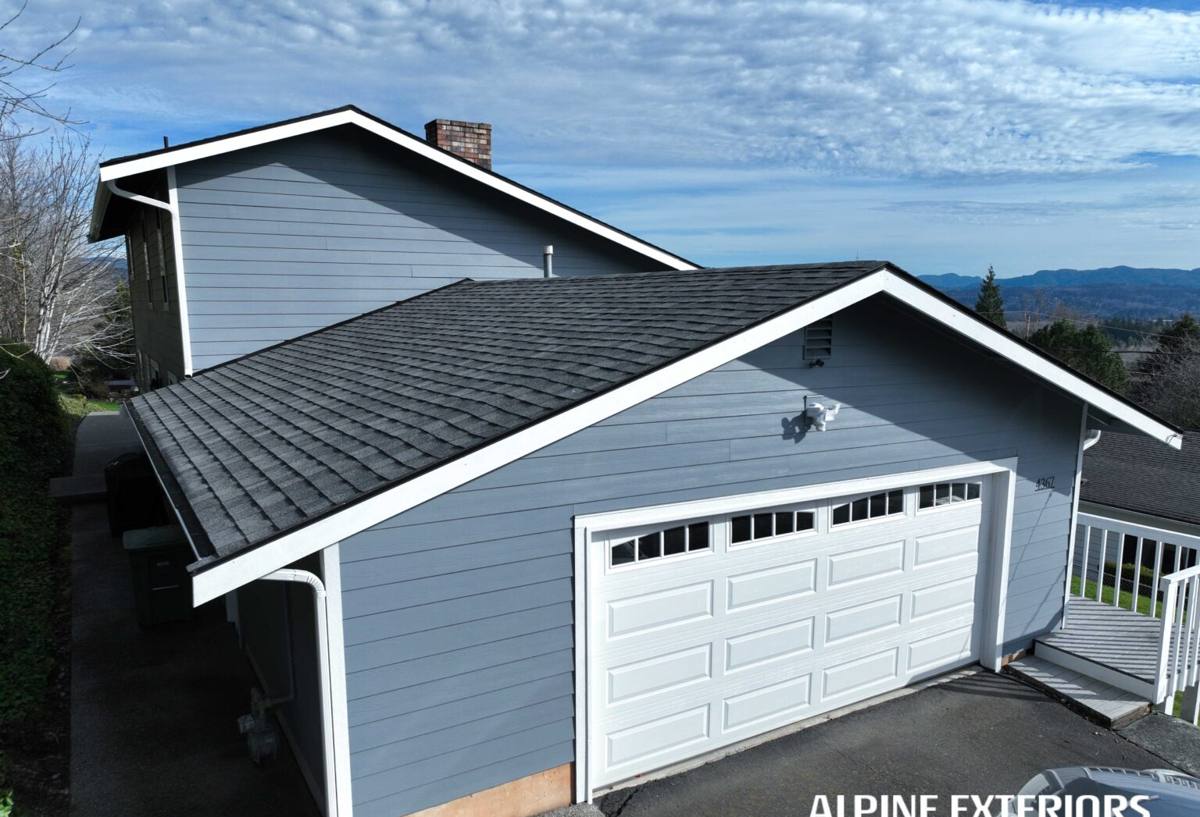
Signs a Ferndale Roof Needs Attention
Most roof problems don't show up as a dramatic leak on day one — they show up as small clues first. Homeowners in this area should watch for:
- Dark streaking or green-black growth concentrated on the shaded, north- or east-facing slopes
- Granules collecting in gutters or at downspout outlets after a hard rain
- Soft or spongy decking felt underfoot in the attic near valleys or chimneys
- Rust staining below metal flashing, vent boots, or exposed nail heads
- Daylight visible through the roof deck at soffits or ridge vents
- Interior ceiling stains that appear only during sustained rain, not a single storm
Any one of these can mean a straightforward repair. Several at once, especially combined with a roof that's already 15-20+ years old, usually means it's worth having an honest look before spending money patching a system that's near the end of its service life.
What a Correct Repair Actually Involves
A roof repair that holds up in this climate does more than swap out damaged shingles. It has to address moisture management as a whole system, because a leak rarely stays where it started — water travels along the deck and shows up somewhere else entirely.
Diagnosing the actual source
We trace leaks from the interior stain or attic evidence back to the actual entry point, which is often several feet away from where the water shows up inside. Guessing and re-shingling the wrong spot is the single most common reason a "repaired" roof leaks again the next season.
Flashing and penetrations
Chimneys, plumbing vents, skylights, and roof-to-wall transitions are where most Whatcom County leaks originate — not the open field of shingles. Flashing that's rusted, undersized, or was never properly step-flashed into the wall needs to be replaced correctly, not caulked over.
Decking condition
If sustained moisture has softened the plywood or OSB decking underneath, replacing shingles over rotten decking just delays the same repair. Any soft decking gets cut out and replaced before new roofing goes down.
Ventilation
Poor attic ventilation traps moisture that accelerates moss growth and shortens shingle life from underneath. A repair is a good time to check that intake and exhaust venting are actually balanced, not just present.
Roofing Materials We Work With — What Matters in This Climate
Not every material behaves the same way under constant damp and salt exposure. Here's how the common options compare for repair and long-term maintenance in a Ferndale setting:
| Material | Moisture & Moss Behavior | Typical Repair Considerations |
|---|---|---|
| Asphalt composition shingle | Moderate moss risk on shaded slopes; granule loss accelerates with age and moisture | Most common, most affordable to repair; matching older shingle color can be a challenge |
| Metal roofing | Sheds moisture fast, low moss risk, but fasteners and cut edges are the vulnerable point near salt air | Repairs focus on fastener corrosion and sealant at panel laps and penetrations |
| Cedar shake | Higher moisture retention, more moss-prone, needs active upkeep | Repairs are more labor-intensive; individual shake replacement requires matching weathering |
| Torch-down / low-slope membrane | Good moisture resistance when seams are intact | Failures are almost always at seams, flashing, or drain penetrations |
We don't push a switch to a different material just because it's trending — we tell you honestly whether your current roofing type is worth repairing as-is or whether the maintenance burden has tipped toward replacement.
Our Roof Repair Process
- On-site inspection — we get on the roof (weather permitting) and in the attic to trace the actual leak path, not just look at the visible damage from the ground.
- Honest scope and estimate — you get a clear explanation of what's failing, why, and what it will take to fix it correctly, with options if more than one approach is reasonable.
- Repair work — decking, flashing, underlayment, and roofing material are addressed as needed, matching existing materials as closely as possible.
- Cleanup and moss treatment where appropriate — we clear debris and growth that contributed to the failure so the repair isn't undone by the same conditions within a year.
- Follow-through — we tell you what to watch for and what reasonable maintenance looks like going forward, rather than disappearing once the invoice is paid.
Moss, Algae, and Salt Air: What Ongoing Care Looks Like
A repair fixes what's broken today. Whatcom County's long moss season and the salt exposure closer to the water mean a little ongoing attention keeps small problems from becoming big ones. A reasonable maintenance routine:
- Keep gutters and downspouts clear so water isn't sitting against the fascia or backing up under shingles
- Trim back overhanging branches to cut down shade and debris on north-facing slopes where moss takes hold first
- Have moss physically removed rather than just chemically treated on a roof that already shows growth
- Check attic ventilation isn't blocked by insulation or debris
- Have flashing and fastener condition checked every few years, especially on metal roofing closer to the water
None of this requires a contractor visit every season — it's mostly homeowner-level upkeep that extends the life of whatever repair or roof you have.
Repair or Replace? How We Help You Decide
Not every roof problem calls for a full replacement, and not every roof is worth continuing to patch. We look at a few honest factors before recommending either direction:
| Factor | Leans Toward Repair | Leans Toward Replacement |
|---|---|---|
| Roof age | Under roughly 15 years, or a well-maintained older roof with one clear issue | Near or past typical material lifespan with widespread wear |
| Extent of damage | Isolated to one flashing point, vent, or section | Multiple leak points, widespread granule loss, or deck damage in several areas |
| Underlying decking | Solid, dry decking found during inspection | Soft or rotted decking across a significant portion of the roof |
| Cost trajectory | Repair cost is a small fraction of replacement cost | Repeated repairs are starting to add up toward what a new roof would cost |
Repair costs vary a lot depending on scope — a single flashing fix is a different job than replacing a damaged section of decking and shingles. We give you real numbers for your specific roof, not a rough guess, and we'll say plainly if replacement is the more sensible long-term move.
Why a Local Ferndale Crew Matters
A roofer who works this specific stretch of Whatcom County has already seen how the salt air, the rain patterns, and the moss cycle play out on roofs like yours across multiple seasons — not just in a brochure. That matters when it comes to knowing which flashing details actually hold up here, which materials are worth their added cost in this climate, and which shortcuts show up as callbacks two winters later. It also means someone answers the phone if a repair needs a follow-up, instead of chasing down an out-of-town crew that's moved on to the next city.
We're not interested in overselling a full roof replacement when a targeted repair will genuinely hold. Our reputation in this area depends on the repair actually working through the next wet season, not just looking finished on the day we leave.
Get an Honest Look at Your Roof
If you're dealing with a stain on the ceiling, moss creeping across the shingles, or just want a straight answer on how much life is left in your roof, we're happy to take a look. Fill out the form below for a free, no-pressure estimate — we'll tell you what we actually find, not just what's easiest to sell.