 Whatcom County
Roof Repair in Sehome: Older Trees, Steep Lots, and a Roof That Rarely Gets a Break
Sehome is one of Bellingham's older, more established neighborhoods, built up around mature trees and a hillside layout that gives a lot of homes here real character — and gives their roofs a harder job than most people realize. Between the tree canopy, the terrain, and Whatcom County's marine climate, a Sehome roof deals with shade, debris, and moisture in combination, which is a different problem than a roof out on an open, sun-exposed lot faces. Add in the salt air drifting up from Bellingham Bay, driving rain off the water, and a moss season that barely lets up most years, and it's easy to see why roofs in this part of town tend to show wear earlier than homeowners expect.
We work throughout Whatcom County and know Sehome specifically — the tree cover, the older roof lines mixed in with newer work, the way water tends to sit on north-facing slopes that never quite dry out. That local familiarity matters for roof repair more than almost any other trade, because so much of what causes a leak here isn't visible from the driveway. We treat roofing as one piece of a connected exterior system along with siding, windows, and decks, because water that gets past a roof detail almost never stays contained to the roof.
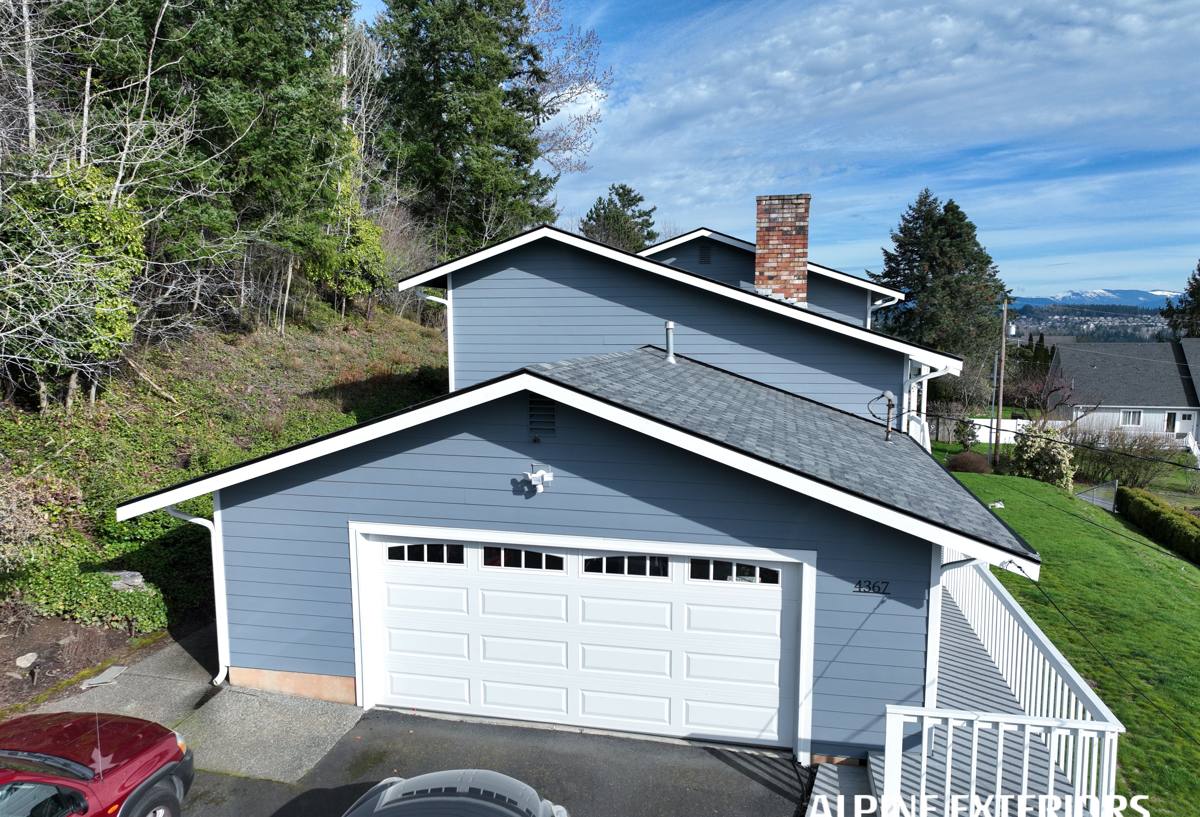
What Makes Roofs in Sehome Age the Way They Do
Tree Cover and Chronic Shade
Mature trees are part of what makes Sehome a desirable place to live, but they're hard on a roof. Overhanging branches drop needles, leaves, and debris into valleys and behind chimneys, where it dams water instead of letting it run off. Shaded sections of roof also dry out more slowly after rain, which matters a lot in a climate that doesn't give a roof many dry stretches to begin with.
Salt Air Off the Bay
Sehome sits close enough to Bellingham Bay that salt-laden air reaches roofs here, and salt air is corrosive to anything metal on a roof — flashing, fasteners, valley metal, vent caps. A fastener that loses its protective coating can work loose or lose its grip years earlier than it would inland, and corroded flashing is one of the more common hidden sources of a leak that seems to come from nowhere.
Driving Rain and Wind-Driven Water
Storms coming off the water don't always drop rain straight down. Wind-driven rain can push water sideways under shingle edges and up under flashing laps that would shed a calm, vertical rain just fine. That's part of why we look hard at flashing and edge details on repair calls here, even when the field of the roof still looks serviceable from the ground.
A Long, Damp Moss Season
Between the marine climate and the extra shade from mature trees, moss finds ideal conditions across much of Sehome for a large part of the year. It's not just cosmetic — moss holds moisture directly against shingles, lifts shingle edges as it spreads, and accelerates granule loss. On shaded, north-facing slopes especially, it can take years off a roof's usable life if it's left to establish.
Debris Buildup in Valleys and Gutters
The same trees that shade a roof also fill its valleys and gutters. A clogged valley backs water up under the shingle courses above it, and a clogged gutter can send water behind fascia boards and into the roof edge rather than off the property. In a tree-heavy neighborhood like this one, debris is as much a driver of roof problems as weather is.
Signs a Sehome Roof Needs Attention
Most repair calls start with something specific a homeowner noticed, not a full inspection. Worth checking for:
- A water stain on a ceiling or in the attic, even a faint one
- Moss buildup on shaded or north-facing roof slopes
- Missing, cracked, curling, or lifted shingles after a windy storm
- Granules collecting in gutters or at the base of downspouts
- Standing debris or visible buildup in roof valleys
- Rust streaking below flashing, vents, or valley metal
- A leak that only appears during wind-driven rain, not calm weather
- Soft or spongy footing when walking the roof, or visible sagging from below
Any one of these on its own is often a contained, affordable repair. Left through another wet Whatcom County winter, though, small issues in a shaded, tree-covered neighborhood like Sehome tend to compound faster than they would on a more exposed roof.
What a Correct Repair Actually Involves
Tracing the Real Source
Water travels before it shows up as a stain, sometimes several feet from where the actual entry point is. A proper repair starts by tracing that path — checking flashing, valleys, penetrations, and the shingle courses above the visible damage — before any material comes off the roof. Chasing the symptom instead of the source is the most common reason a repair doesn't hold.
Clearing and Correcting Debris Points
On a tree-heavy lot, part of a durable repair is addressing the debris pathway itself, not just the leak it caused. That means clearing valleys and gutters properly and, where it makes sense, discussing simple maintenance steps that keep debris from rebuilding in the same spot right away.
Matching Materials and Fastening Correctly
Shingle repairs need to tie into the surrounding courses the way the original installation should have — fasteners placed and sealed correctly, not just patched over the top. A patch that isn't properly integrated into the surrounding shingles is exactly the kind of repair that fails again in the next windstorm.
Flashing and Valley Work
Because so much of the water intrusion we trace on Sehome roofs comes back to flashing, we treat it as its own category of repair rather than an afterthought. That includes step flashing at wall intersections, valley metal, and flashing around chimneys, skylights, and vent penetrations — all common weak points, and all more exposed to corrosion this close to the bay.
Moss Removal Done Without Damage
Where moss has already taken hold, how it's removed matters as much as removing it. Aggressive scraping can lift or strip shingle granules and cause more damage than the moss itself. We remove it carefully and look at what's letting the area stay wet longer than it should, since a roof that dries slowly will just grow the moss back on the same timeline.
Repair vs. Replacement: How We Think About the Line
| Factor | Leans Toward Repair | Leans Toward Replacement |
|---|---|---|
| Roof age | Well within expected lifespan for the material | At or past expected lifespan, especially with shade and moisture exposure |
| Extent of damage | Localized to one area, valley, or detail | Spread across multiple slopes |
| Deck condition | Solid, no soft spots found underfoot | Soft, rotted, or spongy decking discovered |
| Moss history | First or light occurrence, caught early | Repeated, heavy moss growth over multiple seasons |
| Granule loss | Minor and isolated | Heavy and spread across most of the roof |
| Flashing condition | Sound, minor sealant work needed | Corroded, undersized, or failing in multiple locations |
We'll always tell you honestly which side of that table your roof falls on. A repair that's genuinely enough to solve the problem is the right call more often than people expect — we don't push a full replacement when a well-executed repair will hold.
Our Process for a Sehome Roof Repair
1. Inspection and Honest Assessment
We start by walking the roof (weather permitting) and checking the attic from inside where access allows, looking specifically for the patterns common to shaded, tree-covered lots: debris buildup, moss colonization, and flashing condition, not just the spot where the stain showed up.
2. A Clear, Written Explanation of the Problem
Before any work starts, you'll know what we found, why it's happening, and what fixing it involves. If it's a straightforward repair, we say so. If we find deck damage or a pattern that suggests replacement makes more sense, we say that too, and explain why.
3. The Repair Itself
We match materials to what's already on the roof where possible, tie new work into the surrounding courses correctly, and handle flashing, valley, and debris issues as part of the same visit rather than treating them as separate problems.
4. A Final Walkthrough
We check the completed work with you before we consider the job done, and we're straightforward about any follow-up maintenance — gutter and valley clearing, for instance — that will help the repair last given the tree cover common to this neighborhood.
Maintenance That Actually Helps in a Neighborhood Like This
Sehome's tree cover means a little seasonal attention goes further here than in more exposed parts of Whatcom County. A short checklist worth keeping to:
- Clear gutters and downspouts at least twice a year, more often under heavy tree cover
- Check roof valleys for debris buildup after major windstorms
- Have moss treated or removed before it spreads beyond a small patch
- Trim back branches that overhang the roofline where it's safe and practical to do so
- Look at the attic occasionally for daylight, staining, or musty odors between scheduled inspections
None of this replaces a proper inspection, but it does reduce how often small issues turn into repair calls in the first place.
Why It Matters to Hire a Crew That Already Works This Neighborhood
A roofer who mainly works open, sun-exposed properties elsewhere in the county may not think to check debris-packed valleys first, or may underestimate how much moss can establish on a shaded north slope in a single wet season. Crews that already work Sehome regularly know to look for these patterns before they're pointed out, which usually means a faster, more accurate diagnosis and a repair that's built for the conditions the roof actually faces — not a generic fix that happens to be located in a tree-heavy neighborhood.
It also means being available for the kind of follow-up a lot of these roofs eventually need: a gutter check after a windstorm, a look at a spot that's started collecting moss again, or a straightforward answer about whether a repair is still holding. That's easier for a crew that's already familiar with your street and your roof than for one that has to relearn the property from scratch every visit.
Get a Straightforward Assessment
If you're dealing with a leak, moss buildup, or a roof that just doesn't seem to be drying out the way it should, we're happy to take a look and give you an honest read on what's going on and what it'll take to fix it — no pressure, no upsell. Fill out the form below for a free estimate, and we'll walk you through exactly what we find.