 Whatcom County
Why Cordata Roofs Wear Out Differently Than Roofs Inland
Cordata sits close enough to the Salish Sea that homes here deal with a combination most inland roofing crews never have to think about: salt-laden air moving in off the water, long stretches of driving rain, and a moss season that can run nine months out of the year. None of those things is dramatic on its own. Together, over ten or fifteen years, they add up to premature granule loss on asphalt shingles, corroded fasteners and flashing, and moss mats that hold moisture against the roof deck long after a storm has passed.
A roof that was installed correctly for a drier climate can still underperform in Whatcom County if the details weren't adjusted for what actually happens here. That's the difference we focus on with every roof replacement we do in Cordata: not just putting new material down, but building the roof to shed water fast, resist moss colonization, and hold up to salt exposure for the long haul.
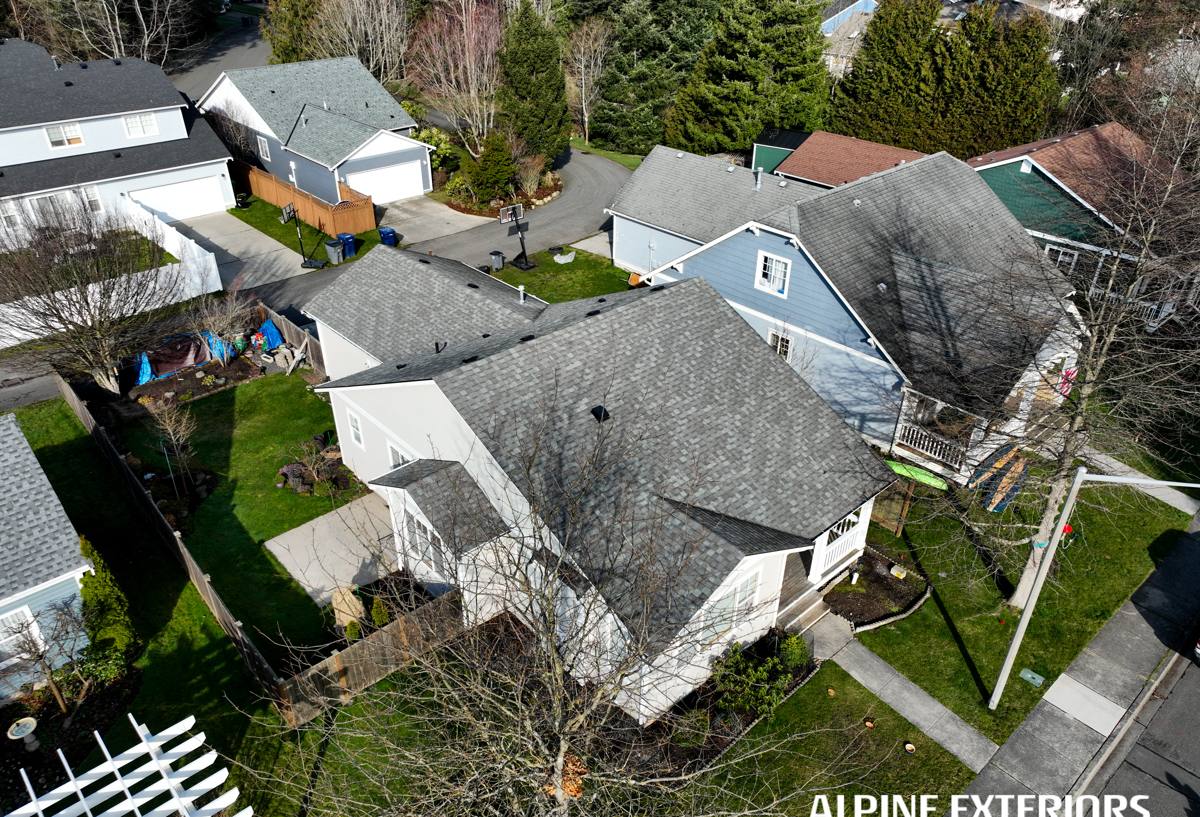
Signs a Cordata Home Needs a Roof Replacement, Not Another Repair
Most homeowners call us first about a leak or a soft spot, and it's a fair question whether that's a repair or a full replacement. A few patterns tell us pretty quickly which one you're dealing with:
- Granules collecting in gutters and downspouts in noticeable amounts, especially after a hard rain
- Shingles that are curling, cupping, or losing their tab lines when viewed from the ground
- Moss growth that keeps returning within a season or two of cleaning, even in shaded, north-facing sections
- Daylight or water staining visible in the attic along the roof deck or near flashing points
- A roof that's already had two or more patch repairs in the last five years
- Rusted, lifting, or missing flashing around chimneys, vents, and valleys
One or two of these on their own might mean a repair is enough. Several together, especially on a roof that's already past 18-20 years old, usually means the underlying materials are failing broadly and a patch will just move the problem somewhere else on the same roof within a year or two.
What a Correct Roof Replacement Actually Involves
A roof replacement is more than swapping old shingles for new ones. In a climate like ours, the parts you don't see matter as much as the ones you do.
Tear-Off and Deck Inspection
We remove the old roofing down to the deck rather than layering over it. That's the only way to actually see the condition of the sheathing underneath. In homes that have had slow leaks for a while, we commonly find sections of plywood or board sheathing that are soft, delaminated, or stained from years of moisture intrusion. Those sections get replaced before anything new goes down — covering over compromised decking is one of the more common shortcuts that leads to problems a few years later.
Underlayment
Given how much rain Cordata sees, we treat underlayment as a real line of defense, not a formality. A synthetic underlayment with good water resistance, installed with proper overlaps, gives the roof a second layer of protection if wind-driven rain gets past the shingles during a storm.
Flashing and Valleys
Flashing around chimneys, skylights, wall intersections, and valleys is where most roof leaks actually start, not in the open field of shingles. We replace flashing as part of a full roof replacement rather than reusing old pieces, and we pay close attention to valley construction since that's where the largest volume of water concentrates during heavy rain.
Ventilation
Proper intake and exhaust ventilation keeps the attic space at a consistent temperature and moisture level. Without it, moisture builds up under the deck from the inside, which shortens the life of both the sheathing and the new roofing from underneath — a problem that has nothing to do with the weather outside but shows up looking like a weather problem.
Material Options for a Coastal Whatcom County Climate
There isn't one universally "right" material — it depends on your budget, your roof's pitch and exposure, and how much long-term maintenance you want to take on. Here's how the common options compare for a home in a moss-prone, salt-air environment like Cordata:
| Material | Moss Resistance | Salt Air Durability | Typical Lifespan | Maintenance Level |
|---|---|---|---|---|
| Standard asphalt shingle | Moderate — benefits from zinc/copper strips | Good with proper fasteners | 20-25 years | Moderate; periodic moss treatment |
| Algae-resistant (AR) shingle | Better — built-in copper granules | Good | 25-30 years | Lower than standard shingle |
| Standing seam metal | Very good — little for moss to grip | Very good with coated/coastal-rated panels | 40-50+ years | Low |
| Composite/synthetic shake | Good | Good | 30-40 years | Low to moderate |
We don't push one product on every home. A lower-slope roof that stays shaded most of the day is a different situation than a steep, sun-exposed roof, and the right shingle or panel choice reflects that rather than a one-size answer.
Our Roof Replacement Process for Cordata Homeowners
- On-site inspection of the existing roof, attic ventilation, and decking condition, with photos so you can see exactly what we see
- A written estimate that spells out material options, scope of work, and what's included — no vague allowances
- Scheduling that accounts for Whatcom County's rain patterns; we don't tear off more roof than we can dry-in and protect the same day
- Tear-off, deck repair as needed, and disposal of old materials
- Installation of underlayment, flashing, ventilation components, and final roofing material
- A final walkthrough covering what was done, what to expect going forward, and basic maintenance guidance specific to your roof
Because we work in Whatcom County regularly, we plan around the reality of our weather rather than working around it after the fact. That means fewer surprises mid-project and a roof that's fully protected at every stage, not just at the end.
Moss and Salt Air: What Happens After the Roof Goes On
A new roof isn't maintenance-free in this climate, and we won't tell you it is. Moss spores are in the air throughout Whatcom County, and they'll land on any roof eventually, new or old. The difference a correct installation makes is how well the roof resists moss taking hold and how easily it can be kept clean without damaging the material.
We typically recommend a simple annual check: clearing debris from valleys and gutters before the wet season sets in, and addressing any early moss growth with a gentle treatment rather than pressure washing, which can strip granules and shorten a shingle roof's life. Salt air exposure is mostly addressed at installation — through fastener selection and flashing material — rather than something you manage afterward, which is part of why getting those details right the first time matters so much here.
Why Local Experience in Cordata Matters
Roofing crews that mostly work drier, inland climates sometimes install roofs that are technically fine on paper but miss the details that matter most on the coast — thinner underlayment, standard fasteners instead of corrosion-resistant ones, or ventilation calculated for a climate that doesn't get our rainfall. Working in and around Cordata regularly means we see how roofs actually perform here over time, not just how they look the day they're finished. That shapes real decisions on your project: where we add extra flashing, which fastener spec we use, and how we set up ventilation for a home that's going to sit through a lot of wet Pacific Northwest winters.
What Affects Timeline and Cost
Every roof is different, but a few factors consistently drive both the price and the schedule on a Cordata roof replacement:
| Factor | Why It Matters |
|---|---|
| Roof size and pitch | Steeper roofs take longer and require more safety setup |
| Number of layers being removed | Multiple layers of old roofing add tear-off time and disposal cost |
| Deck condition | Rotted or soft sheathing found during tear-off requires replacement |
| Material selected | Metal and composite materials cost more upfront but last significantly longer |
| Roof complexity | Valleys, dormers, skylights, and chimneys add labor and flashing work |
| Weather window | Rain delays are common in Whatcom County and are planned into scheduling, not treated as surprises |
Before committing to any project, it's worth having a few things confirmed in writing:
- Whether the estimate includes deck repair, or treats it as a separate cost if found
- What underlayment and flashing materials are specified, not just the shingle or panel brand
- Whether ventilation is being assessed and included, or left as-is
- The manufacturer's warranty terms and whether installation is covered, not just materials
- A realistic timeline that accounts for typical Whatcom County weather
If your roof is showing signs of wear, or you just want an honest read on how many years it has left, we're happy to take a look. Estimates are free, there's no pressure, and you'll get a straight answer about whether you need a full replacement or just a repair — use the form below to get started.