 Whatcom County
Roofing in Lynden: What the Whatcom County Climate Actually Demands
Lynden sits in the flat, fertile stretch of Whatcom County near the Nooksack lowlands, and while the town feels a world away from a shoreline, it still sits inside the same marine-influenced weather system that shapes the whole county. That means long stretches of low-intensity rain rather than short violent storms, humidity that lingers instead of clearing out, and a moss season that can run eight or nine months out of the year. Add in the salt-tinged air that moves inland off the Sound and the Strait on prevailing winds, and you get a climate that is quietly harder on a roof than it looks from the ground.
None of this means Lynden roofs fail faster than roofs anywhere else in western Washington. It means they fail differently — moisture creeping in at nail penetrations and valleys, moss lifting shingle edges instead of wind tearing them off, and slow granule loss instead of dramatic storm damage. A roof replacement done for Lynden needs to be planned around those specific failure patterns, not around a generic checklist written for a drier climate.
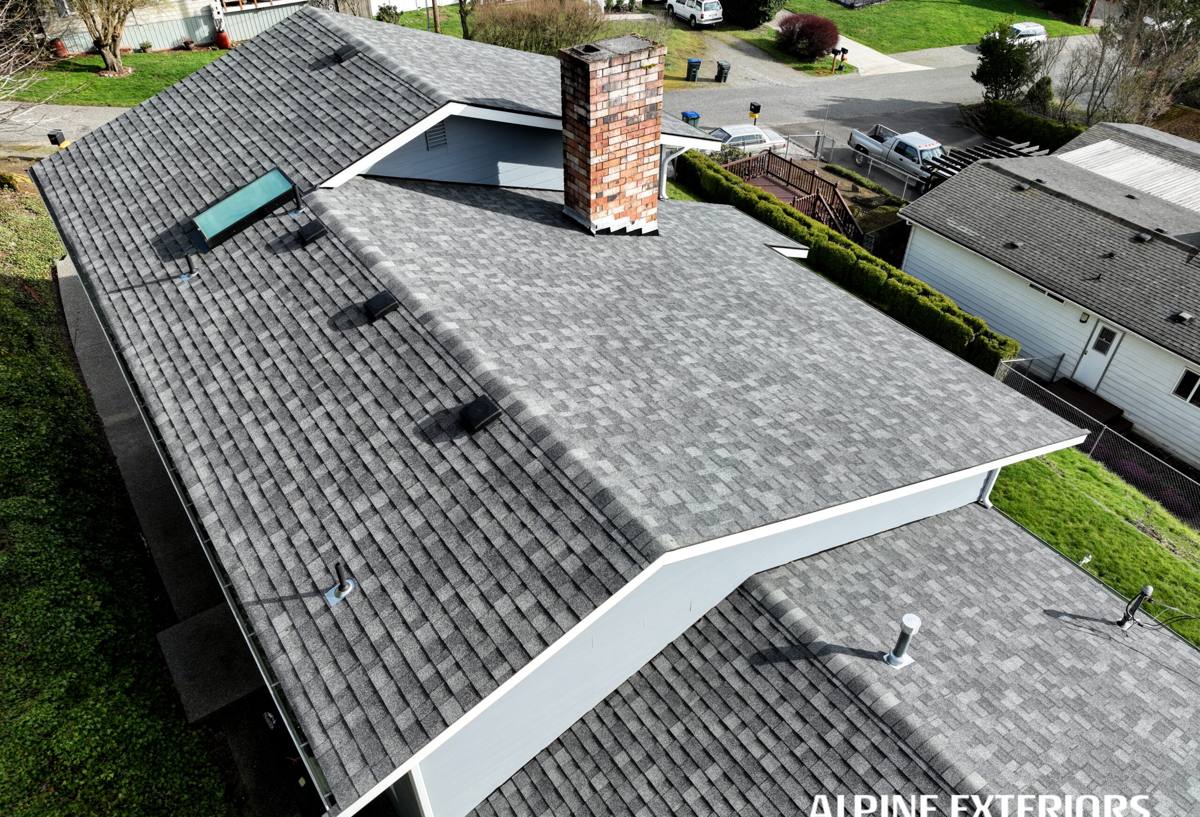
Signs Your Lynden Roof Is Telling You It's Time
Most roofs don't fail all at once. They send signals for a year or two before a leak actually shows up inside the house. Homeowners in Whatcom County should watch for:
- Moss or algae streaking that comes back within months of being cleaned off
- Granules collecting in gutters or at downspout outlets
- Shingles that look cupped, curled at the edges, or brittle when you can see them from the ground
- Soft or spongy spots when walking a low-slope section, or visible sagging along the ridge
- Daylight visible through the roof deck from inside an unfinished attic
- Rust streaking or lifted seams around flashing at chimneys, vents, and skylights
- Interior water stains that appear after heavy or prolonged rain, not just wind events
Any one of these on its own might be a repair. Several at once, especially on a roof already past 20 years old, usually means replacement is the more honest recommendation — patch work on a roof that's structurally tired tends to cost more over a few years than doing it right once.
What a Correct Roof Replacement Actually Involves
Tear-Off and Deck Inspection
A proper replacement starts with a full tear-off down to the sheathing, not a layover on top of old shingles. That's the only way to actually see the deck. In a climate like Whatcom County's, we routinely find soft or delaminated plywood around old penetrations and valleys — spots where moisture has been working its way in slowly for years without ever producing a visible interior leak. Any damaged sheathing gets replaced before anything new goes down; skipping this step is the single most common shortcut that leads to early failure.
Underlayment and Water Protection
Underlayment is your roof's backup plan, and in a wet climate it matters as much as the shingle itself. We use synthetic underlayment across the field and self-adhering ice-and-water membrane at the vulnerable spots — eaves, valleys, around chimneys and skylights, and low-slope transitions — where wind-driven rain is most likely to work its way sideways under the shingle course.
Ventilation
A roof that can't breathe traps moisture in the attic, and trapped moisture rots decking from underneath even on a roof that's shedding rain perfectly on top. Balanced intake at the eaves and exhaust at the ridge keeps air moving, which also helps control the condensation that shows up during Whatcom County's cool, damp winters.
Flashing and Penetrations
Flashing failure is the most common source of leaks on an otherwise sound roof. We replace step flashing, counter-flashing, and pipe boots rather than reusing old metal, and we pay particular attention to chimneys and dormers, since those are the spots where driving rain finds its way in first.
Choosing the Right Roofing Material for Lynden Homes
There's no single "best" roofing material — the right choice depends on your home's style, your budget, and how much long-term maintenance you're willing to take on. Here's how the common options compare for a Whatcom County home:
| Material | Typical Lifespan | Moss/Moisture Behavior | Maintenance |
|---|---|---|---|
| 3-Tab Asphalt Shingle | 15–20 years | More prone to moss gripping the flatter surface | Regular cleaning recommended |
| Architectural (Dimensional) Shingle | 25–30 years | Heavier profile sheds water better, still needs moss control | Moderate |
| Metal (standing seam or panel) | 40-plus years | Sheds moisture fast; moss struggles to grip smooth metal | Low |
| Cedar Shake | 20–30 years with upkeep | Absorbs moisture, needs active moss/mold management | High |
Most of the homes we replace roofs on in Lynden end up with a mid-to-high-grade architectural asphalt shingle — it strikes a fair balance between upfront cost and how well it handles a wet climate. Metal has grown in popularity here specifically because it sheds moisture aggressively and gives moss almost nothing to hold onto, though it comes with a higher upfront cost. We're straightforward with clients about cedar: it can look great, but in a climate this wet it demands a maintenance commitment most homeowners underestimate, and we'll say so rather than sell against our own advice.
What Drives the Cost of a Roof Replacement
We don't publish flat prices because roof cost depends on real variables specific to your house — but these are the factors that actually move the number, so you can ask informed questions of any contractor you're comparing:
| Factor | Why It Matters |
|---|---|
| Roof size and number of planes | More squares and more complex geometry mean more labor and material |
| Pitch and access | Steeper or harder-to-access roofs require more safety equipment and time |
| Deck condition | Rotten sheathing found at tear-off adds material and labor to replace it properly |
| Number of penetrations | Chimneys, skylights, and vents each need individual flashing work |
| Material grade | Standard shingle vs. architectural vs. metal changes both material and install cost |
| Layers to remove | Tearing off multiple old layers takes longer than a single-layer tear-off |
A straightforward, single-layer, moderate-pitch roof on a typical Lynden home will land at a different number than a steep, multi-plane roof with several skylights — and the only honest way to know your number is a real on-site look, not a phone quote.
Our Roof Replacement Process
- On-site inspection and honest assessment of whether repair or replacement makes sense
- Written estimate with material options explained in plain terms, including trade-offs
- Scheduling around Whatcom County's weather windows, with material staged and protected on delivery
- Full tear-off and deck inspection, with any rot or damage documented before repair
- Installation of underlayment, ice-and-water protection, new flashing, and the chosen roofing material
- Ventilation check and correction to make sure intake and exhaust are balanced
- Full site cleanup, including a magnetic sweep for nails and debris
- Final walkthrough so you can see the completed work and ask questions before we consider the job done
Why a Local Whatcom County Crew Matters in Lynden
Roofing crews that work all over Puget Sound and beyond aren't necessarily bad, but a crew that works Whatcom County regularly knows things that only come from repetition in this specific climate: which valleys tend to collect moss first, how much ice-and-water membrane is actually worth installing given our winter pattern, and how to sequence a job around the long stretches of drizzle that can stall a crew that isn't used to working around them. We also know the local permitting process for Lynden and unincorporated Whatcom County, which keeps a project from stalling on paperwork.
Being local also means we're still around after the job. If a question comes up two years later — a shifted flashing seam, a question about warranty coverage — you're calling a crew that's a short drive away and has a record of the work, not chasing down a company that came through once and moved on.
After the Install: Keeping Moss and Moisture at Bay
A correctly installed roof still benefits from basic upkeep in this climate. A few habits go a long way:
- Keep gutters clear so water doesn't back up under the shingle edge, especially during heavy fall rain
- Trim back overhanging branches to cut down on shade and debris that feed moss growth
- Have moss treated or gently removed before it gets thick enough to lift shingles
- Do a visual check after major windstorms for lifted shingles or displaced flashing
- Schedule a periodic inspection every few years even if nothing looks obviously wrong
None of this is heavy maintenance — it's the difference between a roof that reaches its full lifespan and one that starts having problems five years early because moisture got a foothold nobody addressed.
If your Lynden roof is showing any of the signs above, or you'd just like a straight answer on whether repair or replacement is the smarter move, we're happy to take a look. The estimate is free, there's no pressure, and you'll get a plain-English explanation of what we find — just fill out the form below to get started.