 Whatcom County
Why Decks in Sehome Take a Beating
Sehome sits close enough to Bellingham Bay and the Salish Sea that salt-laden air is a constant, low-grade stressor on anything built outdoors. Add in Whatcom County's long, wet fall-through-spring stretch and the shaded, tree-lined lots common in the neighborhood, and you get a climate that is genuinely hard on decks. It isn't one dramatic event that wrecks a deck here — it's the slow accumulation of moisture cycling in and out of wood, fasteners corroding a little faster than they would inland, and moss and algae holding dampness against surfaces for months at a time.
Driving rain off the Sound pushes water sideways into joints, under flashing, and behind ledger boards in ways that vertical rain never would. Combined with the salt air common to this part of Whatcom County, metal hardware — nails, screws, joist hangers, bolts — corrodes faster than manufacturer ratings assume for drier inland climates. That's the real story behind most of the deck repairs we see in Sehome: not bad workmanship at the outset, necessarily, but a structure that was never detailed for this specific combination of moisture, shade, and salt.
The Moss Problem Is Bigger Than It Looks
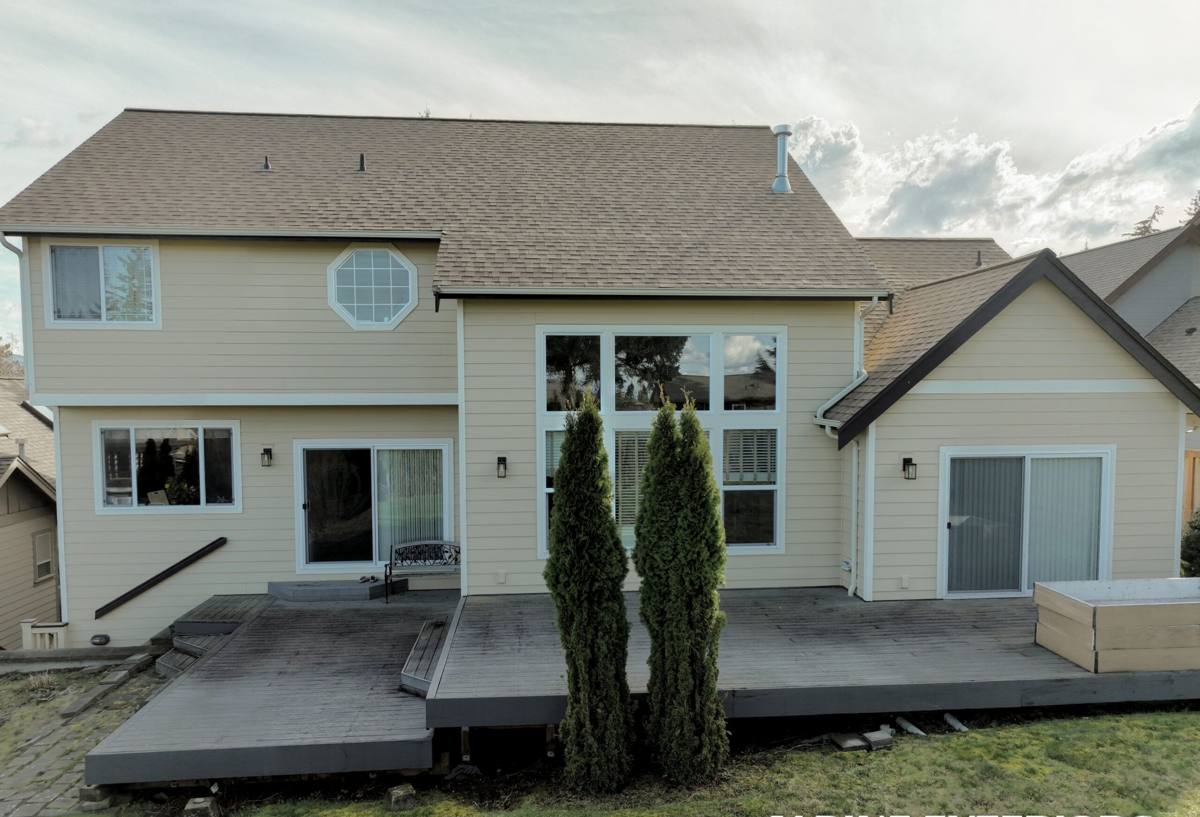
Moss on a deck surface is often treated as a cosmetic nuisance — something to pressure-wash off once a year. In Sehome's climate, it's more than that. Moss holds moisture against decking boards long after the surrounding air has dried out, which slows the wood's ability to shed water between rain events. Over a long moss season, that constant dampness accelerates rot in decking, especially where boards meet joists or where debris collects between boards.
Where Moss Does the Most Damage
- Board-to-board gaps that have closed up with debris and no longer drain
- North-facing or heavily shaded sections of the deck that never fully dry
- Areas under overhangs or near siding where airflow is already limited
- Stair treads and low-traffic corners that don't get walked on enough to stay clear
Signs a Sehome Deck Needs Repair, Not Just Cleaning
Homeowners often call us after noticing something simple — a bouncy board, a wobbly railing — without realizing it can point to a deeper structural issue. Here's what we look for, and what it usually means.
| What You Notice | Likely Cause | Typical Fix |
|---|---|---|
| Soft or spongy decking underfoot | Moisture-driven rot in the board itself | Spot replacement of affected boards |
| Railing that flexes or feels loose | Corroded fasteners or a rotted post base | Hardware replacement, post repair or sistering |
| Rust streaks around screws or nail heads | Fasteners not rated for coastal/salt-air exposure | Replace with stainless or coated coastal-grade hardware |
| Gap or staining where the deck meets the house | Failed or missing ledger flashing letting water behind the band | Flashing repair, sometimes ledger board replacement |
| Persistent green film even after cleaning | Chronic shade and moisture holding moss/algae | Deep clean plus drainage or airflow correction |
| Visible sagging between support posts | Undersized or weakened joists, footing settlement | Joist sistering or footing repair |
What a Correct Repair Actually Involves
A lot of deck "repairs" stop at the surface — replace the obviously rotten board, spray off the moss, call it done. That approach tends to bring the homeowner back to square one within a season or two, because it doesn't address why that section failed in the first place. We treat repair as a diagnostic process first.
Structure Before Surface
Before touching decking boards, we check the framing underneath: joists, beams, ledger connection, and post footings. In Whatcom County's wetter microclimates, the ledger connection — where the deck attaches to the house — is one of the most common failure points, because a compromised flashing detail lets water track behind the band board for years before it shows on the surface.
Fasteners and Hardware
We don't reuse corroded hardware just because it's "still holding." Near the coast, standard galvanized fasteners can underperform their rated lifespan. We use stainless steel or coated fasteners rated for coastal and marine-adjacent exposure on repair work, even if the original build didn't.
Drainage and Airflow
Where moss and standing moisture are part of the problem, a repair that ignores drainage is a temporary fix. That can mean adjusting board spacing during replacement, clearing debris paths under the deck, or correcting a slope that was never quite right to begin with.
Repair or Replace? Honest Factors
Not every deck problem calls for a full rebuild, and not every deck is worth patching. We walk homeowners through the real trade-offs rather than defaulting to the bigger job.
| Factor | Leans Toward Repair | Leans Toward Replacement |
|---|---|---|
| Extent of rot | Isolated boards or a single section | Rot found in multiple joists or the ledger itself |
| Age of structure | Under 12-15 years, sound framing | Original framing already near end of service life |
| Footings and posts | Stable, no visible settling | Heaving, shifting, or undersized for current code |
| Budget timeline | Targeted fix now, plan ahead for larger work | Ready to invest once, avoid repeat repairs |
| Cause of damage | One-time event or a fixable moisture path | Systemic issue (chronic shade, poor original drainage) |
As a rough guide, small-to-moderate repairs — a handful of boards, hardware upgrades, a railing section — usually land in the low-to-mid hundreds of dollars. Structural work involving joists, ledger flashing, or footings runs higher, and a deck with rot in several structural members can approach replacement cost once you add up the labor to access and fix each area properly. We'll always tell you honestly which side of that line your deck is on.
How We Approach a Sehome Deck Repair
1. On-Site Inspection
We walk the full deck — surface, railings, stairs, and underneath where accessible — checking for soft spots, fastener condition, ledger flashing, and footing stability. We probe suspect boards rather than guessing from appearance alone.
2. Straight Assessment
You get a plain explanation of what's failing, why (usually tied to moisture, shade, or salt-air corrosion in this area), and what your real options are — repair now, phase the work, or plan a replacement.
3. Scoped Repair Plan
We write up exactly what's being replaced or fixed, the hardware and materials involved, and why — no vague line items.
4. The Work Itself
Structural issues get addressed before cosmetic ones. We match or upgrade materials appropriately, use coastal-rated fasteners, and correct drainage or flashing details where they contributed to the original problem.
5. Cleanup and Walkthrough
We clear debris, including old boards and hardware, and walk the deck with you so you know what was done and what to watch going forward.
Materials That Hold Up in This Climate
We're selective about what we use for coastal, shaded, moss-prone repairs, and we'll explain the reasoning rather than just picking a product.
Decking Boards
Pressure-treated lumber remains a solid, economical choice for structural framing, but for repair boards in high-moisture, shaded sections, we often recommend a composite or capped composite product where budget allows — it resists moisture absorption better than untreated or standard wood and holds up longer against repeated moss exposure. The trade-off is upfront cost and, on some composite lines, a narrower color-matching window against existing boards.
Fasteners and Connectors
Stainless steel fasteners cost more than standard galvanized options, but in a salt-air environment the difference in corrosion resistance is significant enough that we consider it the correct standard for repair work here, not an upsell.
Flashing
Ledger flashing needs to actually shed water away from the house band, not just look installed. We check for and correct flashing that was undersized or improperly lapped in the original build — a common source of hidden rot we find during repairs.
Maintenance That Prevents the Next Repair Call
A repair holds longer when it's followed by realistic upkeep. This is what we recommend for decks in Sehome's climate specifically:
- Sweep debris out of board gaps and off the deck surface regularly during moss season (fall through spring)
- Clean moss and algae with an appropriate deck cleaner rather than letting it build up over a full season
- Check railing posts and stair connections for looseness once or twice a year
- Inspect the ledger area where the deck meets the house for staining or gaps after heavy rain events
- Keep nearby vegetation trimmed back to improve airflow and sun exposure on shaded sections
- Reseal or refinish wood decking on the manufacturer's recommended schedule, not just when it looks worn
Why It Matters to Hire a Crew That Already Works Sehome
Deck problems in this part of Whatcom County follow patterns that aren't obvious from a general contracting background. Knowing which framing details tend to fail near the coast, which fastener grades hold up against salt air, and how much moss exposure a given deck orientation will realistically get changes how a repair gets diagnosed and built. A crew that regularly works Sehome and the surrounding Bellingham area isn't guessing at these factors — they've seen the same failure patterns on nearby homes and know what actually needs to change versus what can be left alone.
It also means faster, more accurate estimates. We're not learning the local climate on your project; we're applying what we already know about how decks age here.
Get a Straight Answer About Your Deck
If your deck has soft spots, a wobbly railing, persistent moss, or just feels off compared to a few years ago, it's worth having someone take a real look before the damage spreads further into the framing. We offer free, no-pressure estimates for Sehome homeowners — use the form below to get one scheduled.