 Whatcom County
 Why Sehome Homes Put Windows to the Test
Sehome sits close enough to Bellingham Bay that salt-laden air is a constant, and like the rest of Whatcom County, it gets a long, wet fall-through-spring stretch of driving rain coming off the water. Add in the shoulder seasons where moss and mildew take hold on anything that stays damp too long, and you've got a climate that is genuinely hard on windows — not because any one storm is dramatic, but because the exposure never really lets up. A window that's merely "fine" for a drier climate can start showing problems here within a few years: fogged glass, soft trim, drafts that weren't there when the house was built.
Energy-efficient windows done right aren't just about a lower heating bill, though that matters. In this climate they're also your first line of defense against moisture intrusion, which is the thing that actually damages a house. A window package that's rated for the wrong climate zone, or installed without proper flashing and sealant detail, will leak long before the glass itself fails.
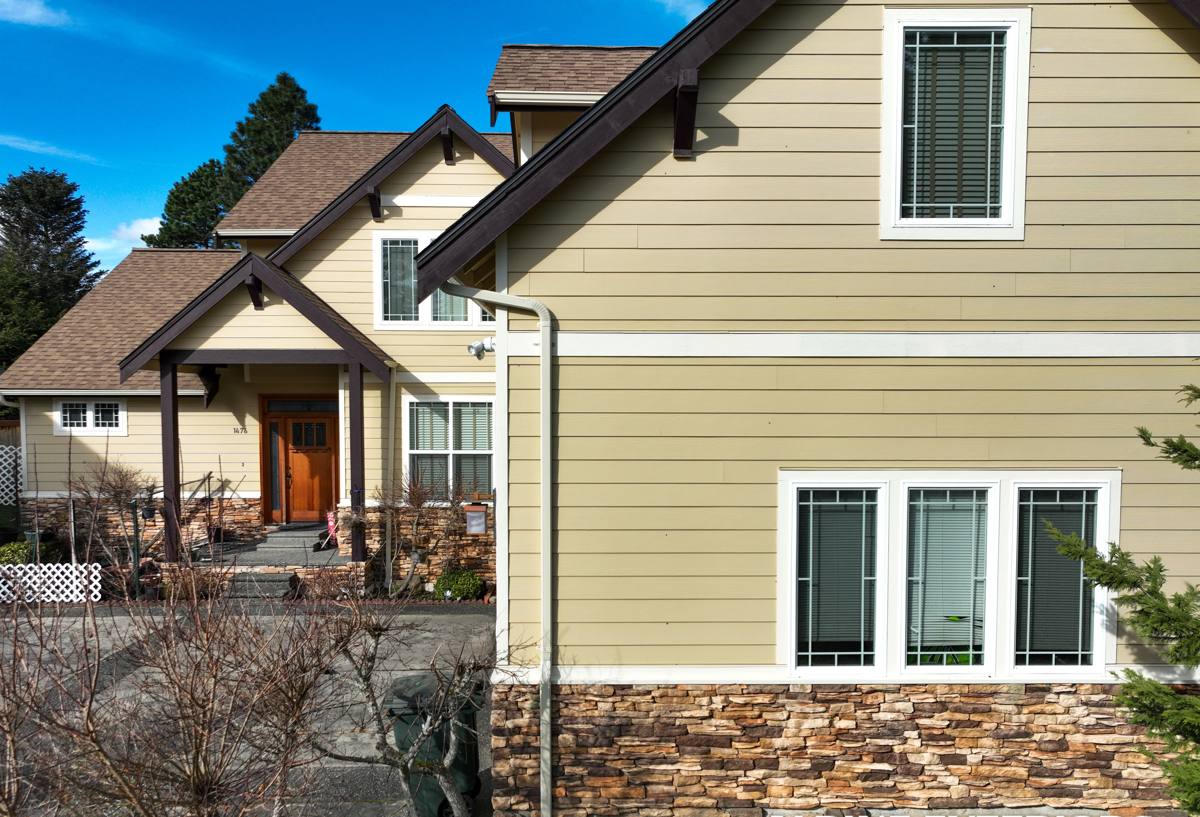
What "Energy-Efficient" Actually Means Here
It's Not Just the Glass
A lot of homeowners assume "energy-efficient window" means double-pane glass and stops there. In Whatcom County's marine climate, the more important numbers are the U-factor (how well the whole unit resists heat transfer) and air infiltration rating — because the bigger risk isn't losing heat through the glass, it's losing it (and letting moisture in) around a poorly sealed frame. A quality window in this climate typically has:
- A U-factor low enough to cut condensation risk on cold, damp mornings, not just save on heating
- Warm-edge spacers between panes, which reduce the cold ring around the glass edge where mold tends to start
- Low-E coatings tuned for a heating-dominated, low-sun climate rather than a hot, sunny one
- Weatherstripping and hardware that actually compresses evenly, since a warped or twisted frame will leak no matter what the glass rating says
Condensation Is the Local Tell
In Sehome's damp winters, interior condensation on window glass is one of the clearest signs a window isn't performing. Some fogging on a cold morning is normal. Persistent moisture pooling on the sill, or fog that doesn't clear by midday, usually means the glass package or the seal has failed — and it's worth having that checked before it turns into sill or frame rot.
Signs a Sehome Home's Windows Are Working Against It
Because the climate here is more about steady exposure than extreme temperature swings, the warning signs tend to show up slowly. Watch for:
- Visible fogging or a milky haze between panes — the seal has failed and the gas fill (if any) is gone
- Soft or discolored wood trim around the window, especially at the bottom corners
- A draft you can feel with your hand near the frame on a windy day, even with the window latched
- Moss or dark streaking building up on the exterior sill or below the window — a sign water is sitting and not shedding properly
- Difficulty opening or latching that didn't used to be there, often from the frame swelling and drying unevenly
What a Correct Installation Actually Involves
Most window failures we get called out to fix in this area aren't a bad window — they're a window that was installed without the moisture management details a wet climate demands. A correct job includes:
- Removing and inspecting the old opening. This is where hidden rot or old, undersized flashing gets found — and it needs to be dealt with before a new window ever goes in, not covered over.
- Proper flashing sequence. Sill pan flashing at the bottom, side flashing lapped correctly, and head flashing integrated with the house wrap or building paper above — installed so water is always directed outward, shingle-style, never trapped behind the siding.
- Correct sealant, not excess sealant. A bead of caulk everywhere is not a substitute for proper flashing — it just hides a problem until it fails. We seal where sealant is supposed to do the work, and rely on flashing and drainage for the rest.
- Shimming and squaring the unit so the sash operates and seals evenly across its whole frame, not just at the latch side.
- Insulating the gap between the window frame and rough opening with a low-expansion foam or backer rod, so there's no air path left uninsulated.
- Interior and exterior trim-out that sheds water away from the frame rather than channeling it toward the joints.
Skip any one of these steps and you can still end up with a window that looks fine and even tests fine on a dry day, but leaks the first time Whatcom County gets a real wind-driven rain event.
Frame Material: Trade-Offs for This Climate
There's no single "best" frame material — each has a real trade-off, and we'll walk through them honestly rather than push whatever's easiest to install.
| Material | Moisture Behavior Here | Maintenance | Typical Lifespan |
|---|---|---|---|
| Vinyl | Won't rot; handles constant damp well | Occasional cleaning; no painting | 20–30 years |
| Fiberglass | Very stable in wet/cold swings; minimal expansion-contraction | Low; can be painted if desired | 30+ years |
| Wood (clad exterior) | Good if cladding and flashing are done right; interior wood still needs a dry interior climate | Higher — exposed wood needs upkeep | 20–30+ years with maintenance |
| Aluminum | Conducts cold, more prone to interior condensation in this climate | Low | 20–30 years |
For most Sehome homes, we lean toward vinyl or fiberglass specifically because they don't depend on paint or exposed wood staying sealed to keep moisture out — which matters in a climate that doesn't give surfaces much chance to dry out between rain events. Wood-frame windows can absolutely work here, but they ask more of the homeowner in terms of upkeep, and we'll say so plainly rather than oversell them.
How Our Process Works
1. On-Site Assessment
We look at each window individually — sun exposure, wind exposure, current condition of the trim and sill — because a house's north-facing windows and its rain-facing windows often need different attention.
2. Honest Recommendation
We'll tell you which windows genuinely need replacement now, which could be repaired or resealed, and which are fine to leave alone. We don't pad a job by replacing windows that don't need it.
3. Written Estimate
Materials, labor, and scope broken out clearly, with the flashing and moisture-management work spelled out — not buried as "installation."
4. Installation
Old units removed, openings inspected and repaired as needed, new units installed with full flashing detail, then trimmed and sealed.
5. Walkthrough
We check operation, seals, and finish with you before we consider the job done.
Why It Matters to Hire a Crew That Already Works This Area
Window installation done by the book in a dry inland climate can still fail here if the crew doesn't build in the extra margin this coastal, rain-heavy part of Whatcom County demands. A crew that regularly works Sehome and the surrounding Bellingham area already knows:
- Which flashing details actually hold up against wind-driven rain off the bay, versus what's just code-minimum
- How much clearance to leave for moss and algae growth on sills and trim so water keeps shedding instead of pooling
- Which frame materials perform consistently through our wet winters and mild, damp summers, rather than just looking good on a spec sheet
- How local permitting and inspection typically goes for window replacement in this area
That local track record is worth more than a lower bid from a crew unfamiliar with how hard this climate actually is on a building envelope.
What Affects Cost
We'd rather explain the real cost drivers than quote a number that doesn't hold up once we're on-site.
| Factor | Why It Matters |
|---|---|
| Number and size of windows | Bigger openings and more units mean more material and labor |
| Frame material chosen | Vinyl, fiberglass, and clad-wood carry different material costs |
| Condition of the rough opening | Hidden rot or old flashing failures found at removal add repair time |
| Access and story height | Second-story or hard-to-reach windows take longer to stage and install safely |
| Full-frame vs. insert replacement | Full-frame replaces flashing and sill too; inserts are faster but only make sense on sound openings |
Broadly, homeowners in this area should expect per-window costs to range from budget-vinyl replacement units up to several times that for larger or higher-end fiberglass units — the honest answer is that it depends on the specifics above, which is exactly what our on-site estimate is for.
Maintaining Energy-Efficient Windows in a Wet Climate
New windows still need some upkeep to keep performing well through Whatcom County's damp season after damp season. A simple annual routine goes a long way:
- Clean weep holes at the bottom of the frame so water can drain out instead of backing up
- Rinse sills and tracks to keep moss and algae from building up and holding moisture against the frame
- Check exterior caulk lines each fall before the wet season starts, and touch up any that have cracked
- Wipe down interior sills if you notice condensation, and run a bathroom or kitchen fan more in winter to cut indoor humidity
- Test that sashes still latch fully snug — a hardware adjustment now is cheaper than a leak later
If your Sehome home has windows that fog, draft, or just feel like they're not keeping the weather out anymore, we're happy to take a look and give you a straightforward, no-pressure estimate — just fill out the form below.