 Whatcom County
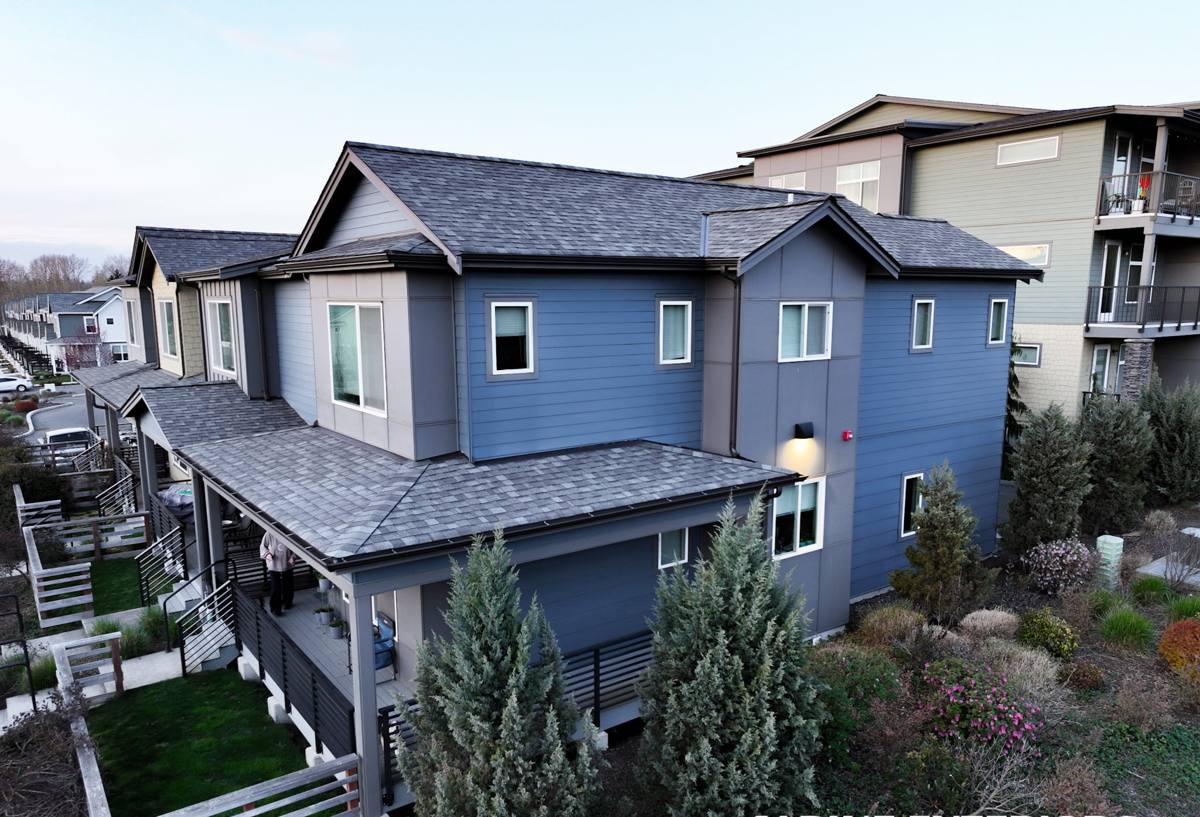
Siding Installation in Sehome, Whatcom County
Sehome sits close enough to Bellingham Bay that salt-laden air is a fact of life, and far enough into Whatcom County's rain belt that siding here spends most of the year wet, drying slowly, and getting wet again. That combination is harder on a home's exterior than most homeowners realize until they're dealing with soft trim, peeling paint, or siding that's grown a green film by the second winter. Installing siding correctly in Sehome isn't just about picking a good-looking product — it's about building an exterior system that can shed water fast, resist salt exposure, and stay dry enough underneath that moss and rot never get a foothold.
We install James Hardie fiber cement siding exclusively, and we work Sehome and the surrounding Whatcom County neighborhoods regularly. That matters more here than in a dry climate, because the margin for error on flashing, gaps, and drainage is much smaller when a house sits under near-constant marine moisture.
What Sehome's Climate Actually Does to Siding
Salt air
Proximity to the bay means airborne salt settles on exterior surfaces year-round, not just during storms. Salt is corrosive to fasteners and hardware, and it accelerates the breakdown of paint films and coatings that aren't engineered to resist it. Siding that isn't factory-finished for a marine environment tends to chalk, fade, or lose adhesion faster here than the same product would inland.
Driving rain
Whatcom County storms frequently come with wind, which pushes rain sideways into wall assemblies instead of letting it run straight down. Driving rain finds every gap in flashing, every under-caulked seam, and every place where siding was nailed too tight or lapped the wrong direction. A siding job that would hold up fine in a calm-rain climate can fail within a few seasons here if the water-management details were skipped.
A long moss season
Cool, damp, and shaded conditions extend the moss and algae growing season in this part of Washington to most of the year. Anything that traps moisture against the wall — poor ventilation gaps, siding installed flush to grade, or trim without proper flashing — gives moss and mildew a place to establish. Once it's growing on or under siding, it holds moisture against the substrate and speeds up rot.
What a Correct Installation Looks Like Here
A siding job built for Sehome's conditions isn't fundamentally different in materials from siding installed anywhere else — it's different in the details that get enforced. The items below are the ones we treat as non-negotiable on every job in this area.
- A continuous weather-resistant barrier behind the siding, lapped correctly so water is directed outward at every seam
- Rigid flashing — not just caulk — above windows, doors, and any horizontal trim break
- Proper clearance between the bottom edge of siding and grade, decks, patios, and roof lines so splash-back and standing water can't wick into the material
- Correct fastener placement and spacing, driven to manufacturer spec rather than "tight enough to hold"
- Factory-finished panels and trim so the protective coating is applied and cured under controlled conditions, not brushed on in the field
- Ventilation gaps maintained where siding meets soffits and other transitions, so trapped moisture has somewhere to go
Skipping any one of these rarely causes an immediate, visible problem. What it causes is a slow failure — moisture intrusion, soft sheathing, or coating breakdown — that shows up two, five, or ten years later, usually after the installer is long gone.
Why We Only Install James Hardie Fiber Cement
We don't install vinyl, LP SmartSide, Cemplank, Allura, primed spruce, or cedar, and that's a deliberate standard, not a limitation of what we're capable of doing. Here's the honest reasoning, product by product, as it applies to a climate like Sehome's:
- Vinyl is inexpensive and low-maintenance, but it expands and contracts with temperature swings, can warp or crack in wind-driven conditions, and its seams and J-channels give driving rain more entry points than a properly lapped fiber cement system.
- LP SmartSide and other engineered wood products perform well when the finish and caulking are maintained on schedule, but they're wood-based, which means sustained moisture exposure — exactly what a long wet season delivers — is their biggest long-term risk.
- Cemplank and Allura are also fiber cement and share some of Hardie's core strengths, but we've standardized on one manufacturer's product line, warranty structure, and factory finish so we can guarantee consistency across every job we install.
- Primed spruce and cedar are attractive natural materials, but they require an ongoing paint and sealing schedule that most homeowners underestimate — miss a cycle in a climate this wet, and the wood starts absorbing moisture.
James Hardie fiber cement is non-combustible, dimensionally stable in wet-dry cycling, and available in HZ product lines specifically engineered for climate zones like the Pacific Northwest's. Its ColorPlus factory finish is baked on and warranted against peeling and fading, which matters directly in a salt-air environment where field-applied paint struggles. That's the combination that made it the only product we put on homes.
Comparing Siding Materials for a Sehome Home
| Factor | James Hardie Fiber Cement | Vinyl | Engineered Wood / Cedar |
|---|---|---|---|
| Moisture tolerance | High — dimensionally stable, won't rot | High, but seams allow water intrusion | Moderate — dependent on coating upkeep |
| Salt air resistance | Strong; factory finish resists chalking | Moderate; can fade and become brittle | Weak without frequent recoating |
| Moss/algae resistance | Good with correct clearances and ventilation | Good, but traps moisture behind panels if gapped wrong | Poor — organic material is prone to growth |
| Maintenance | Occasional wash; no repainting for the warranty period | Low, but limited repair options once damaged | Regular painting/sealing required |
| Fire resistance | Non-combustible | Combustible | Combustible |
Our Installation Process
Assessment and measurement
We start by walking the exterior, checking existing sheathing and trim condition, and noting any areas where past moisture intrusion, grade issues, or ventilation gaps need to be corrected before new siding goes on — not covered up by it.
Removing old siding and prepping the wall
We strip the existing siding back to sheathing so we can inspect for hidden rot, especially around windows, doors, and any spot where flashing has historically failed. Repairs happen here, before anything new is closed in.
Weather barrier and flashing
A new, continuously lapped weather-resistant barrier goes on first, followed by rigid flashing at every horizontal transition and opening. This is the step that determines whether driving rain stays outside the wall assembly or not.
Hardie panel and trim installation
Panels and trim are installed to manufacturer fastening specs, with correct clearances maintained at grade, decks, and roof intersections, and ventilation gaps preserved at soffits and terminations.
Final inspection and cleanup
We walk the finished job checking caulk lines, fastener patterns, and clearances, and confirm the site is cleaned up before we consider the job done.
Why Hiring a Crew That Already Works Sehome Matters
Siding crews that mostly work drier inland regions don't always build in the same margin for water management, because they haven't had to. A crew that regularly installs siding in Sehome and the rest of Whatcom County already knows to over-build flashing details, respect clearance requirements near grade, and account for the extended moss season when planning ventilation — because they've seen what happens on the houses where that wasn't done. That local pattern recognition is hard to replace with a spec sheet alone.
Maintaining Your New Siding in Sehome's Climate
- Rinse siding annually, focusing on north-facing and shaded walls where moss and algae establish first
- Keep gutters clear so overflow doesn't run down the wall face repeatedly
- Trim back vegetation and tree cover that keeps siding shaded and damp longer than necessary
- Check caulking at trim joints and penetrations every year or two, since caulk fails long before Hardie panels do
- Watch for any siding sitting closer than a few inches from grade, mulch, or hardscaping, and correct it if landscaping has crept up over time
Cost Factors for a Sehome Siding Project
| Factor | Why It Matters |
|---|---|
| Home size and wall complexity | More corners, gables, and trim details mean more flashing and labor time |
| Condition of existing sheathing | Hidden rot found during tear-off adds repair scope before new siding goes on |
| Siding profile and trim selection | Lap width, panel style, and trim detail affect material cost and install time |
| Access and site conditions | Tight lots, slopes, or landscaping close to the house can slow staging and installation |
| Color and finish | Factory ColorPlus finishes add cost over field-painted options but eliminate a repaint cycle |
Every Sehome home carries a slightly different mix of these factors, which is why a walk-through and honest measurement beats a rough estimate over the phone.
If your Sehome home's siding is showing moss, soft spots, or peeling finish, we're happy to take a look and give you a straight assessment — no pressure, no obligation. Request a free estimate below and we'll walk the exterior with you in person.