 Whatcom County
Why Fairhaven Siding Takes a Different Kind of Beating
Fairhaven sits close enough to Bellingham Bay that its homes deal with a combination most inland Whatcom County neighborhoods don't get in equal measure: salt-laden marine air, wind-driven rain that hits siding at an angle instead of falling straight down, and a moss season that can run half the year in shaded, north-facing spots. None of these on their own is unusual for western Washington. Together, and applied to the same wall for years at a time, they're what turn a small siding problem into a bigger one if it's left alone.
Salt air is corrosive to exposed metal fasteners and trim flashing, and it breaks down cheap paint films faster than inland exposure does. Driving rain finds every gap in caulking, every under-lapped seam, and every spot where old siding has started to cup or separate from the wall. And moss doesn't just look bad — it holds moisture against the siding surface for weeks at a time, which is exactly the condition that rots wood-based products and stains anything with a weak factory finish.
A siding repair in Fairhaven has to account for all three. That's a different job than patching a board on a dry, sheltered lot twenty miles inland, and it's worth hiring someone who treats it that way.
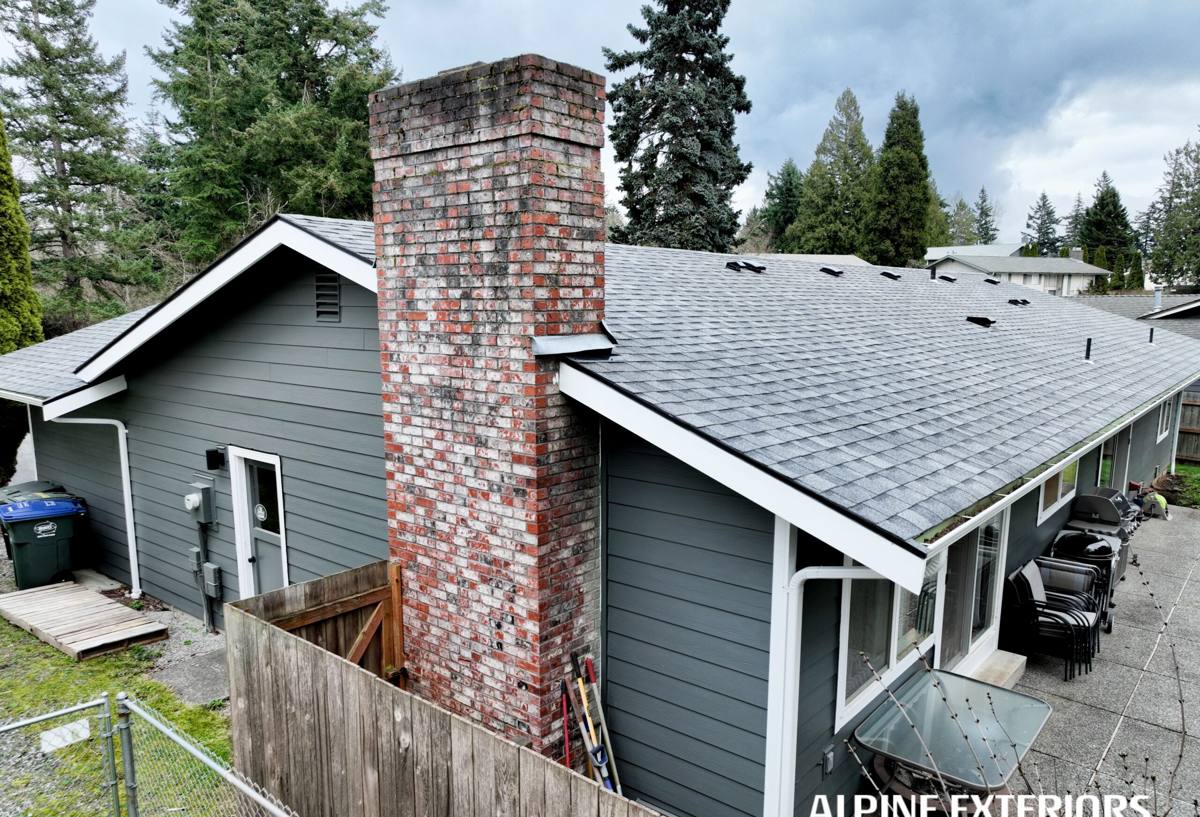
Signs a Fairhaven Home Needs Siding Repair
Moisture-related damage
Look for soft or spongy spots when you press on the siding, boards that have visibly bowed or cupped away from the wall, and paint that's bubbling or peeling in patches rather than wearing evenly. These are signs that water has gotten behind the surface, not just onto it. On homes with wood-based siding or trim, this is often the first visible clue that rot has already started underneath.
Moss, algae, and staining
Green or black streaking on north- and west-facing walls, especially near roof lines, gutters, and any spot that stays shaded most of the day, is common in this climate. On its own, surface staining is mostly cosmetic. But moss that's been left to grow for a season or more can hold enough moisture against the siding to start softening seams and caulk joints, which turns a cleaning problem into a repair problem.
Impact and settling damage
Cracked or chipped panels near ground level, gaps that have opened up at corners or window trim as the house has settled, and fastener heads that have started to rust and stain the surface around them all fall into this category. These are usually localized and straightforward to repair correctly, as long as whoever's doing the work checks what's happening behind the damaged section before they patch it.
What a Correct Siding Repair Actually Involves
The visible damage is rarely the whole story. A repair that only replaces the cracked or stained board, without checking the condition of the water-resistive barrier, flashing, and framing behind it, is a repair that's likely to fail again — sometimes within a year or two, especially in a climate that gives water this many chances to get in.
A correct repair job includes:
- Removing the damaged section carefully enough to inspect what's behind it, not just what's visible from the outside
- Checking the house wrap or building paper for tears, gaps, or water staining
- Verifying flashing at windows, doors, and butt joints is lapped correctly — over, not under, the layer below
- Replacing any rotted sheathing or framing found during the inspection, not just papering over it
- Matching new material to the existing siding in profile, exposure, and color as closely as the product allows
- Re-sealing and re-fastening to the same standard as a new installation, not a shortcut version of it
Skipping that inspection step is the single most common reason a "repaired" section fails again. It's also the step that's easiest for a crew in a hurry to skip, because it takes more time and the damage underneath isn't visible until you go looking for it.
Patch, Panel Replacement, or Full Re-Side?
Not every repair is the same size. The right scope depends on how localized the damage is and how the rest of the siding is holding up.
| Situation | Typical approach | What to watch for |
|---|---|---|
| Single cracked or impact-damaged panel, rest of the wall is sound | Spot patch — cut out and replace the damaged section | Color and batch match on factory-finished product |
| Moisture damage isolated to one wall or elevation (often the side facing prevailing wind and rain) | Section replacement — full wall or affected run of courses | Condition of sheathing and flashing behind that wall |
| Widespread staining, multiple areas of soft or failing material, siding original to an older home | Full re-side is usually more cost-effective than repeated repairs | Whether continued patching is actually cheaper long-term |
| Cosmetic moss/algae staining only, material underneath is sound | Cleaning and re-caulking, not a repair job at all | Don't pay for a repair you don't need |
We'll tell you honestly which category a job falls into. A lot of what looks like extensive damage from the ground is actually confined to one or two courses once we get a ladder up, and a lot of what looks minor turns out to have a rot problem behind it. Either way, you should get a straight answer, not the answer that maximizes the invoice.
Our Repair Process
- On-site inspection. We look at the damaged area and the surrounding siding, not just the spot you called about, since problems in this climate often show up in more than one place at once.
- Behind-the-siding check. Where damage suggests moisture intrusion, we open up the affected section to check the water-resistive barrier, flashing, and framing before quoting a fix.
- Written scope and price. You get a clear explanation of what's being replaced, what it will look like when it's matched to the existing siding, and what it costs — before work starts.
- Repair. Damaged material and any compromised sheathing or flashing are replaced, new material is fastened and sealed to the same standard as new construction, and the area is cleaned up.
- Walkthrough. We go over the finished repair with you, including any recommendations for cleaning or maintenance on adjacent areas that are trending toward needing attention themselves.
Why We Repair With James Hardie — And Nothing Else
We only install James Hardie fiber cement siding, which means repairs on a Hardie-sided home are usually the cleanest match we do: the same product line, the same ColorPlus factory finish, and material engineered for exactly this kind of coastal, high-moisture climate. Hardie's HZ5 product line is built for regions with more rain and humidity exposure, which describes Fairhaven's conditions well — it resists moisture-related swelling and doesn't feed rot the way wood-based siding can when water gets past the surface.
If your home currently has a different siding product — vinyl, LP SmartSide, primed wood, or another fiber cement brand — we'll still repair it honestly if that's what you need, but we won't pretend a patch is a perfect long-term answer if the underlying product has known trade-offs. Vinyl can be color-matched only approximately and becomes brittle with age, especially in salt air. Wood-based products need consistent paint maintenance to keep moisture out, and a missed cycle in this climate adds up fast. Where a repair turns into a larger project, our recommendation is Hardie, because we've seen how it holds up here and we stand behind our own installation of it.
Why Hiring a Crew That Already Works Fairhaven Matters
A repair crew that only occasionally works this close to the water doesn't always think to check for the things that matter most here: whether moss has been sitting on a shaded wall long enough to soften the caulk lines, whether the fasteners on an older section have started corroding from salt exposure, or whether the wind-driven rain pattern on a particular elevation means that section needs a slightly different water-management detail than the rest of the house.
A crew that regularly works Whatcom County's coastal neighborhoods has already seen these patterns repeat across different homes and knows what to check before quoting the job, not after starting it. That matters for getting an accurate price up front and for making sure the repair actually solves the problem instead of delaying it a season or two.
Keeping Repaired Siding Ahead of Moss Season
A repair is only as good as the maintenance around it. A few habits go a long way toward keeping Fairhaven siding — repaired or original — from needing repeat attention:
- Keep gutters clear so overflow doesn't run down the siding face, which is one of the fastest ways to feed moss growth
- Trim back vegetation and tree cover that keeps a wall shaded and damp for most of the day
- Rinse visible moss and algae buildup before it has a chance to sit through an entire wet season
- Check caulk joints at trim, windows, and butt seams once a year and re-seal any that have cracked or pulled away
- Have any soft, cupped, or discolored siding looked at promptly rather than waiting for it to spread
None of this is complicated, but it's the difference between a repair that lasts and a repair that's just delaying the next one.
Get a Straight Answer on Your Fairhaven Siding
If you've got a section of siding that's cracked, staining, or feeling soft to the touch, we're happy to take a look and give you an honest read on whether it needs a patch, a larger section replacement, or nothing more than a good cleaning. Reach out for a free, no-pressure estimate using the form below.