 Whatcom County
 Why Ferndale Siding Wears Differently Than Siding Inland
Ferndale sits close enough to Bellingham Bay and the Strait of Georgia that salt-laden air is a daily fact of life for exterior surfaces, not an occasional coastal storm event. Combine that with Whatcom County's driving rain — wind-pushed moisture that doesn't just fall straight down but gets forced sideways into seams, laps, and trim joints — and you get a siding failure pattern that looks different from what you'd see on a house forty miles inland. Add a moss season that, in this part of Washington, can run from early fall through late spring, and you have three separate stresses working on the same wall assembly nearly year-round.
None of these are dramatic, one-time events. They're slow, cumulative loads: a little more moisture intrusion each winter, a little more organic growth holding dampness against the wall each spring, a little more salt residue drawing moisture into any exposed edge. That's why siding repair in Ferndale is rarely about one obvious point of failure — it's usually about finding where the cumulative wear has finally broken through.
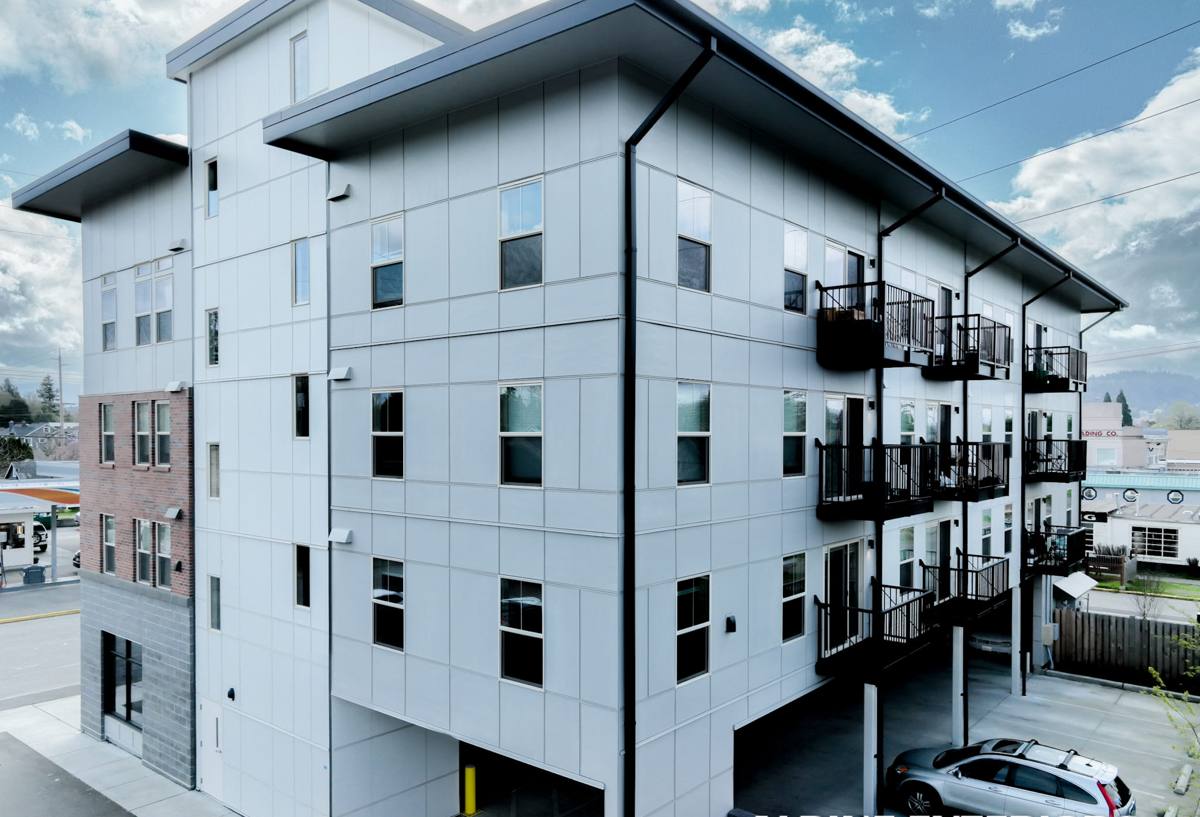
What Salt Air, Rain, and Moss Actually Do to a Wall
Salt Air
Airborne salt doesn't rot wood or crack fiber cement on its own, but it's hygroscopic — it pulls moisture out of the air and holds it against whatever surface it settles on. On fasteners, trim caps, and any exposed cut edge, that means more time spent wet than a house further from the water would experience. Over years, that shows up as accelerated corrosion on lower-grade fasteners and faster breakdown at any spot where a factory finish has been compromised.
Driving Rain
Wind-driven rain finds every gap a calm rainstorm would never reach. It gets behind loose laps, forces its way into unsealed butt joints, and works its way up under trim that was installed tight but not properly flashed. Once water gets behind the siding plane, the problem usually isn't the siding itself — it's the water-resistive barrier, flashing, and house wrap behind it. Any repair that ignores that layer is a cosmetic fix, not a real one.
Moss and Organic Growth
Moss and algae need two things: a foothold and moisture. North-facing walls, areas shaded by trees or neighboring structures, and low horizontal trim all collect grime and take longer to dry between rains. Over a long moss season, that constant dampness against the siding surface — especially at butt joints and lap edges — is what turns a minor coating issue into actual substrate damage on materials that aren't built to handle it.
Signs Ferndale Homeowners Should Not Ignore
- Soft or spongy spots when you press on siding near the bottom courses or around window and door trim
- Visible gaps opening up at butt joints or where panels meet corner trim
- Paint that's bubbling, peeling, or repeatedly failing in the same spots year after year
- Dark streaking or persistent moss growth that comes back within weeks of cleaning
- Warping, bowing, or panels that no longer sit flat against the wall
- Visible daylight or drafts through the wall from inside, especially near corners
- Rising interior utility bills without another clear explanation
- Musty smell near exterior walls, which often points to trapped moisture rather than a surface problem
Any one of these can be minor on its own. Two or three showing up in the same area of the house usually means the problem has moved past the surface and into the wall assembly.
What a Correct Siding Repair Actually Involves
A repair that's done right starts before anyone touches the siding. It starts with figuring out why that section failed in the first place — because replacing a damaged board without addressing the cause just buys a few more years before the same spot fails again.
1. Diagnose, Don't Just Patch
A proper assessment checks the siding, the trim, the flashing details around windows and doors, and — where damage suggests it — pulls back enough material to look at the water-resistive barrier underneath. In a climate that pushes rain sideways, the flashing and barrier layer are often the real point of failure, even when the visible damage is in the siding itself.
2. Match Materials Honestly
Repairing a small section of existing siding means matching profile, exposure, and finish as closely as possible. On older homes this isn't always straightforward — profiles change over product generations, and factory finishes fade unevenly over time. Where an exact match isn't realistic, the honest answer is to say so rather than force a mismatched patch that stands out.
3. Fix the Water Path, Not Just the Hole
Any repair around a leak point needs correct flashing and properly lapped house wrap before new siding goes back on. Caulk is not a substitute for flashing — it's a supplement to it, and it's the first thing that fails under repeated wet-dry cycling.
4. Reinstall to Spec
Fastener placement, minimum clearances above grade, gaps at butt joints, and proper caulking or sealing at trim intersections all matter as much on a repair as they do on new construction. A repair that skips these details is a repair that fails again, usually in the same spot.
Repair Considerations by Siding Material
| Material | How It Typically Fails in This Climate | Repair Difficulty |
|---|---|---|
| Vinyl | Cracks in cold snaps, warps near heat sources, fades unevenly; salt air accelerates brittleness over time | Easy to source and swap, but exact color match to sun-faded panels is often impossible |
| Cedar | Absorbs moisture at butt joints and fastener holes, rots from the back outward, feeds moss growth | Labor-intensive; often requires addressing hidden rot behind the visible board |
| Primed Spruce / OSB-based lap | Swells at cut edges and joints when the factory seal is breached, especially under sustained damp conditions | Once swelling starts, the affected board usually needs full replacement, not a patch |
| Fiber Cement (James Hardie) | Failures are almost always installation-related (unsealed cuts, poor flashing) rather than material breakdown | Durable substrate; repairs focus on installation details rather than material degradation |
This is the pattern we see across Whatcom County repair calls: the material itself often isn't the root problem — how it was installed, and how well it was protected from this region's specific combination of salt, wind-driven rain, and prolonged dampness, usually is.
How Our Repair Process Works
- Inspection: We look at the damaged area and the surrounding wall, checking trim, flashing, and — where warranted — the barrier behind the siding.
- Honest diagnosis: We tell you plainly whether this is a contained repair or a sign of a broader issue, and why.
- Scoped estimate: A clear explanation of what's being repaired, what it involves, and a realistic cost range before any work starts.
- Correct execution: Proper flashing and barrier work first, then siding reinstalled to manufacturer spec — not just cosmetically closed up.
- Cleanup and walkthrough: We show you what was done and why, so you understand the fix rather than just seeing new boards.
When Repair Isn't the Right Answer Anymore
Sometimes the honest recommendation is that a repair would be a temporary patch on a wall system that's failing broadly. That's usually the case when damage shows up in multiple, unrelated areas of the house; when the water-resistive barrier itself has been compromised over a large section; or when the siding material has reached the end of its practical service life and further patching would just mean revisiting the same wall again in a year or two. In those situations, we'll say so directly rather than stack repairs on a wall that needs a fuller solution.
Why We Rebuild and Repair With James Hardie
When a repair does call for replacing sections of siding — or when a homeowner decides a fuller re-side makes more sense than patch after patch — we use James Hardie fiber cement exclusively. It's non-combustible, engineered for climates like this one through Hardie's HZ product lines, and finished with a factory-applied ColorPlus coating that holds up better against fading and moisture than field-applied paint. It also carries a strong transferable warranty when installed to spec, which matters more in a climate this demanding than it does in milder parts of the country. We don't install vinyl, LP SmartSide, cedar, or primed spruce — not because those products have no merit, but because we've made non-combustible, climate-engineered fiber cement our standard, and we'd rather stand fully behind one product system installed correctly than spread our expertise across several.
Why It Matters to Hire a Crew That Already Works Ferndale
Repair work in this area rewards familiarity with the specific way this climate attacks a wall. A crew that regularly works Ferndale and greater Whatcom County already knows which sides of a house take the worst of the driving rain, which areas hold moss the longest, and where salt exposure tends to concentrate fastener corrosion first. That local pattern recognition shortens the diagnostic phase and helps avoid a repair that only addresses what's visible instead of what's actually causing it.
If your siding is showing wear — soft spots, moss that won't stay gone, paint that keeps failing in the same place — we're happy to take a look and give you a straight answer about what it needs. Reach out for a free, no-pressure estimate using the form below.