 Whatcom County
Why Everson Homes Wear Out Siding Faster Than You'd Expect
Everson sits along the Nooksack River in Whatcom County, and that location shapes what siding has to survive here. The same marine weather system that pushes salt-laden air and driving rain across the county doesn't stop at the coastline — it rides up the river valley, keeping humidity high and rainfall frequent for most of the year. Add the long, cool, damp stretch of fall through spring that's typical of Northwest Washington, and you get conditions that are genuinely hard on exterior building materials: constant moisture exposure, slow-drying wall assemblies, and a moss and algae season that can run eight months or longer on shaded or north-facing walls.
None of that is unique to any one house in Everson — it's the baseline climate every home in this part of the county deals with. What varies is how well the siding on a given house was built to handle it. Siding installed without proper flashing, without a drainage gap, or with a product that wasn't designed for sustained moisture exposure will show problems years before it should. That's the gap we see most often when we're called out to look at a failing wall: not one dramatic failure, but years of small moisture intrusions adding up.
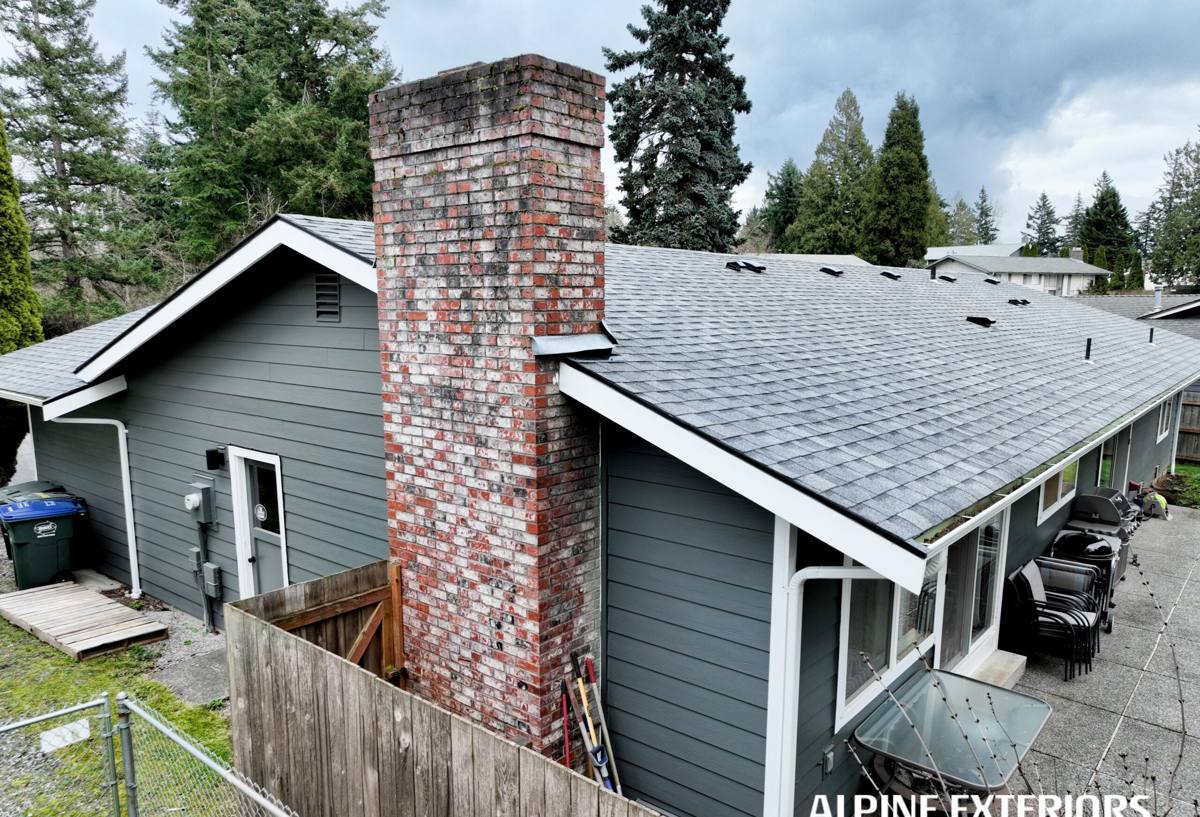
Signs a Home in Everson Needs Siding Replacement, Not Another Patch
Because damage here tends to build slowly, homeowners often patch the same spot two or three times before realizing the underlying problem is systemic. Watch for these signals:
- Soft or spongy spots when you press on siding near the bottom courses or around window trim
- Paint that keeps failing in the same locations no matter how often it's redone
- Persistent black or green streaking on north- and west-facing walls that returns within a season of cleaning
- Visible warping, cupping, or separation at panel seams
- A musty smell in an adjacent interior wall or noticeably higher indoor humidity in that room
- Siding that's original to a home built more than 20–25 years ago, especially wood-based products
Any one of these on its own might be a repair. Several together, especially on a home that's due for a re-side anyway, usually means the assembly behind the siding has been absorbing moisture longer than it looks like from the street.
What a Correct Siding Replacement Actually Involves
Full Tear-Off and Sheathing Inspection
We don't install new siding over old. A proper replacement starts with stripping the wall down to the sheathing, which is the only point in the entire project where you can actually see what's been happening behind the old siding. In a climate like Whatcom County's, this step matters more than almost anything else — it's where we find rot, compromised sheathing, or window flashing that was never done correctly the first time. Any of that gets addressed before a single new panel goes up.
Weather-Resistive Barrier and Drainage Plane
Given how much rain this area gets, the house wrap and drainage gap behind the siding do as much work as the siding itself. We install a continuous weather-resistive barrier and, where the wall assembly calls for it, a drainage mat or furring strategy that lets any moisture that does get past the cladding drain and dry out instead of sitting against the sheathing.
Flashing at Every Penetration
Windows, doors, hose bibs, vents, and deck ledgers are the places siding fails first, because they're the places water is actively directed toward the wall. Correct flashing — installed in the right sequence, lapped the right direction — is non-negotiable on a job in a climate this wet.
Installing the Siding to Manufacturer Spec
Fastener placement, joint treatment, clearance from grade and roof lines, and caulking at the right (and only the right) locations all affect how the finished wall performs over the next several decades. This is also where a lot of the difference between a good installer and a fast one shows up, even though it's invisible once the job is done.
Why We Only Install James Hardie Fiber Cement
We get asked fairly often why we don't offer vinyl, LP SmartSide, or the other engineered wood and composite products on the market. The honest answer is that we looked at how those products perform over 20-plus years in exactly this kind of climate — sustained moisture, moss and algae pressure, freeze-thaw swings — and decided we didn't want to put our name on installations we knew would need more maintenance, or fail sooner, than they should. Engineered wood siding is a wood-based product at its core, which means sustained moisture exposure is its biggest long-term vulnerability. Vinyl is low-maintenance in the sense that it doesn't rot, but it can warp, fade, and crack over time, and it doesn't offer the same fire resistance or paintable, long-term finish options homeowners often want.
James Hardie fiber cement is non-combustible, doesn't feed moisture damage the way wood-based products can, and comes from the factory with a baked-on ColorPlus finish designed to hold color far longer than field-applied paint. Hardie also engineers specific product lines for different climate zones — the HZ5 line used throughout the Pacific Northwest is formulated for regions with sustained damp and freeze-thaw cycling, which is exactly the profile Whatcom County has. That combination — the material itself, the factory finish, and climate-specific engineering — is why it's the only siding we put on a home.
Matching Hardie Products to an Everson Home
| Product | Best Suited For | Why It Fits This Climate |
|---|---|---|
| HardiePlank lap siding | Most traditional single-family homes | Widest color and texture range; standard workhorse for wet-climate re-sides |
| HardiePanel vertical siding | Board-and-batten style homes, accent walls, gables | Fewer horizontal joints for water to catch on vertical wall sections |
| HardieShingle | Craftsman-style homes, accent gables | Authentic shake look without the moisture vulnerability of real cedar shingles |
| HardieTrim | Window and door surrounds, fascia, corners | Matches the fiber cement's moisture resistance at the most flashing-critical points |
Color choice matters too. ColorPlus finishes are factory-cured, which holds up better against the persistent damp and UV cycling this region gets than a field-applied paint job — and it means touch-ups, where ever needed, can be color-matched rather than requiring a full repaint.
Our Process, Start to Finish
- Free on-site estimate — we walk the exterior, check for the warning signs above, and give you a straight assessment of whether you're looking at repair or full replacement
- Written scope and product selection — you'll know exactly which Hardie products, colors, and trim details are going on the house before work starts
- Tear-off and inspection — old siding comes off, sheathing gets inspected, and we flag anything that needs repair before proceeding
- Weather barrier, flashing, and drainage installation — the part of the job that determines how the wall performs for the next 30 years
- Hardie installation to manufacturer spec — proper fastening, clearances, and joint treatment throughout
- Final walkthrough — we go over the finished job with you before calling it done
What Drives the Cost of a Siding Replacement
| Factor | Impact on Cost |
|---|---|
| Extent of sheathing/rot repair found at tear-off | Can range from minor to significant depending on how long moisture has been getting in |
| Home size and number of stories | More wall area and access complexity (scaffolding, staging) raise labor cost |
| Product selection (lap vs. panel vs. shingle, trim detail) | Different Hardie lines and trim packages carry different material costs |
| Number of windows, doors, and penetrations | Each one requires flashing work, which adds labor even if materials are minor |
| Color and finish | Factory ColorPlus finishes vs. field-primed-and-painted options price differently |
We don't quote a job until we've actually seen the walls, because the biggest cost variable — hidden sheathing damage — is invisible from the driveway. That's also exactly why a free estimate matters: it's the only way to get a number that won't change once tear-off starts.
Why It Matters to Hire a Crew That Already Works in Whatcom County
Siding installation isn't a one-size-fits-all trade. A crew that mostly works drier climates can install a technically fine wall that still fails early here, simply because the drainage and flashing details that matter in a place like Everson aren't the ones they're used to prioritizing. A crew that works Whatcom County regularly has already seen what driving rain, river-valley humidity, and a long moss season do to a wall over time — and builds every job assuming those conditions, not as an exception.
Local familiarity also shows up in smaller, practical ways: knowing which sides of a house need extra attention to moss and algae exposure, understanding how a property's proximity to the Nooksack floodplain or surrounding tree cover affects drying time after a storm, and being available for a follow-up visit without a long drive. None of that shows up on a spec sheet, but it shows up in how the siding performs ten years down the road.
Maintaining Hardie Siding After Installation
One of the advantages of fiber cement is how little ongoing maintenance it actually needs compared to wood-based alternatives — but "little" isn't "none." A short annual routine keeps a Hardie installation performing the way it's designed to:
- Rinse the exterior annually with a garden hose (avoid high-pressure washing directly at seams and caulked joints)
- Check caulking at trim and penetrations for cracking or gaps once a year, and re-caulk as needed
- Trim back vegetation and tree branches that keep a wall section shaded and slow to dry
- Address moss or algae growth promptly with a gentle wash rather than letting it establish
- Keep gutters clear so overflow doesn't run down the wall face repeatedly
If you're seeing any of the warning signs described earlier, or you're simply due for a re-side and want to understand what it would actually take on your home, we're happy to come take a look. The estimate is free, there's no pressure attached to it, and you'll walk away with a clear picture of what your siding needs — just fill out the form below to get started.