 Whatcom County
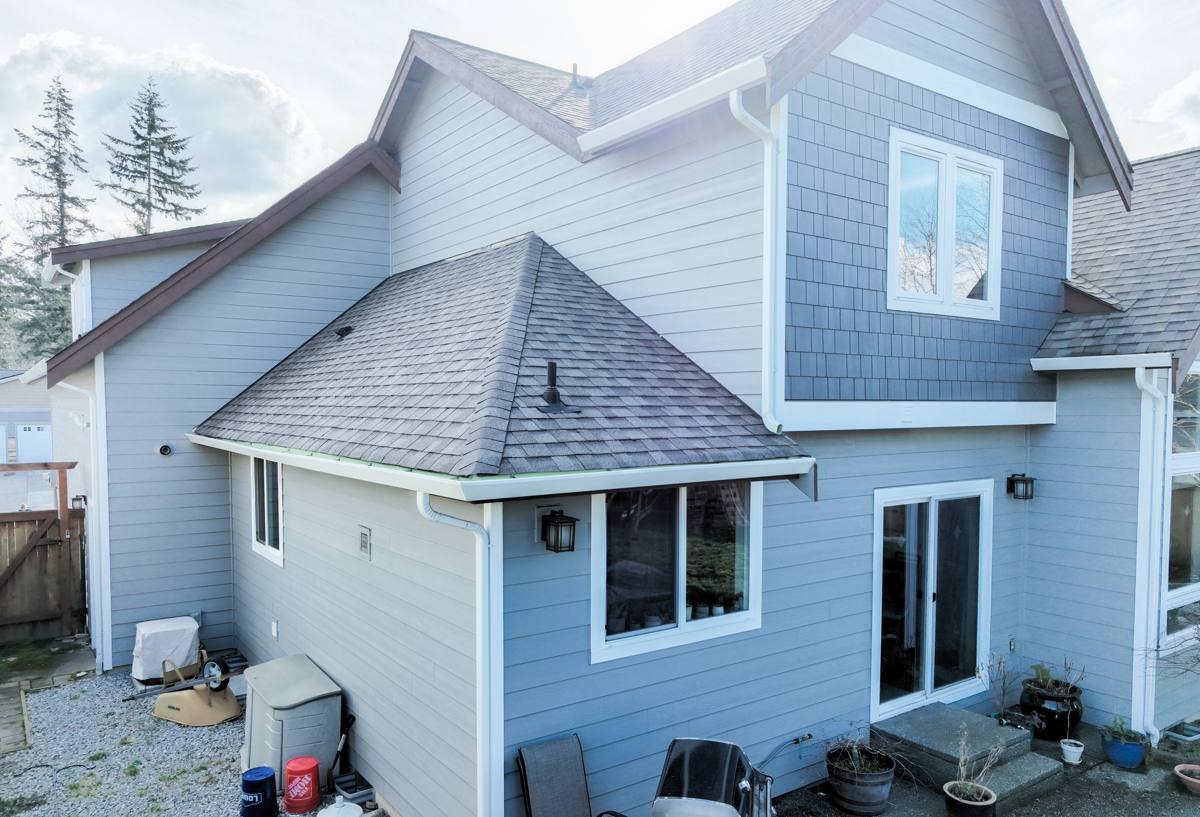
Siding Replacement in Sehome: Built for This Neighborhood's Weather
Sehome sits close enough to Bellingham Bay that salt-laden air is a daily fact of life, and close enough to the hills that homes catch driving rain off the Puget Sound weather systems for months at a stretch. Add in Whatcom County's long, damp moss season — stretching from fall through spring in most years — and you have a climate that is genuinely hard on exterior siding. This isn't a page about siding replacement in general. It's about what siding replacement needs to look like specifically for a Sehome home, given exactly this mix of salt, rain, and moisture.
Homeowners in this neighborhood often call us after noticing the same handful of problems: paint that won't hold, soft spots near the ground, dark streaking that keeps coming back no matter how often it's power-washed, or siding that looks fine from the street but is clearly failing at the seams. Those aren't random maintenance annoyances. They're what happens when siding material or installation wasn't matched to this specific climate.
Why Salt Air, Rain, and Moss Wear Siding Out Faster Here
Three climate factors do most of the damage to siding in Sehome, and they compound each other:
- Salt air accelerates corrosion of fasteners, trim metal, and any exposed hardware, and it degrades paint films faster than inland exposure does.
- Driving rain — wind-driven rather than straight-down — pushes water sideways into laps, seams, and butt joints that were only designed to shed water falling vertically. This is where poor flashing and poor caulking show up first.
- Extended moss and moisture season keeps siding surfaces damp for long stretches at a time, especially on north-facing walls and anywhere shaded by mature trees or neighboring structures. Prolonged dampness is what lets rot, swelling, and mold take hold in moisture-sensitive materials.
Individually, any siding material can handle one of these. Together, year after year, they punish products and installations that weren't built with this exact combination in mind.
What a Correct Siding Replacement Actually Involves
A siding replacement that's going to hold up in Sehome isn't just "new boards over the old wall." It's a system, and every layer matters:
Tear-Off and Inspection
Old siding comes off completely so the sheathing underneath can actually be inspected — not guessed at. This is the step that catches hidden rot, soft sheathing, or past water intrusion around windows and corners before it gets covered up again.
Water-Resistive Barrier
A correctly lapped, correctly taped weather-resistive barrier goes over the sheathing. In a driving-rain climate, the barrier is doing real structural work — it's the layer that stops incidental moisture that gets past the siding from ever reaching the wood framing.
Flashing at Every Penetration
Windows, doors, hose bibs, light fixtures, and any other wall penetration need proper flashing integrated with the water-resistive barrier — not just caulk. Caulk fails. Correctly lapped flashing doesn't rely on a sealant staying intact for twenty years.
Correct Fastening and Clearances
Manufacturer-specified fastener spacing, penetration depth, and ground clearance all matter more in a wet climate than a dry one. Siding installed too close to grade, decking, or roof lines gives moisture a place to sit against the material.
Factory-Finished Material
Wherever possible, the finish should be applied in a factory setting under controlled conditions rather than painted on site after installation. A factory finish adheres more consistently and holds color and protection longer than field-applied paint, which matters when salt air is actively working against paint films.
Signs a Sehome Home Needs Siding Replacement, Not Just Repair
Not every siding problem means a full replacement. But certain signs mean patching is a short-term fix at best:
- Soft or spongy siding when pressed, especially near the bottom courses or below windows
- Paint that's peeling, bubbling, or won't hold for more than a couple of years despite repainting
- Visible gaps or separation at seams and corners that let daylight or drafts through
- Persistent dark streaking or moss growth that returns quickly after cleaning
- Warping, buckling, or waviness in the wall plane, especially on north- or shade-facing walls
- Siding that predates current flashing and water-barrier standards (common in homes with original 1980s–2000s siding)
- Interior signs — musty smell, staining on interior walls near exterior corners — that suggest moisture is already getting past the siding
If you're seeing two or more of these at once, that's usually a sign the underlying water-management system has failed, not just the surface material.
How Our Process Works in Sehome
We approach every project the same way, because skipping steps is exactly how a home ends up with the same problems again in ten years:
- On-site assessment — we walk the exterior, check for soft spots, look at existing flashing and clearances, and talk through what we find in plain terms.
- Written scope and estimate — what's being removed, what's going back, and what the material and labor cover, with no vague line items.
- Tear-off and sheathing inspection — this is when hidden damage, if any, gets identified and discussed before covering it back up.
- Water-resistive barrier and flashing installation — the part of the job that determines how the home performs in driving rain for the next several decades.
- Siding installation to manufacturer spec — correct fastening, spacing, and clearances, not shortcuts to save a day of labor.
- Final walkthrough — we go over the finished work with you before calling the job done.
Why We Install Only James Hardie Fiber Cement
We get asked regularly about vinyl, LP SmartSide, and other engineered wood or composite sidings, and we understand the appeal — they're often cheaper up front. But we made a decision as a company to install only James Hardie fiber cement siding, and in a climate like Sehome's, that decision comes down to how each material actually behaves over time in salt air, driving rain, and long stretches of dampness.
Vinyl siding is affordable and low-maintenance in mild, dry climates, but it can warp or become brittle with temperature swings, and its seams and J-channels rely heavily on proper installation to keep wind-driven rain out — a real concern with our exposure. Engineered wood products like LP SmartSide perform well when installed and maintained exactly to spec, but they're wood-based, meaning any lapse in flashing, caulking maintenance, or field-cut edge sealing creates a real path for moisture absorption and swelling — a bigger risk in a climate that stays damp as long as ours does.
James Hardie fiber cement is non-combustible, doesn't absorb moisture the way wood-based products can, and comes with a factory-applied ColorPlus finish engineered to hold up against UV and salt exposure far longer than field-applied paint. Hardie also builds region-specific HZ product lines engineered for local climate conditions, and backs installations with a strong transferable warranty. For a neighborhood dealing with salt air and driving rain every year, that combination is why we standardized on it rather than offering multiple product lines.
Material Comparison for This Climate
| Factor | Vinyl Siding | Engineered Wood (LP SmartSide) | James Hardie Fiber Cement |
|---|---|---|---|
| Moisture resistance | Doesn't absorb water, but seams can let it in behind the panel | Wood-based; swells or delaminates if moisture gets past the finish | Cement-based; doesn't swell or rot from moisture exposure |
| Salt air durability | Can become brittle over time with UV/temperature cycling | Finish maintenance is critical near salt exposure | Factory ColorPlus finish engineered for coastal UV and salt exposure |
| Fire resistance | Combustible | Combustible (wood-based) | Non-combustible |
| Typical warranty structure | Varies widely by manufacturer | Manufacturer warranty, often with maintenance conditions | Long-term, transferable warranty on the substrate |
What Drives the Cost of a Sehome Siding Replacement
Every home is different, so we don't quote prices without seeing the house, but these are the main factors that move the number up or down:
| Cost Factor | Why It Matters |
|---|---|
| Extent of hidden sheathing damage | Rot or soft sheathing found during tear-off adds repair work before new siding can go on |
| Home size and wall complexity | More corners, gables, and dormers mean more cutting, flashing, and labor time |
| Siding profile chosen | Lap, shingle, and panel styles differ in material and installation time |
| Trim and accessory scope | Replacing trim boards, fascia, or window trim alongside siding adds to the project |
| Site access | Tight lots, fencing, or landscaping close to the walls can slow staging and tear-off |
| Existing paint or lead concerns | Homes built before the 1978 lead paint ban may require additional handling precautions |
Why Hiring a Crew That Already Works This Neighborhood Matters
Siding installation quality comes down to details that don't show up in a sales brochure: how flashing is lapped at a window head, how much clearance is left above a deck ledger, how fastener spacing is handled around a corner. A crew that regularly works homes in Sehome and the surrounding Whatcom County area has already seen how local wall assemblies, roof lines, and moisture exposure tend to behave, and builds that knowledge into every job rather than treating each house as a first-time guess.
It also means faster, more realistic scheduling around our actual weather patterns — knowing when a dry window is reliable enough to open up a wall, and when it's smarter to wait a day than rush a tear-off ahead of rain.
After Installation: What Actually Needs Maintenance
One advantage of a correctly installed Hardie system is that ongoing maintenance is minimal compared to wood-based sidings, but "minimal" isn't "none":
- Rinse siding periodically to clear salt residue and organic buildup before moss or algae take hold
- Keep gutters clear so overflow doesn't run directly down wall surfaces
- Trim back vegetation and tree limbs that keep walls shaded and damp longer than necessary
- Recaulk at trim and penetration joints if you notice separation, rather than waiting for it to become a leak
- Watch for any soft spots or discoloration near ground level and address them early
If you're weighing a siding replacement for a home in Sehome, we're happy to take a look and give you an honest read on what your current siding is doing, what's driving it, and what a correct fix would involve — no pressure, no pushy sales pitch. Use the form below to request a free estimate.