 Whatcom County
Why Edgemoor Roofs Take a Different Kind of Beating
Edgemoor sits close to the water, with mature tree cover, wooded lots, and homes that catch wind and rain coming off Bellingham Bay in a way that inland Whatcom County neighborhoods don't. That combination — salt-laden air, driving rain that comes in sideways during winter storms, and shade from tall conifers that keeps roof surfaces damp for days after a storm passes — is exactly the mix that shortens the life of a roof if it isn't repaired correctly the first time.
We're not describing anything exotic here. It's the ordinary weather pattern of this part of Washington, but it adds up. Salt air accelerates corrosion on exposed metal flashing and fasteners. Driving rain finds any gap in a shingle, ridge cap, or valley that wouldn't leak in a calmer climate. And the long, wet moss season that Whatcom County is known for holds moisture against roofing material for months at a stretch, which is a slower but just as damaging problem than a single windstorm.
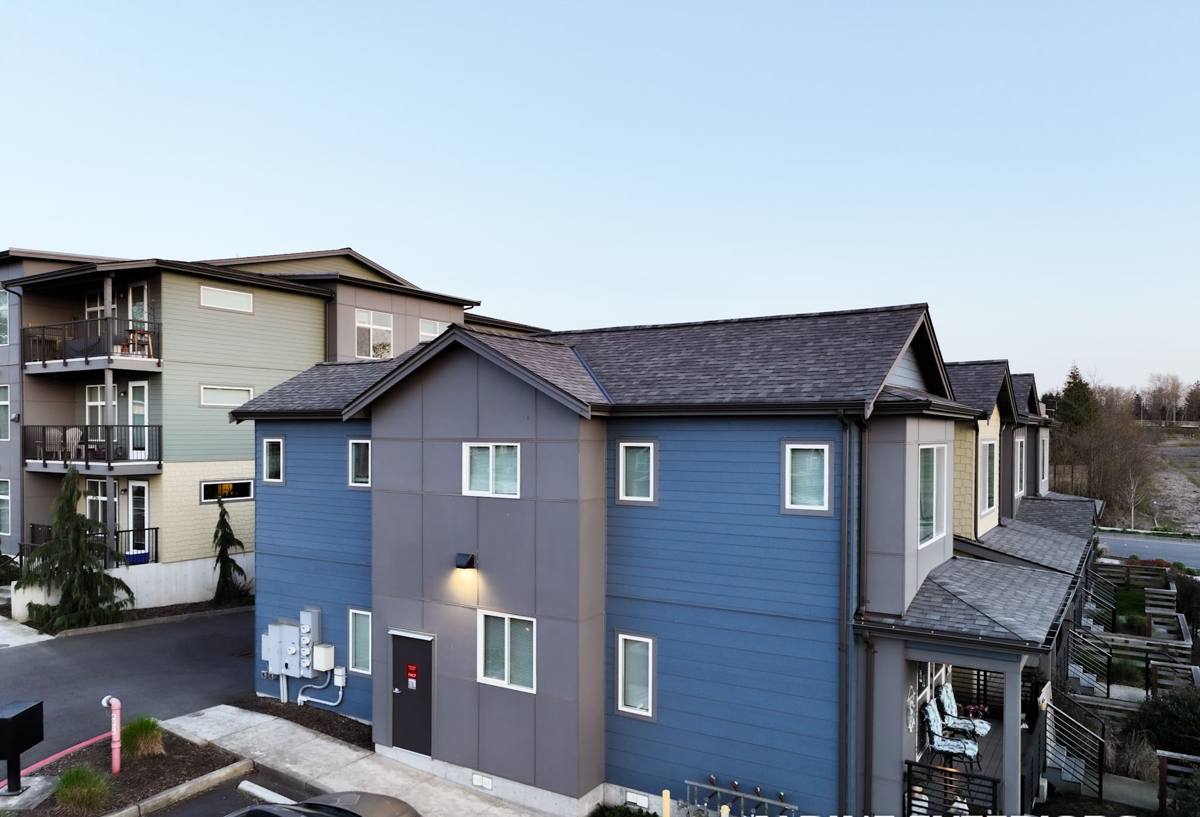
What Storm Damage Actually Looks Like on a Whatcom County Roof
Storm damage isn't always a dramatic hole in the roof. More often it's a handful of small failures that, left alone, turn into a much bigger repair bill by the following winter.
Signs You Can Spot From the Ground
- Shingles that are curled, cracked, or missing entirely after a windstorm
- Granules collecting in gutters or at the base of downspouts
- Visible gaps or lifted edges along ridge caps and hip lines
- Sagging or discolored sections, especially where tree branches overhang the roof
- Flashing that has pulled away from a chimney, skylight, or sidewall
Damage That Hides Until It's Expensive
The damage we see most often on Edgemoor service calls isn't the obvious stuff — it's water that's been tracking under a lifted shingle or through a compromised valley for weeks before a homeowner notices a stain on a ceiling. By that point the sheathing underneath may be soft, insulation may be wet, and what would have been a straightforward shingle and flashing repair has become a structural repair. Moss buildup makes this worse because it holds water against the roofing material and works its way under shingle tabs, which is a slow, quiet form of storm-related damage even when there was no single dramatic weather event.
Our Storm Damage Repair Process
When we get a call after a storm, we follow the same sequence every time, because skipping steps is how small repairs turn into recurring leaks.
- Inspection first, not a sales pitch. We walk the roof (or use a ladder and a careful visual inspection where the pitch or condition makes that the safer option) and document what we actually find — not a generic "you need a new roof" line.
- Photo documentation. This matters for your own records and for any insurance conversation, whether or not you end up filing a claim.
- Temporary protection if needed. If there's active water intrusion, we get a tarp or temporary seal in place the same visit so the interior of the home isn't taking on more damage while a permanent repair is scheduled.
- Scoping the real repair. We identify everything connected to the damage — not just the missing shingle, but the underlayment and decking underneath it, the flashing nearby, and whether moss or standing water contributed to the failure.
- Repair with matched materials. We match shingle type, color, and profile as closely as possible and rebuild flashing details correctly rather than just caulking over a gap.
- Cleanup and a walkthrough. We clear debris, check gutters, and go over what we did and why before we consider the job finished.
Repair vs. Replace: How We Make the Call
Not every storm-damaged roof needs full replacement, and not every "repair" is actually a fix that will hold. Here's the honest breakdown of the factors we weigh:
| Factor | Favors Repair | Favors Replacement |
|---|---|---|
| Roof age | Under 15 years, otherwise sound | Nearing or past expected service life |
| Extent of damage | Isolated to one slope or section | Widespread across multiple slopes |
| Decking condition | Dry, solid sheathing under the damage | Soft, delaminated, or rotted decking |
| Moss history | Light growth, easily treated | Long-term moss with visible shingle lifting |
| Typical cost range | Few hundred to low thousands of dollars | Full replacement runs significantly higher |
| Timeline | Often completed in a day or two | Multi-day project with tear-off |
We'll tell you plainly which side of that table your roof falls on, and we won't push a full replacement when a correctly done repair will genuinely hold up through the next few winters.
Materials and Methods We Use for Lasting Repairs
A repair is only as good as what's underneath it. For Edgemoor's climate specifically, we pay close attention to a few details that matter more here than they would inland:
Flashing: We favor corrosion-resistant flashing materials and make sure fasteners are properly sealed, since salt air off the bay accelerates rust on lower-grade metal and exposed fastener heads over time.
Underlayment: Where a repair opens up a section of roof, we install a self-adhering waterproof membrane at valleys, eaves, and around penetrations — not because code always requires it on a repair, but because driving rain in a windstorm pushes water uphill under shingles in ways that standard felt doesn't reliably stop.
Moss treatment: If moss contributed to the failure, we address it as part of the repair — removing what's there without damaging the shingle surface, and discussing zinc or copper strip options as an ongoing preventive measure rather than a one-time fix.
Fastener pattern and sealing: Wind-lifted shingles are frequently a nailing or sealant issue as much as a wind issue. We check the fastener pattern on surrounding shingles, not just the ones that failed, since a storm often exposes a weakness that was already there.
Insurance and Storm Claims: What Homeowners Should Know
We're not insurance adjusters and won't pretend to be, but after handling storm repairs across Whatcom County we can tell you what's generally true: documentation matters more than anything else. Photos of the damage, a written scope of repair, and a clear description of the cause (wind, falling debris, prolonged moisture) give you and your insurer a real basis for a claim decision. We provide that documentation as a standard part of our inspection, whether you're filing a claim or paying out of pocket. What we won't do is inflate a scope of work to match a deductible or tell you damage is storm-related when it's actually long-term wear — that's a disservice to you and it's not how we want to be known in this community.
Seasonal Timing: When to Repair and When to Wait
Whatcom County's wet season runs long, and Edgemoor's tree cover extends how long roof surfaces stay damp after any given storm. Emergency repairs — active leaks, missing shingles, exposed decking — get scheduled immediately regardless of season, with temporary protection in place if a full repair has to wait for a dry window. Non-emergency repairs, including moss remediation and flashing upgrades, are best done during drier stretches so materials seal and adhere properly. We'll always tell you if a repair should wait for better weather versus needing immediate attention — rushing a repair in the wrong conditions can mean redoing it.
Preventive Maintenance for Edgemoor's Climate
Most of the emergency calls we get could have been smaller jobs if a few maintenance basics had been in place before the storm hit. For homes in this neighborhood, we typically recommend:
- Annual roof inspection before the fall storm season, especially after any period of high wind
- Gutter cleaning at least twice a year given the tree cover common in Edgemoor
- Moss treatment or removal before it spreads under shingle tabs
- Trimming back branches that overhang the roofline to reduce debris impact and shade-driven moisture
- Checking flashing around chimneys, skylights, and sidewalls for early corrosion signs given the salt air exposure
Why a Crew That Already Works Edgemoor Matters
Edgemoor's lots tend to be wooded, sloped, and tighter to access than a typical suburban street, which affects how a crew stages equipment, sets ladders, and manages debris removal safely. A crew that's worked in this specific part of Whatcom County knows what to expect from the terrain and the weather pattern before they ever get on the roof — how quickly a roof surface dries out under tree cover, which flashing details tend to fail first this close to the water, and how to schedule around the wettest stretches of the year so a repair actually cures and seals the way it's supposed to. That local familiarity translates directly into fewer surprises and a repair that's built for the conditions your specific roof deals with every winter, not a generic fix.
If you've got storm damage on an Edgemoor roof — or you just want an honest inspection before the next system rolls through — we're glad to take a look. Reach out for a free, no-pressure estimate using the form below.