 Whatcom County
Windows Built for What Barkley's Climate Actually Does to a House
Barkley sits close enough to Bellingham Bay that salt-laden air is a real factor in how exterior materials age, and it shares the rest of Whatcom County's pattern of long, wet winters and a moss season that can stretch from fall well into spring. None of that is dramatic on its own, but stacked together year after year, it's exactly the kind of slow, steady exposure that finds every weak point in a window installation. A window that's a good fit for a dry inland climate isn't automatically a good fit here, and a window that's installed correctly on paper can still fail early if the flashing, sealants, and drainage details weren't built for sustained moisture.
When we install windows in Barkley, we're not just setting a unit into a rough opening and running a bead of caulk around it. We're building a moisture-management system around that opening, because in this climate the installation detailing matters as much as the window product itself.
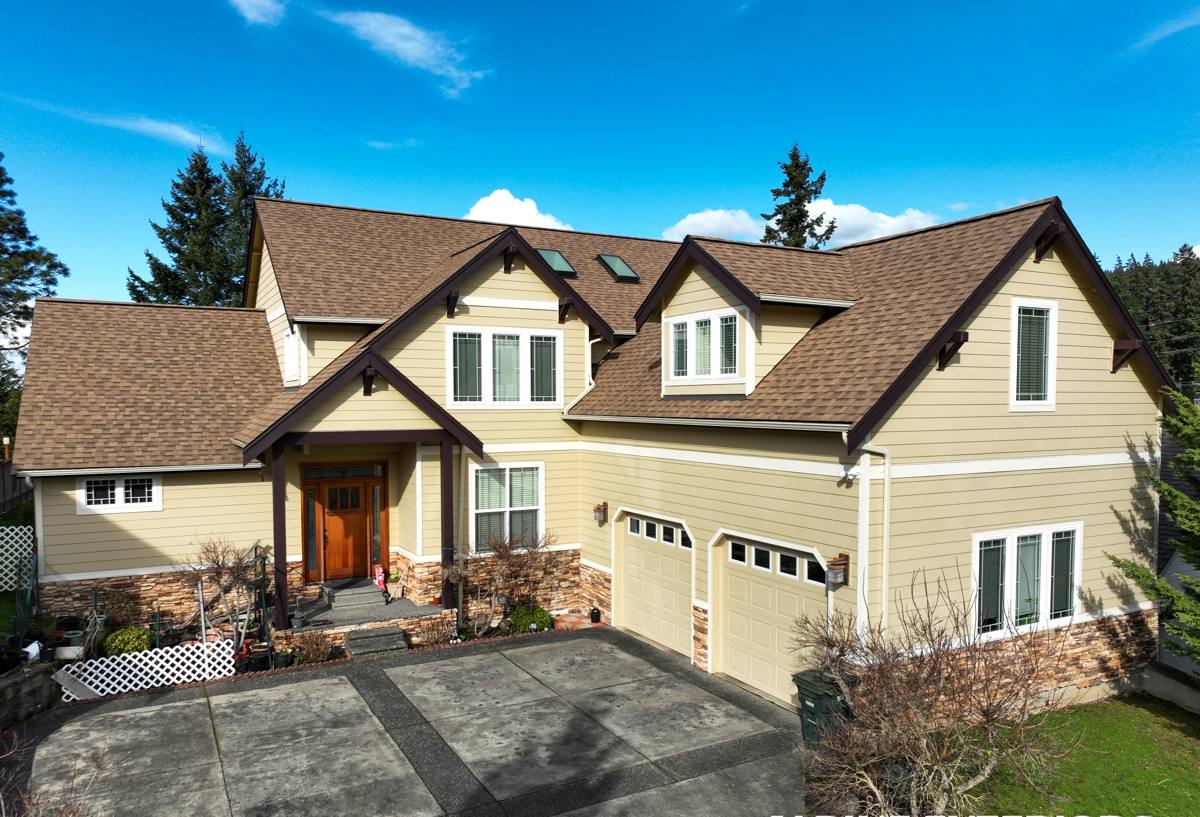
What Local Homes Actually Need from a Window Installation
Driving Rain and Wind-Driven Moisture
Whatcom County storms frequently bring rain sideways, not straight down. That means water is being pushed against and under trim, sills, and siding laps in ways that vertical-rain climates rarely see. A window installation here needs a properly lapped weather-resistant barrier, correctly flashed sill pans, and head flashing that actually sheds water outward instead of trapping it against the sheathing.
Salt Air and Metal Hardware
Proximity to the bay means airborne salt settles on hardware, frames, and fasteners over time. This doesn't ruin a window overnight, but it accelerates corrosion on lower-grade fasteners, hinges, and cranks, and it can degrade some finishes faster than a manufacturer's inland warranty testing assumes. We factor this into which fastener and hardware grades we use, not just which window brand goes in the opening.
Moss Season and Prolonged Dampness
A long moss season isn't just a roof problem. Constant ambient dampness around window openings, especially on north- and west-facing walls that stay shaded longer, keeps wood trim and sill areas wet for extended stretches. If there's any gap in the flashing or sealant detail, that's where rot starts, often invisibly, behind trim that still looks fine from the outside.
What a Correct Window Installation Actually Involves
A lot of window problems homeowners deal with years later trace back to shortcuts taken during installation, not defects in the window itself. Here's what we consider non-negotiable steps, regardless of which product is going in:
- Remove the old window and fully inspect the rough opening, sill, and surrounding framing for hidden rot or moisture damage before anything new goes in
- Install or repair the sill pan flashing so any water that gets past the window drains back outside, not into the wall cavity
- Integrate new flashing correctly with the existing weather-resistant barrier, in the proper shingle-lap order, so water is always directed downward and outward
- Set the window plumb, level, and square, with proper shimming at load-bearing points so the frame isn't stressed or bowed
- Use the right fastening schedule for the window type and wall assembly, not just "enough screws to hold it"
- Insulate the gap between the frame and rough opening with a low-expansion foam or backer rod, avoiding gaps or over-compression that cause air leaks or frame distortion
- Seal and caulk with products rated for the specific materials involved, not a generic all-purpose sealant
- Reinstall or replace exterior trim so it sheds water away from the window rather than channeling it toward the frame
Skip any one of these steps and the window can still look fine on move-in day. The failures show up two, five, or ten years later, usually as soft trim, interior staining, or a window that's suddenly hard to operate.
Our Process for a Barkley Window Installation
1. On-Site Assessment
We look at each opening individually rather than assuming they're all identical, even in the same house. Orientation, existing trim condition, and any visible signs of past moisture intrusion all factor into the plan.
2. Product Selection Based on Fit, Not Upsell
We talk through frame material, glazing options, and hardware grade based on the wall's exposure and your budget, not a one-size-fits-all recommendation. A shaded, salt-exposed wall and a sheltered, south-facing wall on the same house can reasonably get different specs.
3. Removal and Opening Inspection
Old windows come out carefully so we can see the actual condition of the framing and sheathing underneath, which is often the most important part of the whole job.
4. Flashing and Weather Barrier Integration
This is where most of our attention goes. Correct flashing sequencing is the single biggest factor in whether a window installation holds up through Whatcom County winters.
5. Installation and Sealing
The window is set, shimmed, fastened, insulated, and sealed to spec, then checked for square and smooth operation before trim goes back on.
6. Final Walkthrough
We walk the finished opening with you, inside and out, so you can see and understand what was done.
Frame Material: What We Consider for This Area
| Frame Type | Behavior in Salt Air / Wet Climate | Maintenance Consideration |
|---|---|---|
| Vinyl | Doesn't corrode from salt exposure; performs consistently in damp conditions | Low maintenance; limited repainting options if you want a color change later |
| Fiberglass | Very stable dimensionally in temperature and moisture swings; holds up well long-term near the bay | Low maintenance; higher upfront cost than vinyl |
| Wood (clad exterior) | Interior warmth with exterior protection, but any breach in the cladding exposes wood to sustained dampness | Requires attentive caulking and inspection, especially in a long moss season |
| Aluminum | Prone to condensation and, without a thermal break, poor insulating performance in a cold, damp climate | We generally steer clients away from this for this climate unless it's a specific architectural match |
We don't push one frame material as universally "best." We'll walk you through the honest trade-offs for your specific walls and budget, including where a lower-maintenance option might save you money on upkeep over the next decade even if the upfront cost is higher.
Glazing and Hardware Choices That Matter Here
Beyond frame material, a few product-level decisions make a real difference in this climate:
- Low-E, dual-pane glazing is close to standard for our region's heating needs, and helps reduce condensation on interior glass during cold, damp stretches
- Warm-edge spacer systems reduce the chance of seal failure and interior fogging over time, which matters more in a climate with big daily humidity swings
- Corrosion-resistant hardware (cranks, locks, hinges) is worth specifying on any Barkley home within a few miles of the bay, even if it's a modest upcharge over standard hardware
- Weep hole design on the sill should be checked and, if needed, kept clear, since these are what let intruded water drain back out instead of pooling
Common Warning Signs It's Time to Replace, Not Repair
Not every window issue means full replacement, but in this climate certain symptoms usually point that direction:
- Soft or spongy trim or sill material when pressed
- Visible staining or bubbling paint on interior trim near the window
- Persistent fogging between panes, indicating a failed seal
- Drafts you can feel even with the window fully latched
- Difficulty opening, closing, or locking that's gotten worse over a season or two
- Visible daylight or gaps around the frame from outside
If you're seeing one or two of these, it's worth having someone look before deciding between repair and replacement, since the underlying cause (a flashing failure versus a worn-out window) changes the right fix.
Why It Matters That We Already Work in Barkley
A crew that regularly works Whatcom County homes isn't guessing at how a wall assembly here behaves in February versus a crew coming from a drier region. We know what a moss-season-damaged sill looks like before we open up the wall, we know which fastener grades hold up against salt air exposure over years rather than months, and we're not learning the local flashing details on your house for the first time. That familiarity shows up less in any single visible detail and more in the parts of the job you won't see once trim goes back on, which are exactly the parts that determine whether the installation holds up.
Get a Straightforward Estimate
If you're weighing whether it's time to replace windows on your Barkley home, we're happy to take a look and give you an honest read on condition, options, and realistic cost ranges, no pressure either way. Use the form below to request a free estimate.