 Whatcom County
Windows Built for Fairhaven's Waterfront Climate
Fairhaven sits close to Bellingham Bay, which means homes here take on a specific combination of weather stress that inland Whatcom County properties don't deal with as heavily: salt-laden air, wind-driven rain that hits window assemblies at an angle instead of straight down, and a long, damp moss season that keeps exterior surfaces wet for months at a time. Windows in this kind of environment aren't just letting light in — they're one of the primary barriers keeping that moisture and salt exposure out of your wall assembly. When a window is installed correctly for this climate, it holds up for decades. When it's installed with shortcuts, problems show up as rot, fogged glass, and drafts well before the window itself is actually worn out.
We install windows throughout Whatcom County, but Fairhaven jobs get treated with the coastal-exposure mindset from the start: flashing details, sealant choices, and frame materials are all selected with salt air and driving rain in mind, not just whatever's standard for a drier part of the state.
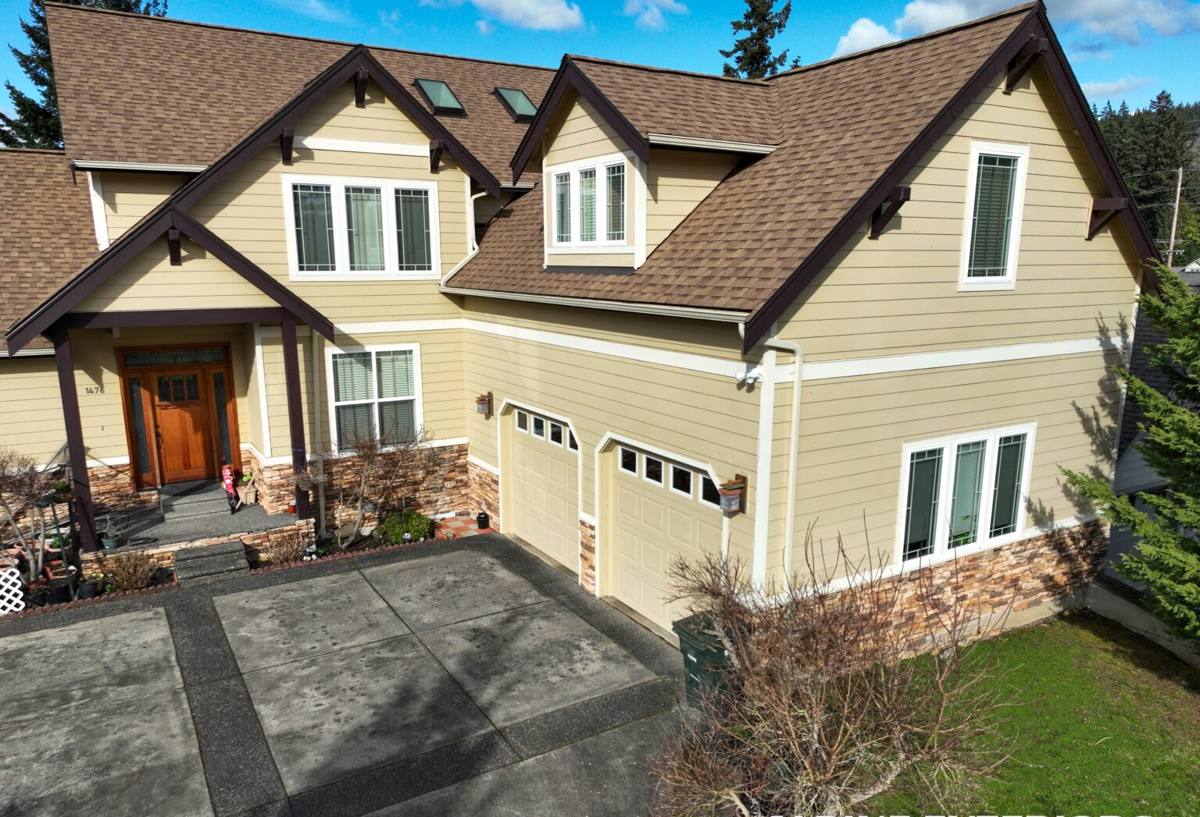
What Fairhaven's Coastal Exposure Actually Does to Windows
Salt Air
Airborne salt from the bay accelerates corrosion on metal window hardware, fasteners, and some lower-grade aluminum components. It also degrades certain sealants and finishes faster than they'd wear in an inland location. This doesn't mean coastal homes can't have durable windows — it means the hardware and sealant specs matter more here than they would twenty miles inland.
Driving Rain
Wind off the water frequently pushes rain sideways into window openings rather than letting it run straight down the siding. A window that would stay dry in a calm rain can take on water at the same opening during a windy Fairhaven storm if the flashing and sill pan aren't built to handle that angle of attack. This is one of the most common reasons we find water damage around older window openings during removal — the original install assumed rain falls straight down.
Moss and Prolonged Dampness
Whatcom County's moss season is long, and moss holds moisture against whatever it grows on. Around windows, moss and algae buildup on adjacent trim or siding keeps that area damp for extended stretches, which is hard on caulk lines, wood trim, and any exposed fasteners. It's a slower-acting problem than a single storm, but over years it's just as damaging.
Signs a Fairhaven Home's Windows Need Attention
- Soft or discolored wood trim or sill area around the window frame
- Drafts you can feel near the frame edges, especially during windy weather
- Fogging or condensation between panes on double- or triple-glazed units, which signals a failed seal
- Paint or finish peeling specifically around the window perimeter, not the whole wall
- Difficulty opening, closing, or latching — often a sign the frame has shifted or swollen
- Visible gaps in old caulk or sealant lines, or sealant that's cracked and pulling away
- Musty smell or visible mold near interior window trim
Any one of these can be minor on its own, but in a coastal exposure like Fairhaven's, they tend to compound quickly once moisture finds a way in.
What a Correct Window Installation Involves
A window installation done right is mostly about what happens before the new window ever gets set in the opening. The window unit itself is only part of the system — the flashing, sill pan, and sealant layers around it are what actually keep water out over time.
Removal and Opening Inspection
We remove the old window carefully and inspect the rough opening, sheathing, and framing underneath for hidden rot or water damage before anything new goes in. This step matters everywhere, but it's especially important on older Fairhaven homes where a prior window may have been leaking slowly for years without obvious interior signs.
Sill Pan and Flashing
A proper sill pan creates a sloped, waterproof pocket at the bottom of the opening so any water that does get past the window has somewhere to drain instead of sitting against the framing. Flashing tape and building paper integration are layered so water sheds outward and downward, shingle-style, rather than being able to work its way behind the siding — a detail that matters more here given how often rain hits at an angle.
Setting the Window and Sealing
The unit is set level and plumb, shimmed correctly so it isn't under stress that could cause premature seal failure, then sealed with exterior-grade sealant rated for the temperature swings and moisture exposure this area sees. Interior air sealing and insulation around the frame are finished before trim goes back on, which affects both draft control and energy performance.
Trim and Finish
Exterior trim is reinstalled or replaced with materials and paint or caulk lines that will hold up under repeated wetting from rain and the humidity that comes with moss season, rather than trim that looks fine at installation but starts failing within a couple of wet winters.
Choosing Window Materials and Glass for This Climate
There's no single "best" window material for every home — it depends on your budget, the home's age and style, and how much maintenance you want to take on. What we won't do is recommend a product just because it's cheap to install; we'll walk you through the honest trade-offs for a coastal Whatcom County property.
| Frame Material | Coastal Performance Notes | Maintenance |
|---|---|---|
| Vinyl | Doesn't corrode from salt air, good energy performance, budget-friendly | Low — occasional cleaning |
| Fiberglass | Very stable in temperature swings, strong resistance to moisture-related warping | Low |
| Wood-clad | Classic look for older or historic-style homes; the exterior cladding protects the wood from direct weather | Moderate — clad exterior needs less upkeep than raw wood, interior wood still needs periodic attention |
| Aluminum | Requires marine-grade or coated hardware near the bay to resist corrosion; not our default recommendation this close to the water unless specified | Moderate to high near salt air |
For glass, we typically recommend double- or triple-pane units with low-E coatings and argon fill for this region — the insulating value helps with both energy costs and reducing interior condensation during Whatcom County's damp, cool months. Impact-resistant or laminated glass options are also worth discussing for exposed, water-facing elevations of a home.
Our Process for a Fairhaven Window Installation
- Free on-site assessment — we look at your current windows, check for signs of hidden water damage, and talk through what your home actually needs given its exposure and age.
- Straightforward quote — you get pricing broken out by window, material, and any additional framing or trim repair, with no vague allowances.
- Scheduling around the weather — we plan installs to minimize the time your wall openings are exposed, which matters more here than in drier parts of the state.
- Careful removal and opening inspection — as described above, this is where hidden problems get caught before they're sealed back up.
- Correct flashing, sealing, and setting — done to hold up against driving rain and salt air, not just to pass a quick visual check.
- Final walkthrough — we go over the finished work with you and make sure every window operates and seals properly before we consider the job done.
Why Local Experience in Fairhaven Matters
A crew that mostly works drier, inland areas can still install a window competently — but they may not automatically account for wind-driven rain angles, salt exposure on hardware, or the way sustained dampness from moss season affects trim and sealant longevity. Working regularly in Whatcom County's coastal neighborhoods means we've seen how windows actually fail here over time, not just how they're supposed to perform on paper. That shapes real decisions: how we detail flashing, which sealants and hardware we trust near the bay, and how we sequence a job around this area's weather patterns.
It also means we're a known, accountable local contractor — not a crew that installs and disappears if a question comes up two years later about how a window is performing.
Cost Factors for Window Installation
Every home is different, but a few factors tend to drive cost on Fairhaven projects specifically:
| Factor | Why It Affects Cost |
|---|---|
| Number and size of windows | Larger openings and more units mean more material and labor |
| Hidden framing or rot repair | Coastal moisture exposure sometimes means the opening needs repair before a new window can be properly set |
| Frame material chosen | Vinyl, fiberglass, wood-clad, and aluminum all carry different material costs |
| Glass package | Double vs. triple pane, low-E coatings, and impact-resistant options add cost but also performance |
| Trim and exterior finish work | Matching or upgrading exterior trim adds labor beyond the window unit itself |
We'll give you real numbers after seeing your home — broad national averages don't account for the coastal-specific detailing this area needs.
If your Fairhaven home's windows are showing drafts, moisture damage, or you're just ready to stop fighting the salt air and rain every winter, we're happy to take a look. Reach out for a free, no-pressure estimate using the form below.